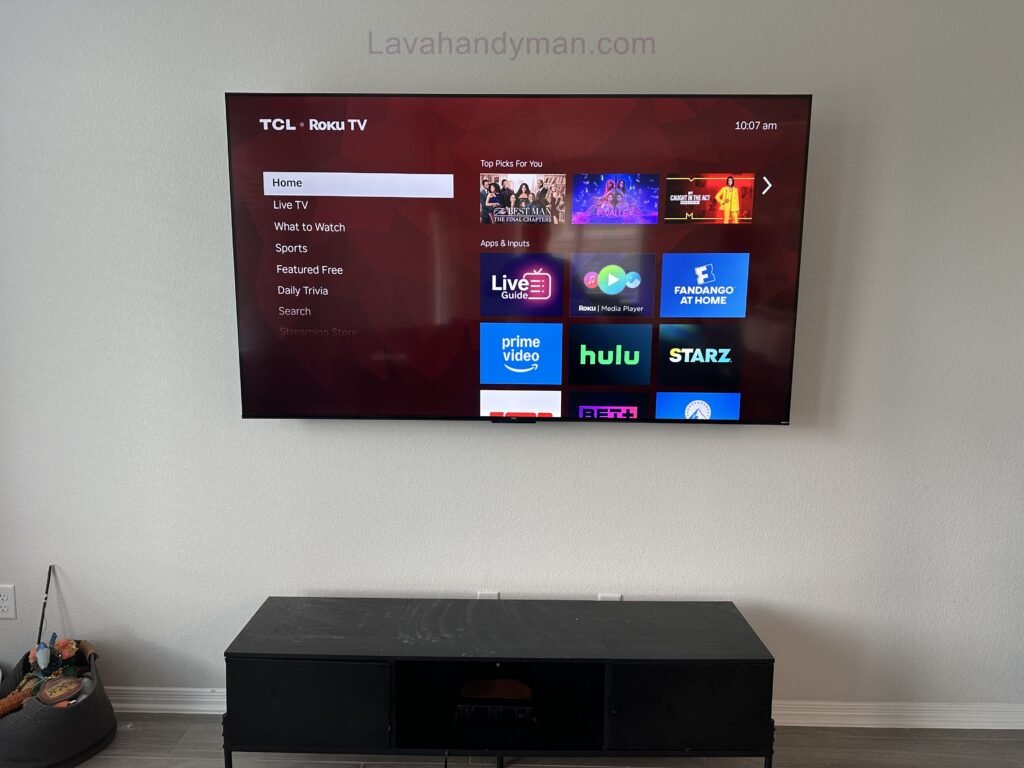
TV Wall Mounting Guide: How to Choose the Best TV Mount and Install It Safely
TV wall mounting is one of the best ways to make better use of your living space while creating a modern and organized interior. Mounting a TV on the wall not only frees up valuable space on your TV stand or furniture but also allows you to position the screen at a comfortable height and viewing angle.
However, professional TV installation involves more than simply attaching a TV mount to the wall. Choosing the right wall mount, checking the wall type, considering the TV’s weight and size, verifying the VESA standard, determining the proper mounting height, and managing the cables are all important factors.
In this complete guide, we will cover everything you need to know about mounting a TV on the wall, from choosing the right wall mount to completing the final installation.
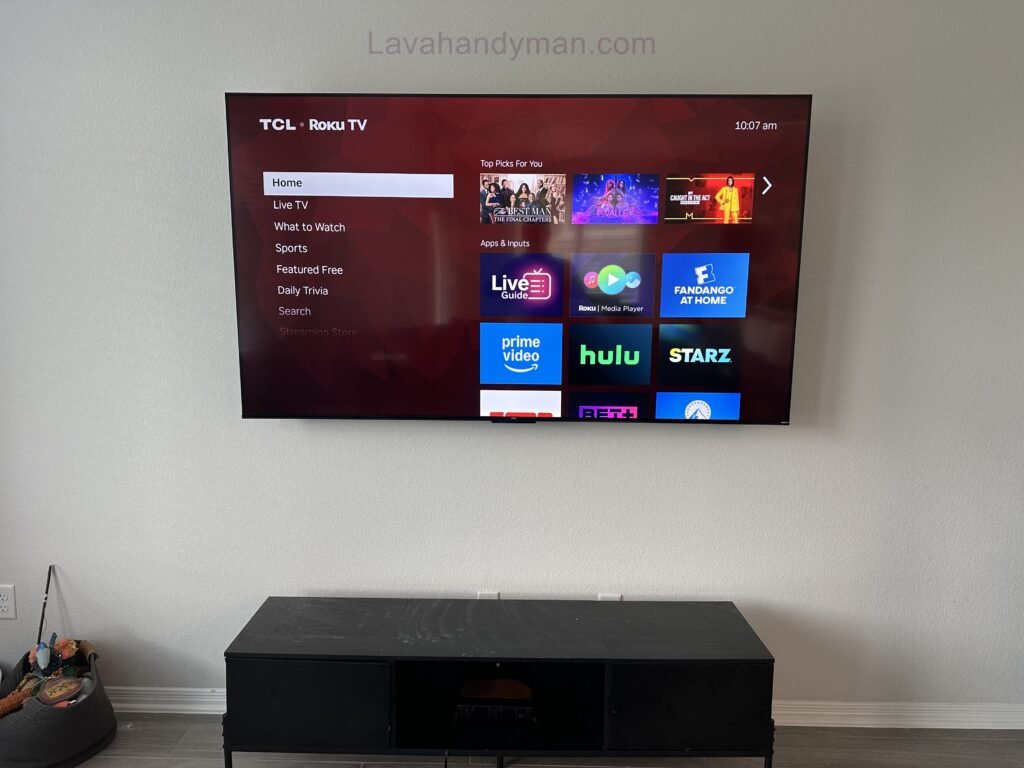
TV Wall Mounting Guide
Why Mount a TV on the Wall?
Wall mounting a TV offers several advantages beyond improving the appearance of your room. When a TV is placed on a stand, it takes up valuable floor and furniture space. A wall-mounted TV frees up that space and creates a cleaner overall look.
Some of the main benefits of TV wall mounting include:
- Better use of available space
- A modern and minimalist appearance
- A cleaner area around the TV
- The ability to hide TV cables
- Better viewing-angle adjustment
- The option to use a full-motion TV mount
- Reduced risk of accidental contact with the TV
- A more streamlined interior design
- The ability to position the TV at a comfortable height
TV Wall Mounting Guide
When installed correctly, a wall-mounted TV can become an attractive focal point without taking up unnecessary floor space.
What Should You Know Before Mounting a TV on the Wall?
Before installing your TV, several important factors should be checked. Ignoring these details can result in choosing the wrong TV mount, installing the TV at an uncomfortable height, or creating an unstable connection.
The most important factors to consider before installation include:
- TV weight
- TV size
- VESA mounting pattern
- Wall type
- Type of TV wall mount
- Mounting height
- Location of the power outlet
- Cable routing
- Viewing angle
- Mount weight capacity
TV Wall Mounting Guide
Checking these factors before drilling any holes can make the installation process easier, cleaner, and more secure.
Choosing the Best TV Wall Mount
One of the most important steps in TV wall mounting is choosing the right mounting bracket. TV wall mounts are available in several different types, and the best option depends on your room and viewing needs.
Fixed TV Wall Mount
A fixed TV wall mount is the simplest type of wall mount. It keeps the television close to the wall and does not allow the screen to be adjusted.
TV Wall Mounting Guide
If your TV is directly in front of your main seating area and you do not need to change the viewing angle, a fixed wall mount can be an excellent choice.
The main benefits of a fixed TV mount include:
- Simple design
- Minimal distance between the TV and wall
- Clean appearance
- Usually more affordable
- Ideal for minimalist interiors
Tilting TV Wall Mount
A tilting TV mount allows you to adjust the vertical viewing angle of the television. This type of mount is especially useful when the TV is installed higher than eye level.
Tilting the screen slightly downward can provide a more comfortable viewing angle.
TV Wall Mounting Guide
Full-Motion TV Wall Mount
A full-motion TV wall mount provides much greater flexibility than fixed or tilting mounts. Depending on the model, you can move the TV from side to side and adjust its vertical angle.
A full-motion mount is useful when people watch the TV from different areas of the room.
However, full-motion mounts generally require more space and must be selected based on the TV’s weight, size, and the structure of the wall.
What Is the VESA Standard for TVs?
TV Wall Mounting Guide
When shopping for a TV wall mount, you will often see the term VESA. VESA refers to the standard mounting-hole pattern on the back of the television.
For example, you may see measurements such as:
- 200 × 200
- 300 × 300
- 400 × 400
- 600 × 400
These numbers indicate the horizontal and vertical distance between the mounting holes.
When choosing a TV wall mount, make sure the mount is compatible with your television’s VESA pattern.
TV Wall Mounting Guide
In addition to the VESA standard, you should also check the maximum weight capacity of the TV mount. The mount must be capable of safely supporting the weight of your TV.
What Is the Best Height for Mounting a TV on the Wall?
One of the most common questions people ask is: How high should a TV be mounted on the wall?
There is no single height that works for every home. The ideal mounting height depends on the TV size, sofa height, viewing distance, and the type of room.
In a living room, the TV should generally be positioned so that you do not have to constantly tilt your head upward or downward while watching.
In a bedroom, the TV may be mounted higher because the viewing position is different from a typical seated position.
TV Wall Mounting Guide
Therefore, when determining the TV mounting height, consider the actual position of the viewer rather than relying on one fixed measurement.
What Types of Walls Can Support a Wall-Mounted TV?
The type of wall is one of the most important factors in TV installation. The installation method for a concrete wall is different from the method used for drywall or brick.
TV Wall Mounting Guide
Mounting a TV on Drywall
Mounting a TV on drywall requires special attention to the structure behind the wall.
Drywall alone may not be strong enough to support a large TV and its mounting bracket. The supporting structure behind the drywall should therefore be identified, and the mount should be attached appropriately.
For large or heavy televisions, professional installation is recommended.
Mounting a TV on a Brick Wall
Brick walls can often support a wall-mounted TV, but the type and condition of the brick are important considerations.
The mounting hardware should be selected according to the wall structure. Older, cracked, or damaged walls should be inspected before installation.
TV Wall Mounting Guide
Mounting a TV on a Concrete Wall
Concrete walls generally provide strong support for TV installation, but the correct mounting hardware is still essential.
For large TVs, the TV weight, mounting bracket capacity, and quality of the wall connection should be carefully considered.
Tools Needed for TV Wall Mounting
The tools required depend on the TV, wall mount, and wall type. However, a typical installation may require:
TV Wall Mounting Guide
- TV wall mount
- Appropriate screws and mounting hardware
- Drill
- Drill bits suitable for the wall type
- Screwdriver
- Level
- Measuring tape
- Pencil for marking
- Appropriate tools for identifying suitable mounting points
- Cable-management accessories
Using inappropriate hardware can reduce the stability of the installation, so all tools and mounting components should be suitable for the specific wall and TV mount.
Steps for Mounting a TV on the Wall
Now let’s look at the most important part: the TV wall mounting process.
TV Wall Mounting Guide
Step 1: Choose the TV Mounting Location
First, determine the best location for the TV.
The television should have a clear view from the main seating area while remaining reasonably close to power and other required connections.
You should also consider the location of devices such as gaming consoles, streaming devices, sound systems, and other equipment before installing the TV.
Step 2: Determine the Mounting Height and Center
Once you have chosen the location, determine the desired mounting height.
Use a measuring tape and level to ensure accurate positioning. It is better to measure several times before drilling any holes.
TV Wall Mounting Guide
Step 3: Check the Wall Structure
Before drilling, determine the wall structure and identify suitable mounting points.
Electrical wiring, plumbing, and other utilities inside the wall must be taken into consideration.
If you are not familiar with the wall structure, professional assistance is recommended.
Step 4: Install the TV Wall Mount
Once the mounting points have been identified, install the wall mount according to the manufacturer’s instructions.
TV Wall Mounting Guide
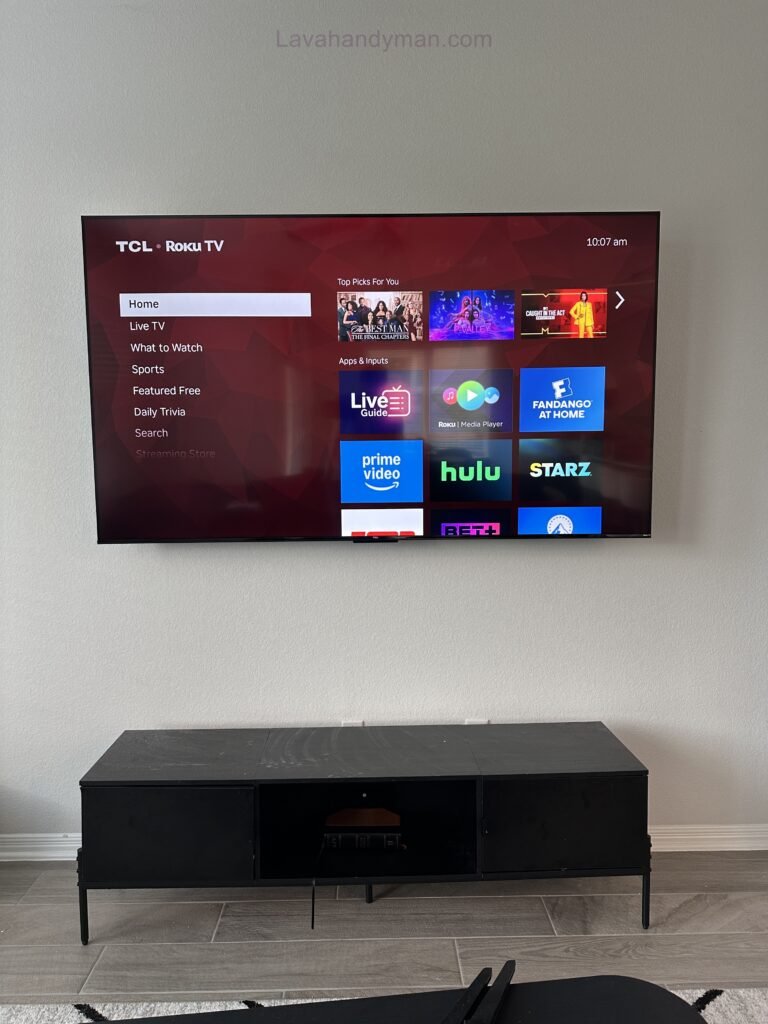
The appropriate mounting hardware depends on the wall type and the specifications of the TV mount.
After installing the bracket, use a level to make sure it is perfectly straight.
Step 5: Attach the Brackets to the Back of the TV
At this stage, attach the TV mounting brackets to the back of the television.
Before installation, verify the VESA mounting pattern and use the correct screw size.
Using screws that are too long or otherwise unsuitable may damage the TV. Always follow the manufacturer’s installation instructions.
Step 6: Mount the TV onto the Wall Bracket
Once the wall mount and TV brackets are ready, carefully place the TV onto the wall mount.
TV Wall Mounting Guide
Large or heavy televisions should ideally be handled by two people to reduce the risk of injury or damage to the TV.
After the TV is positioned on the mount, engage all safety locks or securing mechanisms according to the mount manufacturer’s instructions.
Step 7: Perform a Final Inspection
After installation, check the following:
- TV alignment
- Mount stability
- Bracket connections
- Cable positioning
- Distance from the wall
- Access to ports
- Full-motion movement, if applicable
TV Wall Mounting Guide
Once everything has been checked, turn on the TV and verify all necessary connections.
TV Cable Management After Wall Mounting
Cable management is an important part of a professional TV wall mounting installation.
Even if the TV is mounted perfectly, loose power, HDMI, antenna, and other cables can make the installation look messy.
You can organize your TV cables using:
- Cable ducts
- Cable covers
- Cable-management clips
- Cable concealment systems
- In-wall cable routing where appropriate
TV Wall Mounting Guide
If cables need to be routed inside the wall, the installation should be carried out with consideration for the wall structure and applicable safety requirements.
Common Mistakes When Mounting a TV on the Wall
Several common mistakes can affect the appearance and safety of a TV installation.
Choosing a TV Mount Based Only on Screen Size
One of the most common mistakes is choosing a wall mount based only on the TV’s screen size.
The TV’s weight, VESA pattern, and the mount’s maximum weight capacity must also be checked.
TV Wall Mounting Guide
Mounting the TV at the Wrong Height
Installing the TV too high or too low can result in an uncomfortable viewing experience.
The mounting height should be determined based on the seating position and room layout.
Ignoring the Wall Type
Different wall types require different installation methods. Hardware suitable for concrete may not be appropriate for drywall.
Using the Wrong Screws
The screws must be compatible with both the TV and the wall mount in terms of size and specifications.
Failing to Level the Mount
TV Wall Mounting Guide
Even a small installation error can cause the TV to appear noticeably crooked.
Ignoring Cable Management
The cable route should ideally be planned before the final installation so that additional modifications are not required later.
Is It Better to Mount a TV on the Wall or Use a TV Stand?
The choice between wall mounting and using a TV stand depends on your room and personal preferences.
Wall mounting frees up floor space and creates a cleaner, more modern appearance. It also allows you to use adjustable mounts and change the viewing angle.
A TV stand, on the other hand, makes it easier to move the television and can be more convenient for people who frequently change their room layout.
TV Wall Mounting Guide
If your priorities are saving space, achieving a modern look, and creating a minimalist interior, wall mounting can be an excellent option.
How Much Does TV Wall Mounting Cost?
The cost of mounting a TV on the wall varies depending on several factors, so there is no single price for every installation.
Factors that can affect the installation cost include:
- TV size
- TV weight
- Type of wall mount
- Wall material
- Installation complexity
- Mounting location
- Cable-management requirements
- Installation of additional equipment
- In-wall cable routing
TV Wall Mounting Guide
For example, installing a standard-size TV on a suitable wall is very different from installing a large TV with concealed cable routing.
For an accurate price estimate, the TV and installation location should be evaluated.
Do You Need a Professional TV Installer?
If you do not have the necessary tools or experience with mounting equipment on walls, hiring a professional TV installer can be the safer option.
Professional installation is particularly recommended for large or heavy TVs, full-motion mounts, and complex wall structures such as drywall.
A professional installer can assess the mounting location, choose the appropriate bracket, determine the correct height, and install the TV securely.
TV Wall Mounting Guide
Important Tips for Professional TV Wall Mounting
For a clean and secure installation, keep the following tips in mind:
- Check your TV model and weight before purchasing a wall mount.
- Find your TV’s VESA mounting pattern.
- Choose a mount with an appropriate weight capacity.
- Identify the type and structure of the wall.
- Determine the TV height before drilling.
- Check the location of power outlets and cable routes.
- Make sure the wall mount is perfectly level.
- Use mounting hardware appropriate for the wall type.
- Get assistance when handling large or heavy TVs.
- Check all connections after installation.
TV Wall Mounting Guide
Conclusion
TV wall mounting is an effective way to create a clean, modern interior while making better use of available space. However, achieving a professional result requires more than simply attaching a bracket to the wall.
Choosing the best TV wall mount, checking the VESA standard, considering the TV’s weight, identifying the wall type, determining the appropriate mounting height, and managing cables are all essential steps.
If you have a large or heavy television, a complex wall structure, or want to conceal the cables inside the wall, professional installation is recommended.
Ultimately, a successful TV installation depends on having the right wall mount, suitable wall structure, correct mounting height, and proper installation technique.
TV Wall Mounting Guide
Frequently Asked Questions About TV Wall Mounting
Can Any TV Be Mounted on a Wall?
Most modern televisions are designed to support wall mounting, but you should always check the TV’s VESA compatibility, weight, and compatibility with the selected wall mount.
What Is the Best TV Wall Mount?
The best mount depends on your needs. A fixed mount is suitable for a simple installation, a tilting mount is useful when angle adjustment is required, and a full-motion mount is ideal when you need to move the TV from side to side.
Can a TV Be Mounted on Drywall?
TV Wall Mounting Guide
Yes, but the structure behind the drywall must be considered. For heavier TVs, the mount should be securely attached to an appropriate structural support rather than relying solely on the drywall panel.
What Is the Ideal TV Mounting Height?
The ideal height depends on the TV size, seating position, viewing distance, and room layout. The viewer’s eye level while watching is an important factor when determining the mounting height.
Can TV Cables Be Hidden Inside the Wall?
In some situations, in-wall cable routing is possible. However, it should be carried out with consideration for the wall structure and applicable electrical and safety requirements.
TV Wall Mounting Guide
Does Wall Mounting a TV Cause It to Overheat?
Proper TV wall mounting should not cause overheating as long as the ventilation areas of the television remain unobstructed and the manufacturer’s installation requirements are followed.
How Much Does TV Wall Mounting Cost?
The cost depends on factors such as TV size, wall-mount type, wall material, installation complexity, and cable-management requirements.
How Long Does TV Wall Mounting Take?
Installation time depends on the TV size, wall type, mounting bracket, and whether additional cable-management work is required. A simple installation will generally take less time than a more complex installation involving concealed cables.
TV Wall Mounting Guide
Is Wall Mounting Suitable for Large TVs?
Yes, provided that the selected wall mount has an appropriate weight capacity and the wall connection is strong enough. For large and heavy televisions, professional installation is recommended.
📞 Need Help?
Let us take care of the hard work while you sit back and relax.
📍 Serving: Austin, Round Rock, Cedar Park & more
📱 Call or Text: (737) 420-6992
🌐 Visit: https://lavahandyman.com