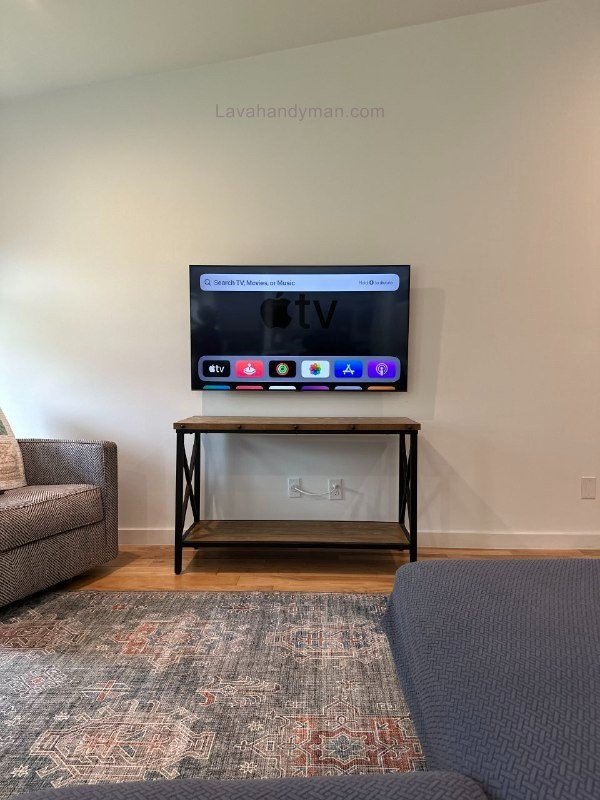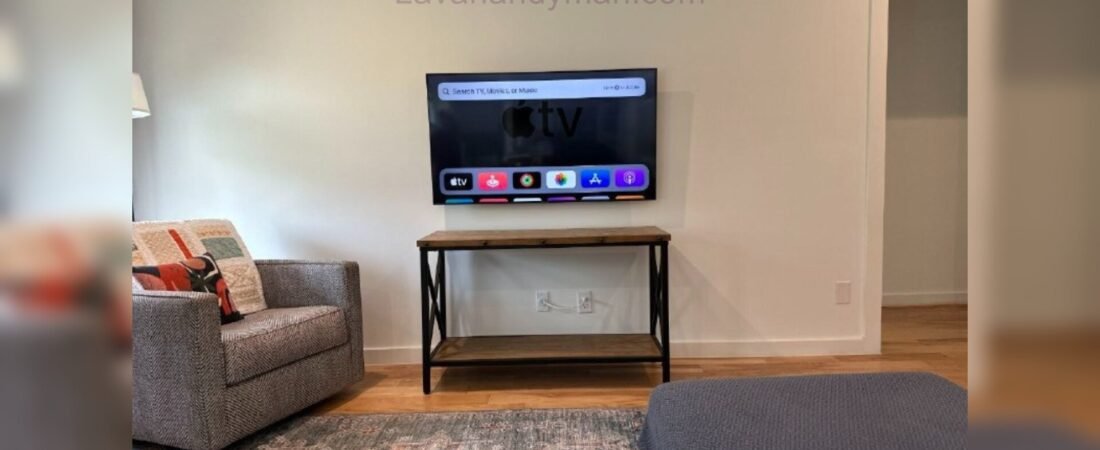
Wall-Mounted TV Installation with Hidden Cables: Important Tips and Steps
Wall-mounted TV installation with hidden cables is one of the best ways to create a modern, clean, and functional look in a home or workplace. Today, many people prefer mounting their TV on the wall instead of placing it on a TV stand. This not only saves space but also creates a more organized appearance. However, if the TV cables remain visible after installation, the final result may not look as clean or attractive.
That is why hiding TV cables on the wall is an important part of a professional TV installation. Power cables, HDMI cables, antenna cables, Ethernet cables, and other connections can be managed and concealed using different methods, depending on the type of wall and the requirements of the project.
In this guide, we will cover the main steps involved in wall-mounted TV installation with hidden cables, including choosing the right bracket, determining the proper mounting height, hiding cables, following safety guidelines, and understanding the factors that affect installation costs.
TV Installation with Hidden Cables
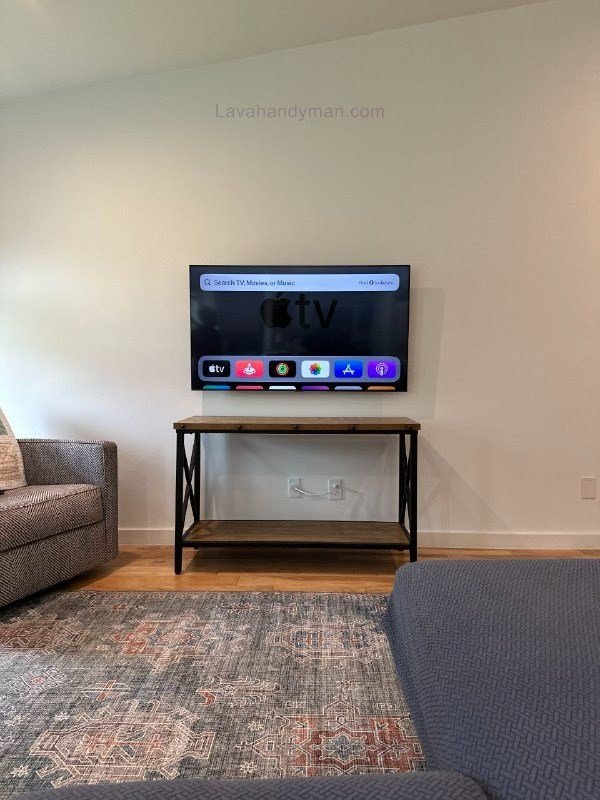
What Are the Benefits of Wall-Mounting a TV with Hidden Cables?
Wall-mounting a TV is not only a decorative choice. It can also provide several practical benefits. When the TV is mounted directly on the wall, the space occupied by a TV stand can be freed up, making the room feel more open and organized.
When the cables are properly concealed, the overall appearance becomes even cleaner and more professional.
TV Installation with Hidden Cables
The main benefits of wall-mounted TV installation with hidden cables include:
- Creating a modern and minimalist appearance
- Keeping the area around the TV organized
- Eliminating visible and hanging cables
- Making better use of available space
- Improving cable management
- Creating a cleaner connection between the TV and the interior design
- Reducing the chance of cables being pulled or accidentally caught
However, cables should not be hidden in a way that makes them completely inaccessible. The cable route should ideally allow access for future maintenance, replacement, or troubleshooting.
What Should You Check Before Installing a TV on the Wall?
Several important factors should be checked before starting the installation. The first is the type and structure of the wall. Installing a TV on a concrete, brick, plaster, or drywall surface may require different installation methods.
TV Installation with Hidden Cables
The weight and size of the TV are also important. The mounting bracket must be capable of supporting the TV and should be compatible with the mounting pattern on the back of the television.
The location of power outlets, antenna connections, Ethernet ports, and other equipment should also be determined before installation. If the cables are going to be hidden inside the wall, the cable route should be planned before the TV is permanently mounted.
Where Is the Best Place to Mount a TV?
Choosing the right location has a significant impact on the viewing experience. The TV should ideally be positioned where direct sunlight or strong artificial light does not create excessive reflections on the screen.
It is also important to avoid placing the TV too close to heat sources. The installation area should provide enough space for access to the back of the TV and any connected equipment.
TV Installation with Hidden Cables
When choosing the mounting location, consider the viewing distance, TV size, seating height, and viewing angle.
What Is the Proper Height for Wall-Mounting a TV?
One of the most common questions about wall-mounted TV installation is how high the TV should be mounted.
The appropriate height depends on the viewing position. In many living rooms, the center of the screen is positioned approximately around the viewer’s eye level when seated. However, the exact height depends on the TV size, furniture height, and room layout.
The ideal height can be different for a bedroom TV because viewers may watch the screen while lying down. Therefore, the mounting height should be adjusted according to the specific environment rather than following one fixed measurement for every room.
Choosing the Right TV Wall Mount
TV Installation with Hidden Cables
The TV wall mount bracket is one of the most important components of the installation. It should be selected according to the TV’s size, weight, and mounting specifications.
TV brackets generally fall into three main categories:
Fixed TV Wall Mount
A fixed wall mount keeps the TV close to the wall and is suitable for locations where there is no need to adjust the viewing angle. It usually provides a simple and minimalist appearance.
Tilting TV Wall Mount
A tilting mount allows the vertical angle of the TV to be adjusted. This can be useful when the TV is mounted slightly higher than the ideal eye level.
Full-Motion TV Wall Mount
TV Installation with Hidden Cables
A full-motion mount allows the TV to be moved and angled in different directions. This type can be useful in rooms where people watch the TV from multiple seating positions.
When selecting a bracket, check the TV’s weight and size as well as its VESA mounting pattern and the specifications of the wall mount.
Which TV Cables Should Be Hidden?
A modern TV usually requires more than just a power cable. Depending on the equipment connected to it, several cables may run from the back of the TV.
TV Installation with Hidden Cables
Common cables include:
- Power cables
- HDMI cables
- Antenna cables
- Ethernet and internet cables
- Gaming console cables
- Soundbar and audio system cables
- Digital receiver cables
- Streaming and media player cables
It is a good idea to consider not only your current equipment but also any devices you may connect to the TV in the future.
Ways to Hide TV Cables on the Wall
The best method for hiding TV cables depends on the wall type, building conditions, budget, and how much modification can be made to the wall.
TV Installation with Hidden Cables
1. In-Wall Cable Installation
One of the cleanest approaches is to create an appropriate internal route for suitable cables so they are hidden from view. This can create a very neat and seamless appearance.
Before carrying out in-wall cable installation, the existing utilities and wiring inside the wall should be considered. Electrical work should also be carried out according to applicable safety requirements.
2. Using a Cable Raceway
If modifying the wall is not practical, a TV cable raceway can be a useful alternative.
Cable raceways are available in different sizes and styles, making it possible to choose an option that blends with the wall and interior design.
TV Installation with Hidden Cables
3. Hiding Cables Behind a TV Panel
In some interior design projects, the TV is mounted on an MDF, wooden, or decorative wall panel. The space behind the panel can be used to organize and conceal cables.
This method can hide the cables while also creating an attractive feature wall for the TV.
4. Using Cable Management Channels
Cable management channels can also be used to organize wires and reduce their visibility. This option can be especially useful in spaces where modifying the wall is not possible.
Steps for Wall-Mounted TV Installation with Hidden Cables
A professional installation should be completed step by step.
TV Installation with Hidden Cables
Step 1: Check the TV and Installation Area
First, check the TV’s weight, dimensions, model, and available connections. Then determine the appropriate location on the wall.
Step 2: Determine the TV Height and Position
The appropriate height should be determined based on the seating position and room layout. It is best to establish the exact TV position before drilling any holes.
Step 3: Choose the Right Wall Mount
The wall mount should be compatible with the TV’s weight, size, and mounting pattern.
Step 4: Plan the Cable Route
TV Installation with Hidden Cables
Before the TV is permanently mounted, determine the routes for power, HDMI, antenna, Ethernet, and other cables.
If the goal is to hide TV cables inside the wall, the cable route should be properly planned and prepared in advance.
Step 5: Install the Wall Mount
Once the drilling points have been determined, the wall mount can be secured using hardware appropriate for the wall material. Keeping the bracket level is extremely important at this stage.
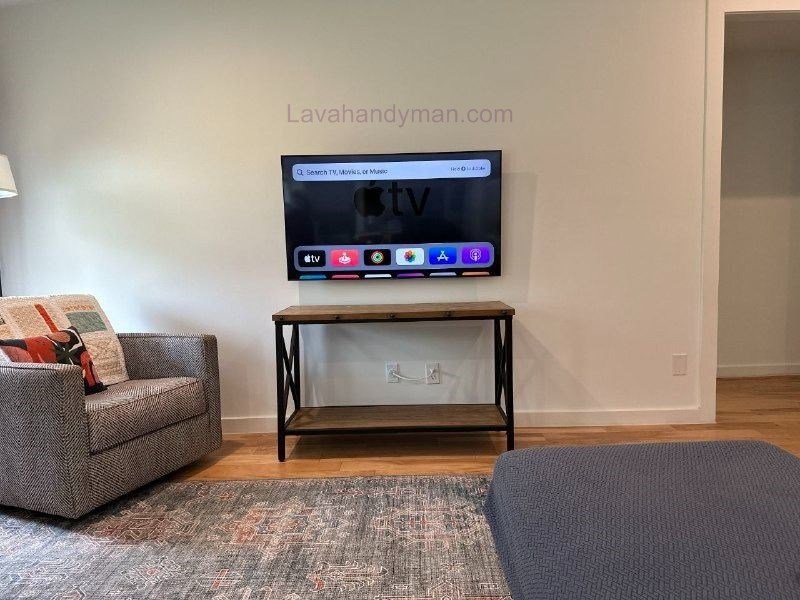
Step 6: Route and Organize the Cables
The cables should be routed through the planned path and any excess length should be properly managed. Cables should not be stretched or placed under excessive pressure.
TV Installation with Hidden Cables
Step 7: Mount the TV on the Bracket
After confirming that the wall mount is secure, attach the TV to the bracket and make sure all locking mechanisms and connections are properly engaged.
Step 8: Connect the Equipment and Perform a Final Test
Finally, test the power, picture, sound, antenna, internet connection, and other equipment. Make sure the TV is level, stable, and securely attached to the wall.
How to Hide an HDMI Cable
HDMI cables are commonly used to connect TVs to gaming consoles, computers, receivers, sound systems, and other devices.
TV Installation with Hidden Cables
If an HDMI cable is going to be routed inside a wall, its required length and specifications should be determined before installation. The cable should also be protected from excessive bending or pressure on the connectors.
If you expect to add new equipment in the future, it is useful to plan the cable route with enough capacity for additional cables.
How to Hide the TV Power Cable
Power cables are different from signal cables such as HDMI and Ethernet. Any electrical wiring installed inside a wall should comply with applicable electrical safety requirements and building regulations.
For this reason, a power cable should not simply be placed inside a wall without appropriate protection. In many installations, positioning a suitable electrical outlet close to the TV can provide a cleaner and safer result.
TV Installation with Hidden Cables
Wall-Mounting a TV on Drywall
Wall-mounting a TV on drywall requires special attention to the wall’s structure. Unlike concrete or brick walls, drywall alone may not provide sufficient support for heavier equipment.
Before installation, the internal framing, studs, and suitable mounting points should be identified. The mounting hardware must be appropriate for the wall structure.
If hidden cable installation is also required, the cable route should be planned before the wall is fully finished.
TV Installation with Hidden Cables
Installing a TV on Brick or Concrete Walls
The installation process for brick and concrete walls differs from drywall installation. The drilling tools and mounting hardware should be selected according to the wall material and the TV’s weight.
Before drilling, the possibility of electrical wires, plumbing, or other utilities running through the intended area should also be considered.
Important Safety Tips for TV Installation and Hidden Wiring
Safety is one of the most important aspects of wall-mounted TV installation. A professional installation should not only look good but should also provide adequate stability and safety.
TV Installation with Hidden Cables
Keep the following points in mind:
- Choose a wall mount rated for the TV’s size and weight.
- Use mounting hardware appropriate for the wall material.
- Check for electrical wiring and other utilities before drilling.
- Do not stretch or put excessive pressure on cables.
- Do not install electrical wiring inside the wall improperly.
- Plan suitable routes for different types of cables.
- Maintain reasonable access for future cable replacement and maintenance.
- Check the TV’s stability and level after installation.
Common Mistakes When Wall-Mounting a TV
Several mistakes can affect both the appearance and performance of a wall-mounted TV.
TV Installation with Hidden Cables
One of the most common mistakes is choosing an unsuitable mounting height. Installing the TV too high or too low can make viewing less comfortable.
Another common mistake is choosing a wall mount without considering the TV’s weight and mounting specifications. Using unsuitable hardware for the wall material can also reduce the stability of the installation.
Poor cable planning is another issue. If the cable routes are not considered before installation, adding a new cable later may require modifying the wall or removing part of the installation.
How Much Does Wall-Mounted TV Installation with Hidden Cables Cost?
The cost of wall-mounted TV installation with hidden cables depends on the specific requirements of each project, so there is no single fixed price for every installation.
Factors that can affect the final cost include:
TV Installation with Hidden Cables
- TV size and weight
- Type of wall mount
- Wall material
- Length of the cable route
- Number of cables
- Type and quality of cables
- Whether wall cutting or in-wall routing is required
- Whether an electrical outlet needs to be installed or relocated
- Presence of a decorative TV panel
- Complexity of the installation
For this reason, the installation area should ideally be assessed before an accurate estimate is provided.
Is Wall-Mounting a TV Better Than Using a TV Stand?
TV Installation with Hidden Cables
The choice between wall-mounting a TV and placing it on a stand depends on the room, design preferences, and practical requirements.
Wall-mounting can save floor space and create a cleaner appearance. When combined with hidden TV cable management, it can provide a particularly neat and modern look.
A TV stand, on the other hand, makes it easier to move the TV and generally requires less modification to the wall.
If your goal is to create a modern and minimalist space, wall mounting combined with proper cable management is an option worth considering.
How Can You Hide TV Cables Without Major Wall Damage?
If cutting or modifying the wall is not practical, alternatives such as cable raceways, cable management channels, or decorative TV panels can be used.
The best solution depends on the wall and the overall interior design. In some situations, a slim raceway that matches the wall color can significantly reduce cable visibility without requiring extensive wall modifications.
Why Hire a Professional for TV Installation with Hidden Cables?
Installing a TV on the wall involves more than simply drilling holes and attaching a bracket. The TV’s weight, wall material, mounting hardware, installation height, and cable management all affect the quality of the final result.
When cables need to be hidden inside the wall, planning the cable routes becomes even more important. Poor installation can make future access difficult and may create risks if existing utilities inside the wall are not properly considered.
For this reason, hiring an experienced installer can help ensure that the TV is mounted accurately, securely, and with a clean cable-management solution.
Frequently Asked Questions About Wall-Mounted TV Installation with Hidden Cables
Can TV cables be hidden inside the wall?
Depending on the cable type, wall structure, and installation conditions, suitable cables may be routed through an internal wall pathway. Electrical wiring should always be installed according to applicable safety requirements.
What is the best height for mounting a TV?
The ideal height depends on the TV size, seating position, and room layout. The position of the center of the screen relative to the viewer’s eye level when seated is an important factor.
How should a TV be mounted on drywall?
The internal framing and suitable mounting points should first be identified. The wall mount and mounting hardware should then be selected according to the structure of the drywall system.
Can TV cables be hidden without cutting into the wall?
Yes. Cable raceways, cable management channels, and decorative TV panels can be used to reduce cable visibility without extensive wall cutting.
Can an HDMI cable be installed inside a wall?
Depending on the cable and installation method, an HDMI cable can be routed through an appropriate internal pathway. However, excessive bending and pressure should be avoided.
How much does wall-mounted TV installation with hidden cables cost?
The cost depends on factors such as TV size, wall type, mounting bracket, number of cables, and the chosen cable-hiding method. An accurate price can usually be determined after assessing the installation requirements.
Conclusion
Wall-mounted TV installation with hidden cables is an effective way to create a clean, modern, and organized space. To achieve a professional result, factors such as the installation location, TV height, wall material, TV weight, mounting bracket, and cable routes should be considered before the installation begins.
There are several ways to hide TV cables on the wall, including in-wall cable routing, cable raceways, cable management channels, and decorative TV panels. The right method depends on the building conditions, wall structure, and interior design.
Ultimately, a professional TV installation should provide more than an attractive appearance. It should also offer stability, safety, proper cable management, and reasonable access for future maintenance. Careful planning and the use of suitable equipment can help ensure that your TV is securely mounted on the wall while unnecessary cables remain out of sight.
📞 Need Help?
Let us take care of the hard work while you sit back and relax.
📍 Serving: Austin, Round Rock, Cedar Park & more
📱 Call or Text: (737) 420-6992
🌐 Visit: https://lavahandyman.com