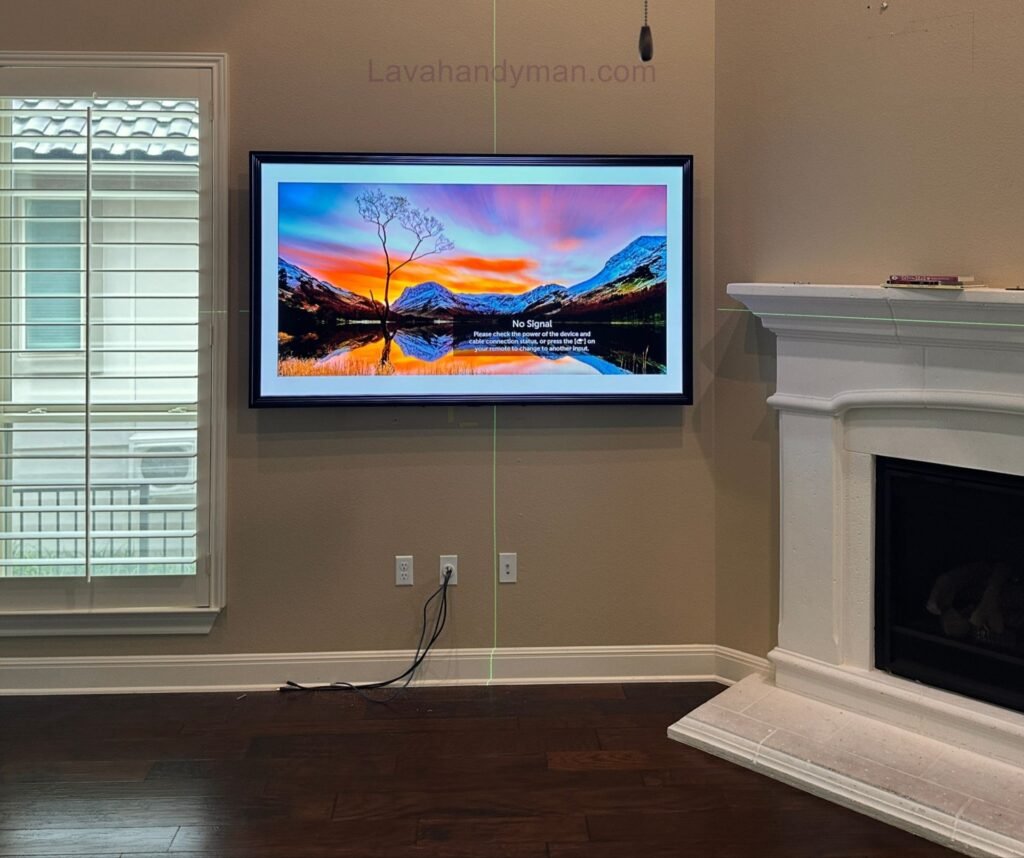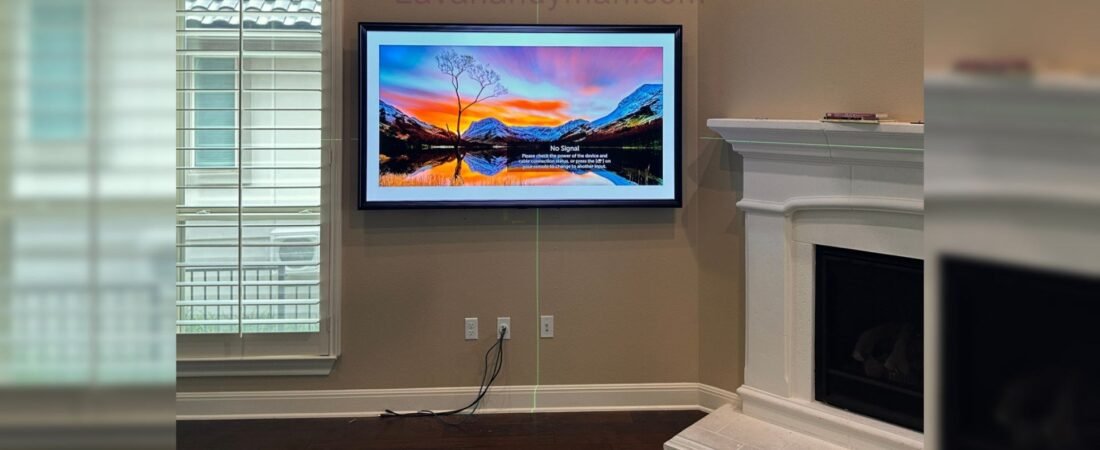
Step-by-Step Guide to Mounting a TV on Drywall and Plasterboard Without Damaging the Wall
Introduction
Mounting a television on the wall is one of the most effective ways to create a modern entertainment space without sacrificing valuable floor space. A properly positioned TV can improve viewing comfort, reduce clutter, and give your living room or bedroom a cleaner appearance. However, learning how to mount a TV on drywall or plasterboard requires more than choosing a bracket and drilling a few holes.
Drywall and plasterboard are typically attached to a supporting framework made of timber or metal. Unlike solid brick or concrete, these panels cannot automatically be treated as a strong fixing surface for a heavy television. The wrong mounting method can cause cracks, loose brackets, damaged plasterboard, or even a falling TV.
The good news is that mounting a TV on drywall without damaging the wall is achievable when you identify the wall structure, select compatible fixings, and follow the correct installation procedure. Although small fixing holes may still be necessary, careful preparation helps prevent unnecessary damage and expensive repairs.
Step-by-Step Guide to Mounting a TV on Drywall
In this guide, you will learn how to mount a TV on plasterboard step by step, choose the right wall bracket, locate structural supports, manage cables, and avoid common installation mistakes. Whether you are installing a compact bedroom television or a large living room screen, these practical recommendations will help you plan a safer and more professional installation.
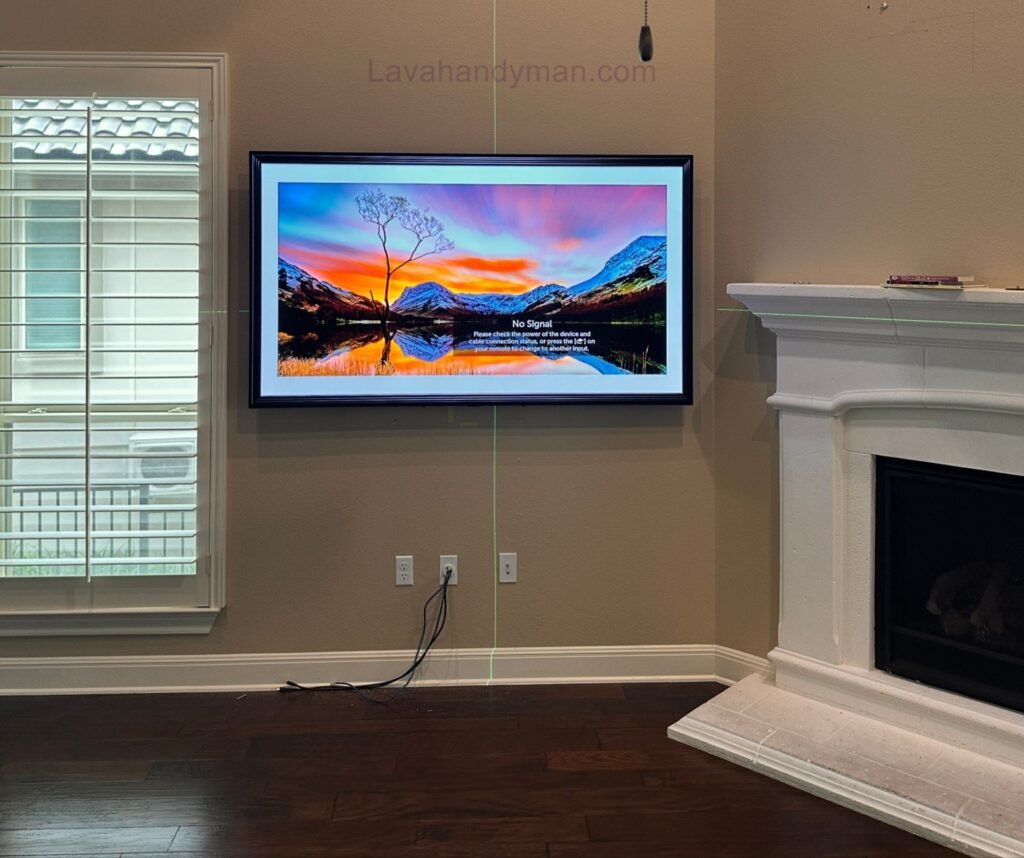
1. Understand Your Drywall and Plasterboard Construction
Before selecting a TV wall mount, determine how your wall has been constructed. The visible surface does not always reveal what lies behind it, and the supporting structure determines which mounting methods are appropriate.
Step-by-Step Guide to Mounting a TV on Drywall
Drywall attached to timber studs
Timber-framed walls consist of plasterboard panels secured to vertical wooden supports. These studs provide structural support and are commonly used as mounting points for television brackets.
For many installations, fixing the bracket to suitable timber studs is the preferred method. The screws must be designed for the application and penetrate sufficiently into sound structural timber.
Plasterboard attached to metal studs
Metal framing is common in some modern homes, apartments, and commercial buildings. These walls require mounting hardware compatible with the particular metal-stud system.
A fixing suitable for timber cannot automatically be used in metal framing. Depending on the wall construction and TV weight, an approved mounting plate, reinforcement, or specialist fixing system may be necessary.
Step-by-Step Guide to Mounting a TV on Drywall
Plasterboard installed over masonry
Some plasterboard walls are attached to brick or concrete using adhesive or a supporting framework. In these cases, the fixing method must account for the plasterboard thickness and any cavity between the board and the masonry.
A suitable masonry fixing may need to pass through the board and engage with the solid material behind it. The installation must follow the fixing manufacturer’s specifications.
Important: Never assume that a wall is suitable for TV mounting simply because it feels firm when tapped. Identify the construction before drilling or selecting fasteners.
2. Choose the Right TV Wall Mount
The best TV wall mount depends on your viewing preferences, screen dimensions, and the structure supporting the television.
Step-by-Step Guide to Mounting a TV on Drywall
Fixed TV wall mount
A fixed bracket holds the TV close to the wall without providing significant movement. It is suitable for rooms where the screen faces the main seating area.
Its main advantages are a slim appearance, a relatively straightforward installation, and minimal movement during everyday use. Because the television remains close to the wall, a fixed bracket also generally creates less leverage than an extended-arm design.
Tilting TV wall mount
A tilting bracket allows the screen to angle up or down. This can be useful when the TV is positioned above the usual viewing height, such as in some bedrooms.
The bracket still needs appropriate structural support, and the permitted tilt range should follow the manufacturer’s instructions.
Step-by-Step Guide to Mounting a TV on Drywall
Full-motion TV wall mount
A full-motion bracket allows the television to extend away from the wall and swivel in different directions. It is useful in open-plan rooms or spaces where viewers sit in several locations.
However, extending the arm increases the leverage acting on the mounting points. This places additional demands on the bracket, fasteners, and supporting wall structure.
For this reason, a full-motion TV wall mount requires particularly careful attention to installation specifications.
Check compatibility before purchasing
Before buying a bracket, verify the following:
- TV weight: Check the television’s weight without its stand.
- VESA pattern: Confirm the spacing between the mounting holes on the back of the TV.
- Screen dimensions: Make sure the bracket supports the television’s size.
- Wall compatibility: Confirm that the mounting system is approved for your wall construction.
- Required movement: Decide whether a fixed, tilting, or full-motion design meets your needs.
Step-by-Step Guide to Mounting a TV on Drywall
A bracket’s advertised weight capacity does not guarantee that the plasterboard or the complete mounting arrangement can safely support the television.
3. Prepare the Tools and Materials
Gathering the correct tools before beginning the project helps reduce mistakes and prevents unnecessary drilling.
Depending on your wall and mounting system, you may need:
- A compatible TV wall bracket.
- A stud finder suitable for the wall framing.
- A tape measure.
- A spirit level or laser level.
- A pencil or removable masking tape.
- A drill and appropriate drill bits.
- A screwdriver or suitable socket wrench.
- Approved structural screws or specialist wall anchors.
- A suitable wall scanner for detecting concealed services.
- Safety glasses.
- A second person to assist with lifting the television.
Step-by-Step Guide to Mounting a TV on Drywall
You may also need cable trunking, suitable wall filler, and matching paint for minor repairs after installation.
Check the manufacturer’s instructions for the required fastener size, pilot-hole diameter, drilling depth, and tightening procedure. These specifications can differ between brackets and wall systems.
Do not substitute random screws or leftover wall plugs simply because they appear to fit. The fasteners must be suitable for the actual supporting material and the intended load.
4. Choose the Best Position for Your Television
The correct mounting position affects comfort, appearance, cable access, and installation safety.
Start by identifying the main viewing position. In most living rooms, the centre of the screen should be close to the seated viewer’s eye level. The ideal height depends on the television’s dimensions, the seating arrangement, and personal preference.
Step-by-Step Guide to Mounting a TV on Drywall
Before drilling, use removable tape to mark the approximate screen outline. Sit in your usual viewing position and check whether the proposed height feels comfortable.
Consider these additional factors:
- Lighting: Avoid positions where sunlight creates strong reflections on the screen.
- Furniture: Make sure shelves, cabinets, and decorations do not obstruct the display.
- Electrical outlets: Check whether the power cable and other connections can reach safely.
- Ventilation: Leave the clearance recommended by the TV manufacturer.
- Movement: If using an articulating bracket, ensure the screen can swivel without striking nearby objects.
Cable planning is especially important when the television will be mounted above a fireplace, cabinet, or entertainment unit. Confirm the cable route before drilling to avoid creating unnecessary holes later.
Step-by-Step Guide to Mounting a TV on Drywall
5. Locate the Wall Studs Accurately
Finding the structural supports is one of the most important steps when mounting a TV on drywall.
A stud finder is a useful starting point because it can help identify timber framing or metal supports behind the board.
Calibrate the device according to its instructions and move it slowly across the intended mounting area. Mark the indicated stud positions and repeat the scan to check the readings.
Some buildings use stud spacing of approximately 400 mm or 600 mm, but actual spacing varies. Never rely on standard measurements without confirming the locations.
Electronic stud finders can also produce false readings due to insulation, pipes, cables, metal components, or unusual wall construction. If the results are inconsistent, investigate further before drilling.
Step-by-Step Guide to Mounting a TV on Drywall
Once you have identified the supports, determine whether they are timber or metal. This distinction affects the required fixings and mounting method.
If you cannot confidently identify the structure, consult a qualified installer rather than guessing.
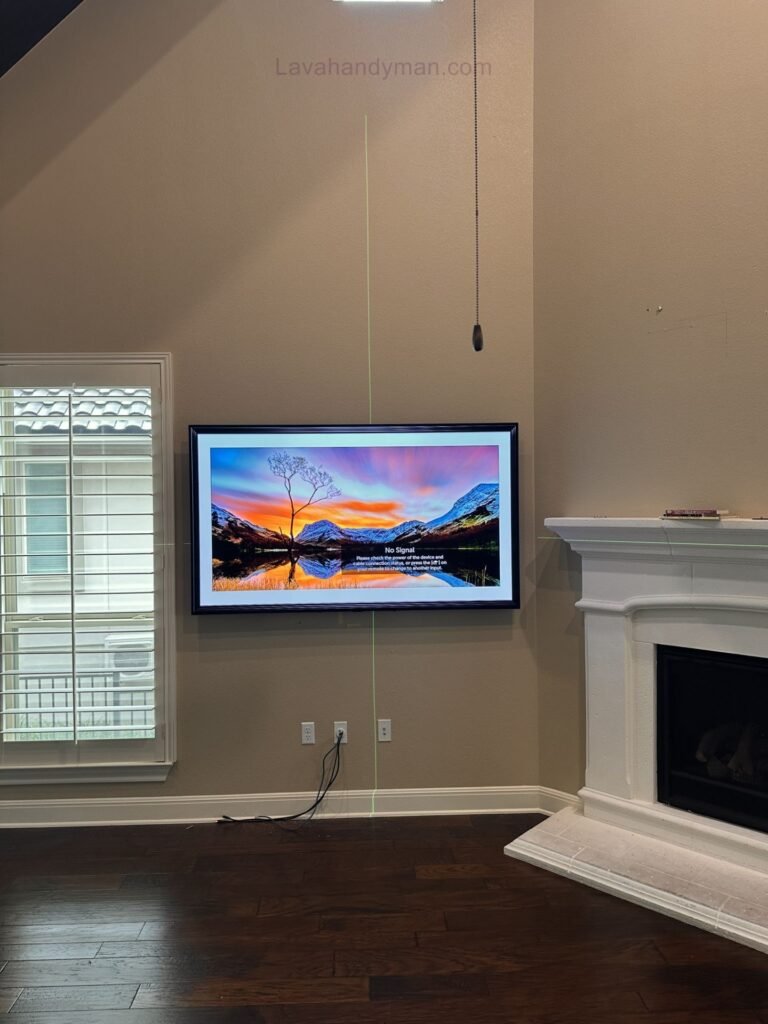
6. Mark the Mounting Holes and Check for Hidden Services
Hold the wall plate against the wall at the selected height. Use a spirit level to make sure the bracket is horizontal.
Step-by-Step Guide to Mounting a TV on Drywall
Mark the approved fixing points with a pencil, checking that they align with the intended structural supports or approved mounting system.
Before drilling, verify the measurements again. Confirm that the bracket is centred appropriately, the screen will be positioned correctly, and the cable route remains practical.
Next, inspect the drilling area for concealed electrical wiring, plumbing, and other services. Use suitable detection equipment and follow its instructions.
Avoid drilling if you cannot establish that the proposed holes are safe. Electrical cables and water pipes may be concealed in walls, and damaging them can create serious hazards.
A little additional preparation at this stage can prevent expensive repairs and help keep the installation process controlled.
Step-by-Step Guide to Mounting a TV on Drywall
7. Drill the Holes Without Damaging the Plasterboard
Once the fixing points have been confirmed, select the drill bit specified for the chosen fasteners.
For timber studs, the pilot-hole diameter and depth must follow the screw manufacturer’s instructions. An incorrectly sized hole can compromise the fixing or make installation difficult.
Keep the drill aligned with the intended fixing direction and avoid excessive pressure on the board. If the surface begins to crumble or the drilling conditions differ from what you expected, stop and reassess the wall construction.
For plasterboard installed over masonry, use a fixing system designed for the actual wall assembly. Account for the board thickness and any gap between the plasterboard and the solid wall.
Do not use ordinary plastic plugs intended for solid masonry in hollow plasterboard unless the product is explicitly approved for that application.
To minimize damage, drill only the required holes and avoid repeatedly enlarging a hole to accommodate a poorly fitting fastener.
Step-by-Step Guide to Mounting a TV on Drywall
8. Attach the TV Wall Bracket Securely
The correct attachment method depends on the supporting structure behind the plasterboard.
Mounting into timber studs
Position the wall plate so its designated fixing points align with the identified timber studs.
Install the specified structural screws or bolts, using washers if required. Fastener length must account for the plasterboard, bracket thickness, any spacers, and the required penetration into sound timber.
Tighten the fasteners according to the manufacturer’s instructions. Overtightening can damage the plasterboard, strip the screw threads, or compromise the supporting material.
Check that the bracket sits correctly against the wall and that the fixings show no visible signs of movement.
Step-by-Step Guide to Mounting a TV on Drywall
Mounting into metal studs
Metal-stud walls require fasteners and mounting systems approved for the particular framing.
Depending on the metal thickness, wall construction, and TV weight, additional reinforcement or a plate spanning multiple studs may be necessary.
Do not assume that a generic screw or ordinary plasterboard anchor can support a heavy television, especially when using a full-motion bracket.
If the manufacturer’s instructions do not clearly confirm that the mounting system is suitable for your wall, obtain professional advice.
Using specialist plasterboard anchors
Step-by-Step Guide to Mounting a TV on Drywall
Some hollow-wall anchors are designed for specific plasterboard applications. Their suitability depends on the board thickness, anchor design, bracket type, TV weight, and installation conditions.
A stated anchor load rating should not be treated as the safe capacity of the entire TV installation. Extended brackets can introduce additional forces that are not captured by a simple weight comparison.
For heavy televisions or articulating mounts, appropriate structural support is generally preferable to relying exclusively on the plasterboard.
9. Attach the Mounting Arms to the Television
After securing the wall plate, prepare the television for installation.
Place the TV on a clean, soft, stable surface only if the manufacturer permits it. Protect the screen from scratches and concentrated pressure.
Step-by-Step Guide to Mounting a TV on Drywall
Locate the VESA mounting holes on the back of the television and attach the mounting arms using the specified screws, washers, and spacers.
Check screw length carefully. Screws that are too short may not engage adequately, while screws that are too long can damage internal components.
Tighten the screws according to the TV and bracket instructions. Never force a screw that does not fit properly.
Before lifting the television, check that the mounting arms are correctly positioned and all required safety components are ready.
10. Lift and Secure the TV on the Wall
For medium and large televisions, use a second person to help lift and position the screen.
Step-by-Step Guide to Mounting a TV on Drywall
Clear the area beneath the bracket and follow the handling instructions provided by the TV manufacturer. Avoid applying pressure directly to the screen.
Align the mounting arms with the wall plate and lower the television into position according to the bracket instructions.
Engage all required locking screws, clips, or safety mechanisms before releasing the TV.
Once installed, check that the television is level and properly seated. Inspect the surrounding plasterboard for cracks, crushing, bulging, or other visible damage.
Do not forcefully pull or shake the television to test the mounting system. Follow the manufacturer’s verification procedure instead.
If you notice movement, loose fixings, unusual noises, or damage around the mounting points, stop using the installation and arrange a professional inspection.
Step-by-Step Guide to Mounting a TV on Drywall
11. Hide the TV Cables for a Professional Finish
Cable management can make a wall-mounted television look significantly neater.
Surface-mounted cable trunking is often the simplest option because it hides wires without requiring the wall to be opened. Choose a cover that accommodates the required cables and does not interfere with the bracket’s movement.
For a more discreet finish, in-wall cable management may be possible using approved products and installation methods. However, concealed services, insulation, fire barriers, and local electrical regulations must be considered.
Never run an ordinary mains power cord through a wall cavity unless the installation method is specifically permitted. Where new mains wiring or an in-wall outlet is needed, consult a qualified electrician as appropriate.
Plan the cable route before mounting the television to avoid unnecessary holes and make future maintenance easier.
Step-by-Step Guide to Mounting a TV on Drywall
12. How to Mount a TV on Drywall Without Studs
Sometimes, the preferred TV position does not align with the available studs. There are several possible solutions, but the appropriate choice depends on the wall structure and the complete mounting system.
Use a mounting plate across multiple studs
A purpose-designed mounting plate can span several structural supports and allow the television to be positioned more centrally.
The plate must be suitable for the intended load and attached using approved fasteners.
Install structural reinforcement
In some situations, structural backing can be installed behind the plasterboard. This may involve opening a section of the wall, installing suitable reinforcement, and repairing the surface.
Step-by-Step Guide to Mounting a TV on Drywall
Although this approach requires additional work, it can provide a dependable mounting point when properly designed and installed.
Consider specialist hollow-wall systems
Certain mounting systems are specifically designed for approved plasterboard applications without direct attachment to timber studs.
Only use such systems when the manufacturer confirms their suitability for the actual wall, television, and bracket. Do not assume that an anchor is appropriate simply because its advertised weight rating exceeds the TV’s weight.
For large screens, heavy televisions, and full-motion brackets, professional assessment is advisable when the structural capacity cannot be confirmed.
Step-by-Step Guide to Mounting a TV on Drywall
13. Common TV Wall Mounting Mistakes to Avoid
Several installation mistakes can compromise the wall, bracket, or television.
- Using unsuitable wall anchors: Masonry plugs are not automatically appropriate for hollow plasterboard.
- Ignoring the framing: The mounting method must account for the structural supports behind the wall.
- Choosing an incompatible bracket: Check the TV weight, VESA pattern, bracket specifications, and wall compatibility.
- Drilling without checking for services: Concealed electrical wiring and plumbing must be considered before making holes.
- Overtightening fasteners: Excessive tightening can damage the board or compromise the fixing.
- Mounting the TV too high: Check viewing comfort before drilling.
- Lifting a large TV alone: Use assistance to reduce the risk of injury and accidental damage.
- Ignoring wall cracks: Stop using an installation that shows signs of movement or failure.
Correcting these mistakes before installation is much easier than repairing a damaged wall or replacing a broken television.
Step-by-Step Guide to Mounting a TV on Drywall
14. How to Prevent Wall Damage During Installation
To minimize damage to drywall and plasterboard, focus on accurate preparation rather than rushing through the work.
Measure the mounting position carefully and use removable tape to organize your marks. Confirm the stud locations and selected fixing points before drilling.
Choose the correct drill bit and avoid unnecessary holes. Protect the surrounding surface from tools, sharp bracket edges, and accidental impacts.
Inspect the wall for moisture damage, loose plaster, or existing cracks before beginning. These problems should be addressed before mounting the TV.
If you need to remove the bracket later, expect the fixing holes to require filling and repainting. Small holes can often be repaired with suitable filler, while larger areas of damage may require plasterboard repair.
Remember that avoiding unnecessary damage is realistic, but a screwed wall mount cannot normally be removed without leaving any marks.
Step-by-Step Guide to Mounting a TV on Drywall
15. When Should You Hire a Professional Installer?
Professional installation may be the best option when the wall construction is uncertain or the mounting arrangement is complex.
Consider hiring a qualified installer if your wall contains metal studs, damaged plasterboard, unusual framing, or concealed services near the proposed drilling area.
Professional assistance is also advisable when installing a particularly heavy television, using an extended full-motion bracket, or adding structural reinforcement.
An experienced installer can assess the wall, identify suitable fixing points, and determine whether additional support is necessary.
If you cannot confirm that the complete mounting system is appropriate for the TV and wall, do not proceed on assumptions alone.
Step-by-Step Guide to Mounting a TV on Drywall
Frequently Asked Questions
Can you mount a TV directly on drywall without studs?
Some specialist hollow-wall mounting systems may be suitable for particular installations. However, the wall thickness, anchor specifications, TV weight, and bracket design must all be considered. Suitable structural support is generally the preferred option.
What is the best TV wall mount for plasterboard?
A fixed bracket is often practical because it keeps the television close to the wall. The best choice still depends on the television, viewing position, wall construction, and approved fixing method.
Can plasterboard support a 65-inch TV?
Some plasterboard walls can accommodate a 65-inch television when the supporting structure and mounting system are appropriate. Screen size alone does not determine whether the installation is safe.
Step-by-Step Guide to Mounting a TV on Drywall
Are drywall anchors strong enough for a TV?
Certain specialist anchors are designed for specific hollow-wall applications, but not every anchor is suitable for TV mounting. Check the manufacturer’s instructions and consider the additional forces created by tilting or full-motion brackets.
How do you find studs behind plasterboard?
Use a suitable stud finder, scan the mounting area carefully, and verify the results. If the readings are inconsistent or the wall construction is unclear, arrange a more thorough inspection before drilling.
Can you hide TV cables inside drywall?
In-wall cable management may be possible with approved products and installation methods. Mains power wiring must comply with local regulations, and a qualified electrician may be required.
What should you do if the wall cracks after installation?
Stop using the installation if the crack appears around a fixing point or the bracket moves. Do not simply cover the crack with filler. Have the wall and mounting system inspected before reinstalling the television.
Step-by-Step Guide to Mounting a TV on Drywall
Conclusion
Mounting a TV on drywall or plasterboard can transform a room while saving space and improving its appearance. However, a successful installation depends on understanding the wall construction, choosing a compatible bracket, and using the correct fixing system.
By locating the structural supports, measuring the mounting position, checking for concealed services, and following the manufacturer’s instructions, you can minimize unnecessary damage and achieve a professional-looking result.
Although some specialist hollow-wall systems may be suitable for particular installations, structural support should never be overlooked. When the wall’s capacity or fixing compatibility is uncertain, consult a qualified installer.
📞 Need Help?
Let us take care of the hard work while you sit back and relax.
📍 Serving: Austin, Round Rock, Cedar Park & more
📱 Call or Text: (737) 420-6992
🌐 Visit: https://lavahandyman.com