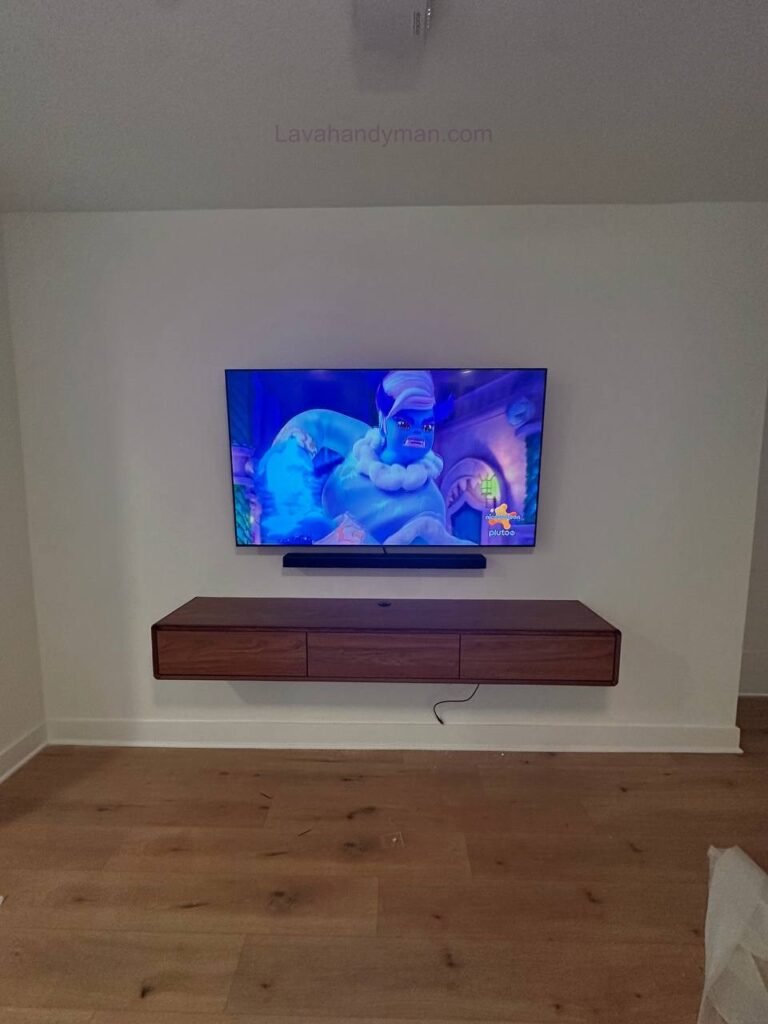
Low TV Wall Mounting: A Complete Guide to Proper Height, Installation Standards, and Interior Design
Introduction
Low TV wall mounting has become an increasingly popular choice in modern homes, offering a combination of viewing comfort, practical functionality, and stylish interior design. Instead of installing a television high on the wall, homeowners are choosing lower mounting positions that create a more natural connection between the screen, seating area, and surrounding furniture.
However, installing a television at a low height requires more than simply choosing a convenient position. The correct TV mounting height depends on several factors, including screen size, seated eye level, viewing distance, wall construction, and the type of wall mount being used. Incorrect positioning can affect viewing comfort, create an unbalanced appearance, and make everyday television use less enjoyable.
Whether you are planning a new entertainment area or updating an existing living room, understanding the principles of low TV wall mounting can help you achieve a safe and attractive installation.
This guide covers everything you need to know about mounting a TV low on the wall, including ideal mounting height, installation standards, suitable wall brackets, cable management, common installation mistakes, and modern interior design ideas. By following these recommendations, you can create an entertainment space that combines functionality, comfort, and visual appeal.

1. What Is Low TV Wall Mounting?
Low TV wall mounting is the process of installing a television closer to the floor than traditional high-mounted television installations. The screen is generally positioned according to the seated eye level of viewers, creating a comfortable viewing angle while maintaining a balanced relationship with nearby furniture.
This mounting style is particularly suitable for modern living rooms, minimalist interiors, bedrooms, and home entertainment spaces. It works especially well with low-profile sofas, floating entertainment cabinets, and contemporary furniture arrangements.
Unlike installations where televisions are positioned close to the ceiling, low-mounted screens can become an integrated part of the room’s overall design. The television appears visually connected to the entertainment unit rather than separated from it.
However, low TV wall mounting does not mean installing the screen as close to the floor as possible. The objective is to find a suitable height that supports natural viewing posture and complements the room’s layout.
Low TV Wall Mounting
The ideal position should always be determined by considering the actual seating arrangement, television dimensions, and viewing habits of the people using the space.
2. Why Is Low TV Wall Mounting Becoming Popular?
Modern interior design increasingly focuses on comfortable furniture arrangements, clean visual lines, and functional use of available space. Low TV wall mounting supports these principles by creating a more balanced entertainment area.
Improved Viewing Comfort
One of the main advantages of installing a television at an appropriate lower height is improved viewing comfort. When the screen is positioned near seated eye level, viewers can generally watch television without constantly tilting their heads upward.
Low TV Wall Mounting
An excessively high television installation may encourage an uncomfortable viewing posture, particularly during long periods of use.
A properly positioned low-mounted TV can help maintain a more natural head and neck position.
Better Interior Design Balance
Television placement affects the visual proportions of an entire wall. When a television is mounted too high, it may appear disconnected from the entertainment cabinet and surrounding furniture.
Low TV wall mounting can create a more harmonious arrangement by bringing the screen closer to the furniture below it.
This approach is particularly effective in contemporary homes where simplicity and balanced proportions are important design features.
Low TV Wall Mounting
A Cleaner and More Organized Entertainment Area
Low-mounted televisions work well with floating cabinets, concealed storage, decorative wall panels, and integrated cable management systems.
These elements help reduce visual clutter and create a more organized entertainment space.
Suitable for Modern Furniture
Many contemporary sofas, media consoles, and entertainment units are designed with relatively low profiles. Positioning the television appropriately can help connect these elements and create a consistent interior design.
Low TV Wall Mounting
3. What Is the Ideal Height for Low TV Wall Mounting?
Choosing the correct TV mounting height is one of the most important parts of the installation process. There is no single measurement suitable for every television or room because viewing conditions vary between households.
For most conventional living room arrangements, positioning the center of the television screen near the seated eye level of the primary viewers is a useful starting point.
In many homes, this may be approximately 100 to 110 centimeters above the floor. However, this is a general reference rather than a mandatory installation standard.
Low TV Wall Mounting
Measure Your Seated Eye Level
The most reliable way to determine the correct TV mounting height is to measure eye level while sitting in the usual viewing position.
Ask someone to sit comfortably on the sofa with their back supported and head in a natural position. Measure the distance between the floor and their eyes.
This measurement provides a practical reference for positioning the center of the television.
If several people regularly use the room, consider the average viewing position rather than designing the installation around one person’s height.
Low TV Wall Mounting
Consider the Television Screen Dimensions
Screen size directly affects the position of the television’s upper and lower edges.
A larger television extends farther vertically than a smaller screen. Therefore, even when two televisions have the same center height, their bottom edges may be positioned differently.
Before installing the wall bracket, measure the actual height and width of the television.
Low TV Wall Mounting
Calculate the Bottom Edge of the TV
After choosing the desired screen center height, calculate where the bottom edge should be positioned.
Use this formula:
TV Bottom Edge Height = Screen Center Height − Half of the Screen Height
For example, if the desired center height is 105 centimeters and the screen is 70 centimeters tall, the bottom edge will be approximately 70 centimeters above the floor.
This calculation also helps determine the clearance between the television and the entertainment cabinet.
Low TV Wall Mounting
Consider Your Sofa Height
The height of the sofa can significantly influence the appropriate mounting position.
Low-profile sofas generally place viewers closer to the floor, while taller sofas and chairs may increase seated eye level.
For this reason, choosing a TV mounting height before selecting the furniture can sometimes lead to an uncomfortable viewing arrangement.
Always evaluate the television position in relation to the actual seating area.
4. Recommended Low TV Mounting Heights for Different Rooms
Low TV Wall Mounting
The best mounting position depends on how each room is used. Living rooms, bedrooms, and dedicated home theaters have different seating arrangements and viewing requirements.
Low TV Wall Mounting in the Living Room
The living room is one of the most common places for low TV wall mounting.
In a conventional living room, the television should be positioned according to the seated eye level of people using the main sofa.
A screen center around 100 to 110 centimeters from the floor can be a useful starting point, although the actual measurement should be adjusted to the furniture and television dimensions.
Low TV Wall Mounting
The television should also maintain a balanced distance from the entertainment cabinet. Leaving an appropriate gap can prevent the installation from looking crowded while keeping the screen visually connected to the furniture.
Low TV Wall Mounting in the Bedroom
Bedroom television installations require additional planning because viewers often watch television while reclining or sitting against pillows.
The ideal height may therefore differ from a standard living room installation.
Consider the height of the mattress, bed frame, pillows, and the viewer’s normal head position.
Low TV Wall Mounting
A tilting wall mount can be useful when the television needs to be positioned slightly higher than seated eye level to provide a comfortable viewing angle from the bed.
Low TV Wall Mounting in a Home Theater
Home theater installations usually have more controlled seating arrangements.
The television or display should be positioned according to the eye level of viewers in the primary seating row.
Screen size, viewing distance, seating height, and the vertical viewing angle should all be considered together.
The objective is to create an immersive viewing experience without forcing viewers to maintain an uncomfortable head position.
Low TV Wall Mounting
Low TV Wall Mounting in Small Apartments
Low TV wall mounting can be particularly effective in small apartments where space is limited.
A television positioned above a compact media cabinet or floating shelf can create a visually organized entertainment area.
However, ensure that the screen does not interfere with nearby furniture, walkways, electrical outlets, or storage areas.
5. Choosing the Best TV Wall Mount Bracket
Selecting the correct wall bracket is essential for a secure and successful low TV wall mounting installation.
Low TV Wall Mounting
Different types of television brackets provide different levels of movement and positioning flexibility.
Fixed TV Wall Mounts
Fixed TV wall mounts hold the television close to the wall without allowing significant movement.
They are ideal for installations where the viewing position is directly in front of the screen and the mounting height has already been carefully selected.
Their compact design makes them suitable for minimalist entertainment walls and contemporary living rooms.
Tilting TV Wall Mounts
Tilting brackets allow the television to angle slightly upward or downward.
They can improve viewing angles when the television must be positioned above the preferred eye level.
They may also help reduce reflections from windows or lighting fixtures, depending on the room layout.
However, a tilting bracket should not be used as a substitute for choosing an appropriate mounting height.
Full-Motion TV Wall Mounts
Full-motion wall mounts allow the television to extend away from the wall, swivel from side to side, and tilt vertically.
They are useful when viewers watch television from different positions within the room.
For example, a full-motion bracket can help direct the screen toward a dining area or an adjacent seating space.
Because these brackets create additional leverage when extended, they must be attached securely using suitable mounting hardware.
Understanding VESA Compatibility
Before purchasing a TV wall bracket, check the television’s VESA mounting pattern.
VESA refers to the standardized horizontal and vertical distance between the mounting holes on the back of the television.
Common patterns include:
- 200 × 200 mm
- 300 × 300 mm
- 400 × 400 mm
- 600 × 400 mm
These are examples rather than a complete list of available configurations.
The selected bracket must support the television’s exact mounting pattern, weight, and screen size. Always check the manufacturer’s compatibility information before installation.
6. TV Wall Mounting Standards and Safety Requirements
Safety is one of the most important considerations when installing a television at a low wall height.
A properly selected mounting bracket is not enough on its own. The wall structure, fasteners, installation method, and television weight must all be considered.
Identify the Wall Material
Before drilling, determine what type of wall will support the television.
Common wall materials include:
- Concrete
- Solid brick
- Hollow brick
- Timber stud walls
- Metal stud walls
- Drywall and plasterboard
Each material requires an appropriate mounting method.
Concrete and solid brick walls generally require suitable masonry anchors or approved concrete fasteners.
Timber stud walls require appropriate structural screws installed into the studs.
For plasterboard walls, the mounting system must connect to suitable structural framing or an engineered support system unless a specifically rated alternative is approved for the application.
Check the Weight Capacity of the Bracket
Every television wall bracket has a maximum supported weight.
Before installation, compare the television’s actual weight with the bracket’s specifications.
Do not select a bracket based only on screen size. Two televisions with the same screen dimensions may have different weights and mounting requirements.
Use Suitable Screws and Anchors
The correct fasteners depend on the wall construction and bracket design.
Using unsuitable screws or ordinary wall plugs can compromise the stability of the installation.
Follow the bracket manufacturer’s instructions and use hardware specifically appropriate for the wall material.
Check for Hidden Electrical Wiring and Pipes
Before drilling, check the wall for concealed electrical cables, plumbing pipes, and other services.
Use appropriate detection equipment and follow local building and electrical requirements.
If the wall structure or location of concealed services is uncertain, consult a qualified professional.
Maintain Proper Ventilation
Televisions require sufficient ventilation to prevent overheating.
Avoid blocking ventilation openings with decorative panels, furniture, or other objects.
Follow the television manufacturer’s recommendations for clearance around the screen.
7. Step-by-Step Guide to Installing a TV Low on the Wall
A successful low TV wall mounting project requires accurate measurements, suitable tools, and careful installation.
Step 1: Choose the Right Wall Location
Select a wall that provides a comfortable viewing angle and enough space for the television.
Consider the sofa position, natural lighting, nearby windows, electrical outlets, and surrounding furniture.
Step 2: Measure the Ideal TV Height
Measure seated eye level and determine the desired center position of the screen.
Use the television’s actual dimensions to calculate the position of its upper and lower edges.
Step 3: Mark the Screen Position
Use painter’s tape to outline the approximate television dimensions on the wall.
This allows you to visualize the installation before drilling.
Sit in the usual viewing position and check whether the proposed height feels comfortable.
Step 4: Locate Structural Supports
Identify the wall studs or determine the appropriate masonry fixing locations.
For stud walls, use a suitable stud finder and verify the measurements.
Do not proceed until the supporting structure has been identified.
Step 5: Position the Wall Bracket
Follow the manufacturer’s instructions to determine the correct bracket position.
Remember that the bracket’s mounting holes may not align with the center of the television screen.
Measure the distance between the television’s mounting points and its screen center before marking the final drilling positions.
Step 6: Drill the Mounting Holes

After checking for concealed electrical wiring and plumbing, drill the required holes using suitable equipment.
Use the correct drill bit for the wall material and follow the bracket installation instructions.
Step 7: Secure the Bracket
Install the bracket using the recommended fasteners.
Check that it is level and securely attached before mounting the television.
Step 8: Attach the Television
Install the mounting arms or brackets according to the television manufacturer’s instructions.
For large or heavy televisions, use another person to assist with lifting and positioning the screen.
Step 9: Connect the Cables
Connect the required power, HDMI, network, and audio cables.
Arrange the cables so that they are not trapped, stretched, or bent excessively.
Step 10: Test the Installation
Check that the television is secure, level, and positioned correctly.
Test the connections, viewing angle, and remote control.
If the bracket allows movement, make sure that the cables remain clear of moving parts.
8. Cable Management for Low Wall-Mounted TVs
Cable management is an important part of creating a clean and professional entertainment wall.
Visible cables can make even a carefully designed television installation appear untidy.
Fortunately, several solutions can help conceal wires and organize entertainment equipment.
Use Wall-Mounted Cable Covers
Cable covers are a practical solution for hiding wires along the wall.
They are available in different sizes and finishes and can often be painted to match the wall color.
Install a Floating TV Cabinet
Floating entertainment cabinets provide storage for streaming devices, gaming consoles, routers, and other accessories.
They can also help conceal excess cable lengths and create a cleaner appearance.
Consider Approved In-Wall Cable Systems
In-wall cable management can create a seamless television installation by routing suitable cables behind the wall.
However, electrical wiring must follow applicable local regulations. Ordinary television power cords should not simply be concealed inside a wall.
Use approved systems and consult a qualified electrician when necessary.
Plan Cable Connections Before Installation
Before mounting the television, identify the locations of HDMI ports, power connections, and other inputs.
Ensure that the selected bracket provides enough clearance for cables and future maintenance.
9. Modern Interior Design Ideas for Low TV Wall Mounting
Low TV wall mounting can become an important element of contemporary interior design.
With the right furniture, materials, and lighting, the entertainment wall can become an attractive focal point.
Minimalist TV Wall Design
Minimalist interiors emphasize simplicity, clean lines, and functional furniture.
A television mounted above a low-profile cabinet can create a balanced arrangement without unnecessary decoration.
Neutral colors, concealed storage, and simple accessories help maintain a calm appearance.
Floating Entertainment Cabinets
Floating TV cabinets are a popular choice for modern homes.
Because they are attached to the wall rather than resting directly on the floor, they create an open visual effect.
When combined with low TV wall mounting, they can produce a clean and contemporary entertainment area.
Decorative Wood Wall Panels
Wooden wall panels can add warmth and texture to a television wall.
They work particularly well in Scandinavian, contemporary, and minimalist interiors.
The television bracket must be securely attached to the supporting wall structure rather than relying on decorative panels alone.
Stone and Textured Wall Finishes
Stone, marble-effect surfaces, and textured finishes can create an elegant background for a wall-mounted television.
Choose materials that complement the flooring, furniture, and overall color palette.
LED Backlighting
LED lighting behind the television or beneath a floating cabinet can add depth to the entertainment wall.
Soft indirect lighting creates an attractive atmosphere without distracting from the screen.
Avoid positioning bright light sources where they create reflections on the television display.
Built-In Shelving
Built-in shelves can provide additional storage and display space.
They can accommodate books, decorative accessories, speakers, and entertainment devices.
Low TV Wall Mounting
However, avoid overcrowding the television wall. The screen should remain the central visual element.
10. Lighting and Viewing Angle Considerations
Lighting conditions have a significant effect on television viewing comfort.
A television positioned opposite a large window may reflect daylight, reducing screen visibility.
Similarly, bright ceiling lights or decorative lamps can create distracting reflections.
Before choosing the final mounting position, observe how sunlight enters the room throughout the day.
Consider using curtains or blinds to control excessive daylight.
If necessary, select a wall orientation that reduces direct reflections.
Low TV Wall Mounting
Viewing angle is equally important.
The television should remain comfortably visible from the primary seating positions. If the room has multiple viewing areas, a tilting or full-motion bracket may provide additional flexibility.
The objective is to achieve a clear picture without requiring viewers to change their natural seating posture.
11. Common Low TV Wall Mounting Mistakes to Avoid
Even a visually attractive television installation can become uncomfortable or unsafe when important details are overlooked.
Mounting the TV Too Low
Low TV wall mounting does not mean placing the television as close to the floor as possible.
If the screen is significantly below the viewer’s natural line of sight, it may require repeated downward head movement.
Always measure seated eye level before selecting the mounting position.
Ignoring Screen Dimensions
A large television extends farther vertically than a smaller model.
Failing to account for screen height can result in insufficient cabinet clearance or an unbalanced wall arrangement.
Choosing the Wrong Wall Bracket
A bracket that does not support the television’s weight or VESA pattern may create serious safety risks.
Always verify compatibility before purchasing.
Using Incorrect Wall Anchors
Different wall materials require different fasteners.
Never assume that a standard wall plug is suitable for every installation.
Forgetting Cable Management
Visible cables can reduce the appearance of an otherwise attractive entertainment wall.
Plan cable routes before drilling and mounting the television.
Ignoring Natural Light
Poor positioning can create unwanted reflections from windows and lighting fixtures.
Evaluate the room’s lighting conditions before choosing the final location.
Mounting Without Checking the Wall Structure
Attaching a heavy television to an unsuitable wall surface can compromise the installation.
Always identify the supporting structure and use the appropriate mounting hardware.
12. Low TV Wall Mounting for Different Screen Sizes
Television size affects mounting calculations, wall clearance, and furniture coordination.
Small TVs
Small televisions are commonly installed in bedrooms, kitchens, and compact entertainment areas.
Their dimensions provide greater flexibility, but viewing height should still be based on the viewer’s natural eye level.
Medium-Sized TVs
Medium-sized televisions are suitable for many standard living rooms and apartments.
A screen center close to seated eye level is usually a practical starting point.
Consider the dimensions of the media cabinet and the distance between the television and seating area.
Large TVs
Large televisions require additional planning because their screens occupy more wall space.
Even when the center of the television is positioned correctly, the bottom edge may extend closer to the floor.
Check the clearance between the screen, entertainment cabinet, and surrounding objects.
The mounting bracket must also support the television’s weight.
Extra-Large TVs
Extra-large televisions may require professional installation, particularly when the wall structure is uncertain or the mounting system is complex.
Careful lifting, accurate positioning, and secure structural attachment are essential.
13. Professional TV Installation vs. DIY Mounting
Homeowners can choose between installing a television themselves or hiring a professional TV mounting service.
The best option depends on the television size, wall construction, available tools, and installation experience.
Advantages of DIY TV Wall Mounting
DIY installation can reduce labor costs and give homeowners more control over the project.
It may be suitable for straightforward installations when the wall structure is known and the installer has the necessary equipment and experience.
However, inaccurate measurements or unsuitable fasteners can create safety problems.
Benefits of Professional TV Installation
Professional installers can help identify suitable mounting locations, select compatible brackets, and manage cable connections.
They may also provide more reliable solutions for large televisions, complex wall surfaces, and custom entertainment walls.
Professional installation is particularly recommended when the wall structure is uncertain or electrical modifications are required.
Choosing a Reliable TV Mounting Service
Before hiring an installer, ask about their experience with your television type and wall material.
Confirm whether the service includes bracket installation, cable management, screen leveling, and connection testing.
A professional installer should also explain the proposed mounting height and identify any potential structural concerns.
14. Maintenance and Long-Term Safety of Wall-Mounted TVs
After completing a low TV wall mounting installation, regular maintenance helps preserve the appearance and safety of the entertainment area.
Periodically inspect the visible mounting hardware for signs of movement or damage.
If the television becomes unstable or appears to pull away from the wall, stop using it and arrange for the installation to be inspected.
Keep the television’s ventilation openings clear and follow the manufacturer’s recommendations for operating temperature and clearance.
Avoid placing unnecessary weight on the television bracket or using it to support other objects.
Check power cords and HDMI connections occasionally for signs of damage, excessive bending, or loose connections.
If the television needs to be removed or repositioned, follow the manufacturer’s instructions and obtain assistance when necessary.
15. Frequently Asked Questions About Low TV Wall Mounting
What is the best height for low TV wall mounting?
The best height depends on the seated eye level of the viewers, television dimensions, and seating arrangement. In many living rooms, positioning the screen center approximately 100 to 110 centimeters above the floor can be a useful starting point.
Is low TV wall mounting better than high mounting?
For most conventional living room arrangements, positioning the television near seated eye level can provide a more natural viewing posture than mounting it excessively high. The ideal position depends on the room and how the television is used.
How far should a TV be from the floor?
There is no universal distance. Measure the desired screen center height and calculate the bottom edge using the television’s actual screen dimensions.
Can I mount a large TV low on the wall?
Yes. Large televisions can be installed at a low height when the wall structure, bracket capacity, screen dimensions, and viewing arrangement are suitable.
Which TV wall bracket is best for low mounting?
Fixed brackets are suitable for straightforward installations. Tilting brackets provide vertical adjustment, while full-motion brackets allow the screen to move and swivel.
Can a TV be mounted directly above a floating cabinet?
Yes. A floating cabinet can complement a low-mounted television and create a modern entertainment area. Ensure sufficient clearance for ventilation, cable connections, and furniture use.
Is low TV wall mounting suitable for bedrooms?
Yes. It can work well in bedrooms, but the mounting height should account for the bed height and reclining viewing position. A tilting bracket may provide additional comfort.
How can I hide cables behind a wall-mounted TV?
Cable covers, floating cabinets, and approved in-wall cable management systems can help conceal wires. Electrical installations must comply with local regulations.
Can I install a TV wall mount on drywall?
Installation depends on the wall construction and the mounting system. Suitable structural framing or an engineered support system may be required. Always follow the bracket manufacturer’s instructions.
Do I need a professional to mount my TV?
Not every installation requires professional assistance. However, professional installation is recommended for large televisions, uncertain wall structures, complex mounting systems, and installations involving electrical modifications.
Conclusion
Low TV wall mounting is an effective way to combine comfortable television viewing with modern interior design. By positioning the screen appropriately in relation to seated eye level and surrounding furniture, homeowners can create an entertainment area that looks organized and feels comfortable to use.
Choosing the correct mounting height is the most important part of the process. Screen dimensions, sofa height, viewing distance, and room layout should all be considered before installation begins.
Equally important are wall construction, bracket compatibility, suitable fasteners, and proper cable management. These technical details help ensure that the television remains securely mounted and functions as intended.
From minimalist entertainment walls and floating cabinets to decorative wood panels and integrated LED lighting, low TV wall mounting offers many opportunities to improve the appearance of contemporary living spaces.
Ultimately, a successful installation balances three essential elements: viewing comfort, structural safety, and interior design. With accurate measurements, appropriate mounting equipment, and careful planning, you can create a stylish and functional television area that complements your home for years to come.
📞 Need Help?
Let us take care of the hard work while you sit back and relax.
📍 Serving: Austin, Round Rock, Cedar Park & more
📱 Call or Text: (737) 420-6992
🌐 Visit: https://lavahandyman.com