Important Tips for Hanging Paintings on the Wall: From Measuring and Choosing the Right Height to Arrangement
Hanging a painting on the wall is one of the simplest yet most important steps in interior decoration. A well-chosen painting can transform an empty wall into a beautiful focal point. However, even a valuable piece of artwork may not achieve its full visual impact if it is hung at the wrong height or in an unsuitable location.
Choosing the right location, measuring accurately, determining the appropriate hanging height, considering the size of the wall and furniture, and maintaining the right spacing between artworks are all essential factors to consider before installing a painting.
In this guide, we will cover the most important tips for hanging paintings on the wall and explain how to choose the right height, location, and arrangement for your artwork.
Important Tips for Hanging Paintings on the Wall
Why Is Properly Hanging a Painting Important?
A painting is more than just a decorative accessory. It can become one of the most important visual elements in an interior. For this reason, the way it is positioned on the wall can have a significant impact on the overall appearance of the space.
If a painting is hung too high, its visual connection with furniture and other decorative elements may be lost. On the other hand, if it is placed too low, it may interfere with a sofa, console table, or other furniture.
When hanging multiple paintings, spacing, alignment, and visual balance become even more important. Therefore, before drilling into the wall, it is best to determine the exact position and arrangement of the artwork.
Important Tips for Hanging Paintings on the Wall
What Should You Consider Before Hanging a Painting?
Before starting the installation, take a moment to evaluate several important factors. This can help prevent mistakes and create a more professional final result.
Consider the following:
- The size of the painting and frame
- The size of the wall
- Ceiling height
- The position of furniture
- The appropriate height from the floor
- The number of paintings
- The spacing between artworks
- The type of wall
- The weight of the painting
- The type of frame and hanging system
- The amount of available light
Taking these factors into account will help the painting look more balanced and harmonious within the space.
Important Tips for Hanging Paintings on the Wall
Measuring Correctly Before Hanging a Painting
Accurate measurement is one of the most important steps when hanging artwork. Even if you are installing only one painting, it is a good idea to mark its exact position before drilling any holes.
A measuring tape, pencil, and preferably a spirit level are useful tools for this process.
Start by measuring the width of the wall or the specific area where you want to place the painting. Then measure the overall width of the painting, including its frame.
If the painting is intended to be centered on an empty wall, the distance between the painting and the edges of the wall should be approximately equal on both sides.
However, the geometric center of a wall is not always the best location. If there is a sofa, console table, or other major piece of furniture in front of the wall, the artwork should usually be positioned in relation to that element.
Important Tips for Hanging Paintings on the Wall
What Is the Best Height for Hanging a Painting?
One of the most common questions about hanging artwork is: How high should a painting be hung from the floor?
A widely used guideline is to position the center of the artwork approximately at eye level. In many residential spaces, placing the center of a painting around 145–155 cm (57–61 inches) above the floor can be a useful starting point.
However, this is not a strict rule. Ceiling height, painting size, furniture height, and the layout of the room can all affect the ideal position.
The important point is to consider the center of the artwork, rather than simply measuring the distance from the floor to the top edge of the frame.
For large paintings, the bottom edge may naturally sit closer to the furniture. Smaller paintings, on the other hand, may require a greater distance from the floor.
Important Tips for Hanging Paintings on the Wall
How High Should a Painting Be Hung Above a Sofa?
Hanging artwork above a sofa is one of the most common ways to display paintings in a home.
In this situation, the painting should be proportional to the sofa. As a general guideline, the overall width of the painting or group of paintings can be around two-thirds to three-quarters of the sofa’s width.
The distance between the top of the sofa and the bottom of the painting should also be considered. In many arrangements, a gap of approximately 15–25 cm (6–10 inches) can work well, although the height of the sofa and the size of the artwork should also be taken into account.
The painting should not be so high that it feels disconnected from the sofa, nor should it be so low that it interferes with the furniture.
Hanging a Painting Above a Console Table
Important Tips for Hanging Paintings on the Wall
A console table is another excellent location for displaying artwork. In this case, the size of the painting should generally be proportional to the width of the console.
A large painting can be centered above the console, or several smaller artworks can be arranged together to create a gallery-style display.
If the console already contains decorative objects such as vases, sculptures, or lamps, it is usually better to keep the wall arrangement relatively simple. This prevents the overall area from looking too crowded.
Important Tips for Hanging Paintings on the Wall
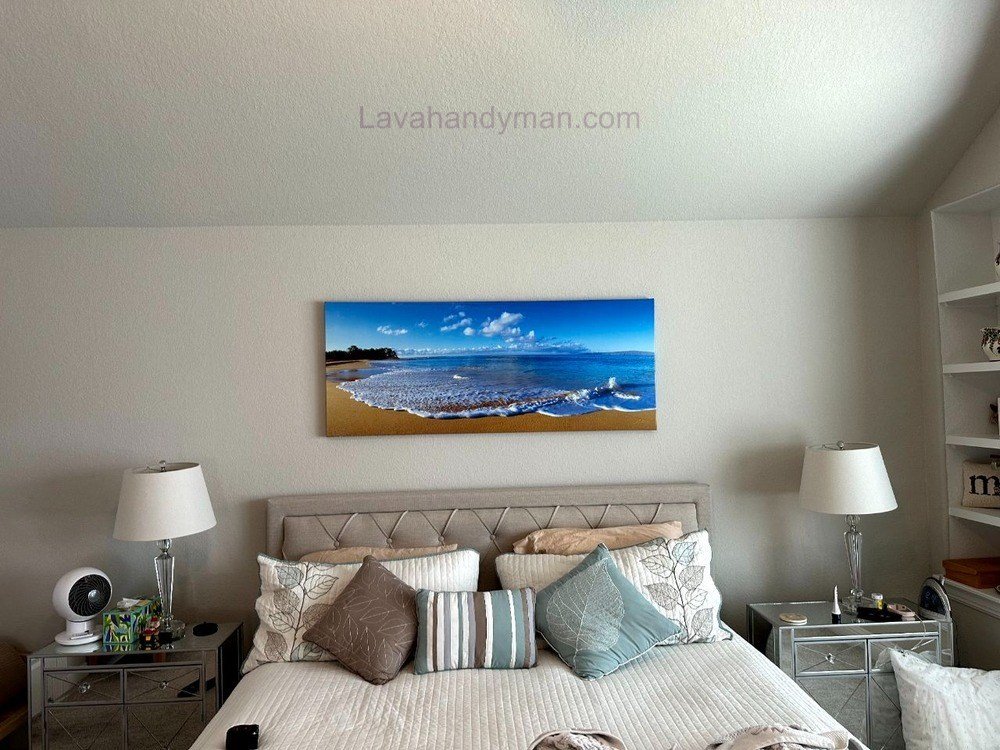
Hanging Paintings in a Bedroom
Bedrooms generally benefit from calm and balanced arrangements. The wall above the bed is one of the most popular locations for displaying artwork.
If you choose this location, the size of the painting should complement the width of the bed. There should also be an appropriate amount of space between the artwork and the headboard.
In smaller bedrooms, one appropriately sized painting may create a more balanced look than a large collection of artworks.
Important Tips for Hanging Paintings on the Wall
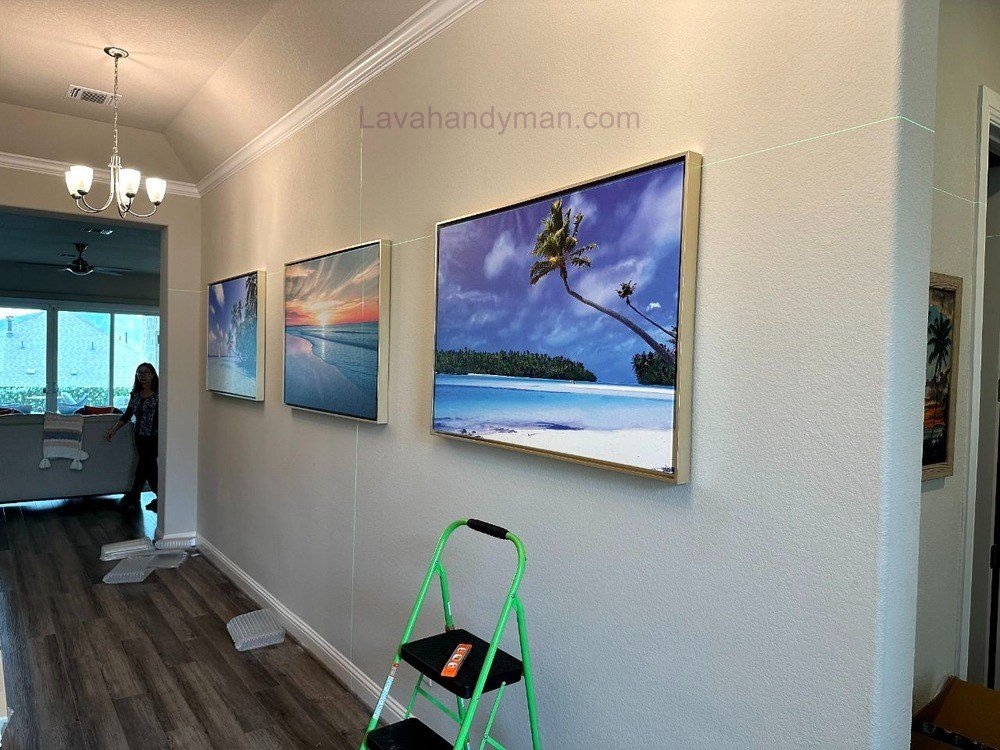
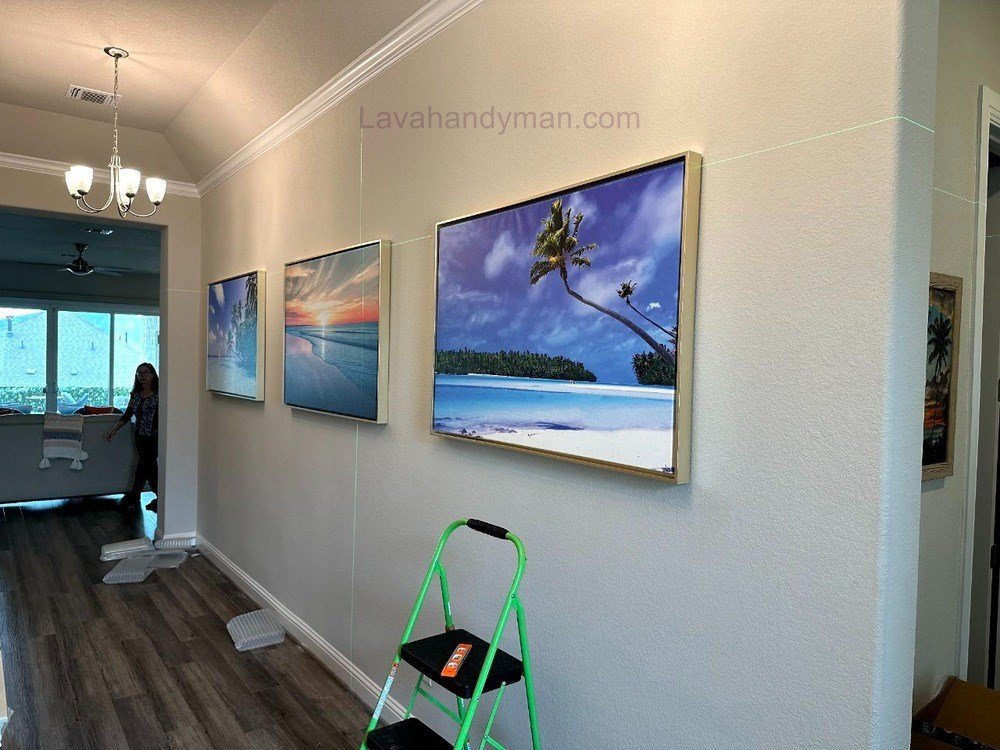
Hanging Paintings in a Hallway
Hallways often have long and narrow walls, making them ideal for displaying several small or medium-sized paintings.
When creating a hallway arrangement, try to keep the centers of the paintings at a similar height. Consistent spacing between frames can also create a cleaner and more organized appearance.
Using paintings with similar frames or a related artistic style can help make the entire arrangement feel cohesive.
Important Tips for Hanging Paintings on the Wall
How to Arrange Multiple Paintings on a Wall
If you want to hang several paintings on the same wall, start by creating an overall composition.
Instead of treating every painting as a separate object, think of the entire collection as one large visual arrangement.
Before drilling into the wall, place the paintings on the floor and experiment with different layouts. This allows you to evaluate the spacing, proportions, and overall size of the arrangement before committing to the final installation.
Linear Arrangement
Important Tips for Hanging Paintings on the Wall
In a linear arrangement, paintings are placed along a horizontal or vertical line. This layout works particularly well in modern and organized interiors.
If the paintings are similar in size, keeping the spacing between them consistent can create a clean and balanced appearance.
Grid Arrangement
A grid arrangement places paintings in organized rows and columns. This style works well when you have several artworks with similar dimensions or matching frames.
Important Tips for Hanging Paintings on the Wall
Alignment and consistent spacing are especially important in this type of arrangement.
Gallery Wall Arrangement
A gallery wall is one of the most popular ways to display multiple artworks. It allows you to combine paintings of different sizes and shapes.
Although this style offers greater flexibility, the artworks should have at least one visual element in common. This could be color, artistic style, subject matter, frame design, or an overall color palette.
Symmetrical Arrangement
If you prefer a classic and organized interior, a symmetrical arrangement can be an excellent choice.
In this layout, paintings are positioned around a central axis to create a sense of balance and order.
Important Tips for Hanging Paintings on the Wall
Asymmetrical Arrangement
An asymmetrical arrangement provides greater creative freedom. Paintings of different sizes can be combined to create a more contemporary and dynamic composition.
However, asymmetry does not mean randomness. The visual weight of the artworks should still feel balanced across the overall arrangement.
Important Tips for Hanging Paintings on the Wall
What Is the Ideal Spacing Between Paintings?
Spacing is an important part of creating a successful wall arrangement.
If paintings are placed too far apart, they may appear unrelated. If they are too close together, the arrangement can feel crowded.
For many gallery walls, a spacing of approximately 5–15 cm (2–6 inches) can be a useful starting point. However, the ideal distance depends on the size of the artworks and the available wall space.
Important Tips for Hanging Paintings on the Wall
Large paintings may benefit from more breathing room, while smaller artworks can often be grouped more closely together.
Why Is It Important to Keep a Painting Level?
Even when you have chosen the perfect location, a slightly crooked painting can negatively affect the final appearance.
Using a spirit level before and after installation is therefore highly recommended. Once the painting is mounted, check that the frame is level and aligned with the surrounding architectural lines.
Keeping artworks level is particularly important when installing multiple paintings because even a small difference in height can become noticeable across a larger arrangement.
Important Tips for Hanging Paintings on the Wall
Choosing the Right Hanging Method
The appropriate hanging method depends on the weight of the painting, the type of wall, and the frame design.
Lightweight paintings may be suitable for simpler hanging solutions, while heavier artworks require stronger and more secure hardware.
Different wall types also have different requirements. Drywall, plaster, brick, and concrete walls may require different anchors, screws, or mounting systems.
Before choosing nails, screws, or other hardware, always consider both the weight of the artwork and the construction of the wall.
Important Tips for Hanging Paintings on the Wall
Hanging Paintings on Drywall and Plasterboard
Drywall and plasterboard require special consideration because their load-bearing capacity differs from that of brick or concrete walls.
For heavier paintings, the attachment point and the wall’s ability to support the load should be carefully considered. Using unsuitable hardware can cause the painting to come loose or damage the wall.
For valuable or heavy artwork, choosing the appropriate mounting hardware is particularly important. If you are unsure about the wall structure or weight capacity, consider consulting a professional installer.
Important Tips for Hanging Paintings on the Wall
Hanging Paintings Without Nails or Drilling
In some situations, lightweight paintings can be installed without drilling holes into the wall. However, every no-drill hanging method has a specific weight limit.
Before using an adhesive or other drilling-free solution, check the weight of the painting and the manufacturer’s recommended load capacity.
For heavy or valuable artwork, a secure mounting method should always be the priority.
Important Tips for Hanging Paintings on the Wall
Lighting and Its Effect on Artwork
The lighting around a painting can have a major impact on how the artwork is perceived.
Good lighting can reveal the colors, textures, and details of a painting. However, prolonged exposure to strong direct sunlight may affect certain paints and materials over time.
If the artwork is framed behind glass, the direction of the light is also important because reflections can make the painting difficult to see.
When choosing the installation location, consider not only the height and arrangement but also the lighting conditions in the room.
Important Tips for Hanging Paintings on the Wall
Matching Artwork with Interior Design
A painting does not necessarily need to match the exact color of the wall or furniture. In many successful interiors, artwork is intentionally used as a contrasting focal point.
However, having some visual connection between the artwork and the rest of the room can create a more cohesive appearance.
For example, one of the colors in the painting could subtly complement the color of cushions, curtains, rugs, or other decorative elements.
The artistic style can also be considered. Modern, minimalist, classic, or abstract artwork may work particularly well in interiors with complementary design characteristics.
Important Tips for Hanging Paintings on the Wall
Choosing the Right Frame for a Painting
The frame is an important part of the overall appearance of a painting and should be considered before installation.
Thick and decorative frames tend to have a stronger visual presence, while simple frames can work well in minimalist interiors.
When measuring the artwork, always consider the complete dimensions of the painting including the frame, rather than measuring only the canvas or artwork itself.
The weight of the frame should also be taken into account because it affects the type of mounting hardware required.
Important Tips for Hanging Paintings on the Wall
Does a Painting Have to Be Exactly in the Center of the Wall?
No. The geometric center of a wall is not always the best location for artwork.
If the wall has a sofa, console table, bed, or another dominant element, the painting should generally be positioned in relation to that element.
This is why the concept of a visual center can be more useful than simply finding the mathematical center of the wall.
For example, if a sofa is positioned in the middle of a wall, the painting should be aligned with the sofa’s width and position rather than necessarily being centered according to the entire wall.
Important Tips for Hanging Paintings on the Wall
Common Mistakes When Hanging Paintings
Hanging the Painting Too High
One of the most common mistakes is placing artwork too close to the ceiling. This can make the painting feel disconnected from the furniture and other elements below it.
Choosing the Wrong Painting Size
A very small painting on a large wall may lack visual impact, while an oversized artwork in a small room can make the space feel crowded.
Ignoring the Spacing Between Paintings
Important Tips for Hanging Paintings on the Wall
Uneven or inconsistent spacing is one of the main reasons gallery walls can look disorganized.
Installing a Painting Without Checking the Level
Even a slight tilt can affect the overall appearance of the arrangement.
Choosing a Poor Location for Lighting
Placing artwork in direct sunlight or directly opposite a strong light source may cause glare and make the painting difficult to view.
Drilling Without Measuring
Before drilling any holes, mark and double-check the exact installation points. Taking a few extra minutes to measure can prevent unnecessary damage to the wall.
Important Tips for Hanging Paintings on the Wall
Using Paper Templates to Plan a Gallery Wall
If you are planning to hang multiple paintings, paper templates can be a simple and effective way to test your arrangement.
Cut pieces of paper or cardboard to match the approximate size of each frame and attach them to the wall using painter’s tape.
You can then experiment with different positions, heights, and spacing without making holes in the wall.
If the arrangement does not look right, simply move the templates until you find a composition that works.
This method is particularly useful when creating a gallery wall with several different-sized artworks.
Important Tips for Hanging Paintings on the Wall
Hanging Paintings in Small Spaces
In small rooms, it is generally better to be selective with the number of artworks.
A single appropriately sized painting can create an attractive focal point without overwhelming the room.
If you want to create a gallery wall, maintain visual consistency between the artworks and leave enough empty space around the arrangement.
Important Tips for Hanging Paintings on the Wall
Hanging Paintings on Large Walls
A small painting may not have enough visual impact on a large wall.
In this situation, you can choose a large statement piece, combine several artworks, or create a larger gallery wall.
However, there is no need to fill the entire wall. Negative space around the artwork is also an important part of interior design.
Important Tips for Hanging Paintings on the Wall
How to Choose the Right Painting Size
When choosing the size of a painting, consider three main factors:
Wall size, furniture size, and viewing distance.
If the painting is going above a sofa, its width should be proportional to the sofa. If it will be displayed on a completely empty wall, the size of the wall and the typical viewing distance become more important.
It is always a good idea to measure the available space before purchasing or installing artwork.
Important Tips for Hanging Paintings on the Wall
Important Tips for Securely Installing Artwork
Beauty is not the only consideration when hanging a painting. Safety and stability are equally important.
The mounting system should be appropriate for the weight of the artwork and strong enough to keep it securely attached to the wall.
In homes with children or pets, secure installation becomes even more important.
For heavy or valuable paintings, use appropriate mounting hardware and consider professional installation when necessary.
Frequently Asked Questions About Hanging Paintings on Walls
Important Tips for Hanging Paintings on the Wall
What Is the Best Height for Hanging a Painting?
In many spaces, positioning the center of the painting around 145–155 cm (57–61 inches) above the floor can be a useful starting point. However, furniture height, artwork size, and room layout should also be considered.
How Far Above a Sofa Should a Painting Be Hung?
A gap of approximately 15–25 cm (6–10 inches) between the top of the sofa and the bottom of the painting can work well in many arrangements. However, the proportions of the furniture and artwork should also be considered.
What Is the Ideal Distance Between Multiple Paintings?
For many arrangements, a spacing of approximately 5–15 cm (2–6 inches) works well. Larger artworks or specific gallery layouts may require different spacing.
Important Tips for Hanging Paintings on the Wall
Can a Painting Be Hung Without Nails?
Some lightweight paintings can be installed using no-drill hanging methods. However, the weight capacity of the mounting solution should always be checked before installation.
Does a Painting Need to Be Centered on the Wall?
Not necessarily. It is often more effective to align artwork with the main furniture or architectural element in the room rather than focusing exclusively on the geometric center of the wall.
What Is the Best Way to Arrange Multiple Paintings?
Important Tips for Hanging Paintings on the Wall
The best arrangement depends on the room and the artwork. Linear and grid layouts work well for organized interiors, while gallery walls offer more flexibility for combining different sizes and styles.
Conclusion
Hanging a painting on the wall may seem simple, but several details can make a significant difference to the final result. Accurate measurement, choosing the right height, considering wall and furniture dimensions, maintaining appropriate spacing, using a spirit level, and selecting the right mounting method are all essential parts of a successful installation.
Important Tips for Hanging Paintings on the Wall
If you are hanging a painting above a sofa, console table, or bed, consider it as part of the overall interior design rather than as an isolated decorative object. When arranging multiple paintings, it is also a good idea to test the composition on the floor or use paper templates before drilling into the wall.
Ultimately, there is no single rule that works for every room. The size of the space, interior style, artwork dimensions, frame design, lighting, and personal preference all play a role in determining the best placement.
📞 Need Help?
Let us take care of the hard work while you sit back and relax.
📍 Serving: Austin, Round Rock, Cedar Park & more
📱 Call or Text: (737) 420-6992
🌐 Visit: https://lavahandyman.com