The Most Common TV Mounting Height Mistake Homeowners Make
Introduction
Wall-mounted televisions have become a key feature of modern living room design. A properly installed TV can enhance both the appearance of a space and the overall viewing experience. However, many homeowners make a critical mistake during installation: mounting the television too high on the wall.
While factors such as screen size, picture quality, and smart features often receive the most attention, the height of a wall-mounted TV is equally important. Incorrect placement can lead to neck pain, eye strain, poor viewing angles, and an unbalanced room design.
In this guide, we’ll explain the most common TV mounting height mistake, why it happens, and how to determine the ideal height for your television.
Common TV Mounting Height Mistake
Why TV Mounting Height Matters
The height of your television affects more than just appearance. It directly impacts:
- Viewing comfort
- Eye health
- Neck and shoulder posture
- Overall room aesthetics
- Long-term usability
A television positioned at the wrong height can turn even the most expensive home entertainment setup into an uncomfortable experience.
The Most Common TV Installation Mistake: Mounting the TV Too High
The number one mistake homeowners make is installing their television significantly above eye level.
This often happens because people take inspiration from:
- Sports bars
- Restaurants
- Hotel lobbies
- Waiting rooms
- Commercial spaces
Common TV Mounting Height Mistake
In these environments, TVs are mounted higher so they remain visible from different locations. However, what works in a public setting does not necessarily work in a residential living room.
At home, people spend hours sitting and watching television from a fixed position. Comfort should always be the primary consideration.
Signs Your TV Is Mounted Too High
You may have mounted your TV too high if:
- You constantly tilt your head upward while watching.
- Your neck feels stiff after a movie or TV marathon.
- The center of the screen is noticeably above eye level when seated.
- The television appears disconnected from nearby furniture.
- The wall feels visually unbalanced.
Many homeowners don’t realize their TV height is causing discomfort until they experience physical strain.
How a High TV Position Affects Viewing Comfort
Common TV Mounting Height Mistake
When a television is mounted too high, viewers are forced to extend their necks upward for extended periods.
Over time, this can contribute to:
Neck Pain
One of the most common complaints associated with poor TV placement is chronic neck discomfort.
Shoulder Tension
Maintaining an upward viewing angle places additional stress on the upper body.
Eye Fatigue
An unnatural viewing angle can increase eye strain, especially during long viewing sessions.
Reduced Relaxation
Instead of enjoying your favorite content, your body remains in a subtly uncomfortable position.
Standard TV Mounting Height Guidelines
Common TV Mounting Height Mistake
Most ergonomics experts recommend a simple rule:
The center of the television screen should be at or near seated eye level.
For most adults:
- Average seated eye level: 39–43 inches (100–110 cm) from the floor
- Recommended screen center height: Approximately 42 inches (107 cm) from the floor
This position allows viewers to maintain a natural head and neck posture.
Large TV Mounting Height: Common Misconceptions
As 75-inch, 85-inch, and even 98-inch televisions become increasingly popular, many homeowners assume larger TVs should be mounted higher.
This is incorrect.
Because larger televisions have taller screens, they often need to be mounted lower than expected to keep the center of the screen at eye level.
The larger the screen, the more important proper positioning becomes.
Common TV Mounting Height Mistake
The Relationship Between Furniture and TV Height
The ideal TV mounting height depends on your seating arrangement.
For example:
- Low-profile sofas may require a slightly lower installation height.
- Taller couches can accommodate a slightly higher placement.
- Recliners may alter viewing angles significantly.
A professional installation should always account for furniture dimensions.
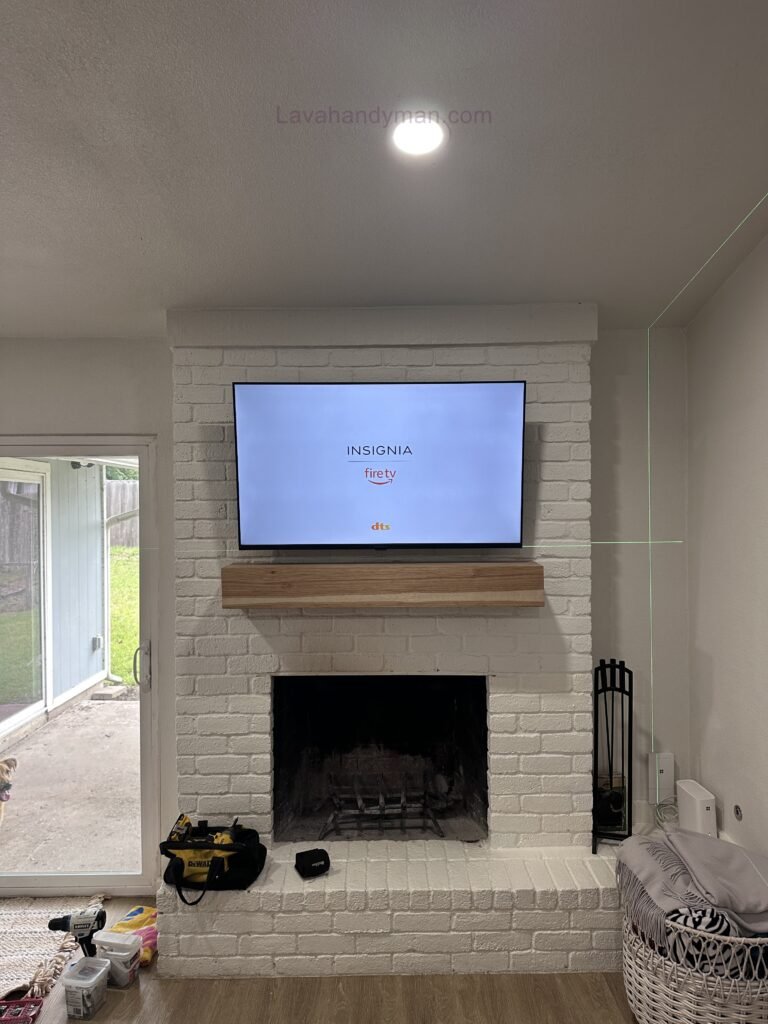
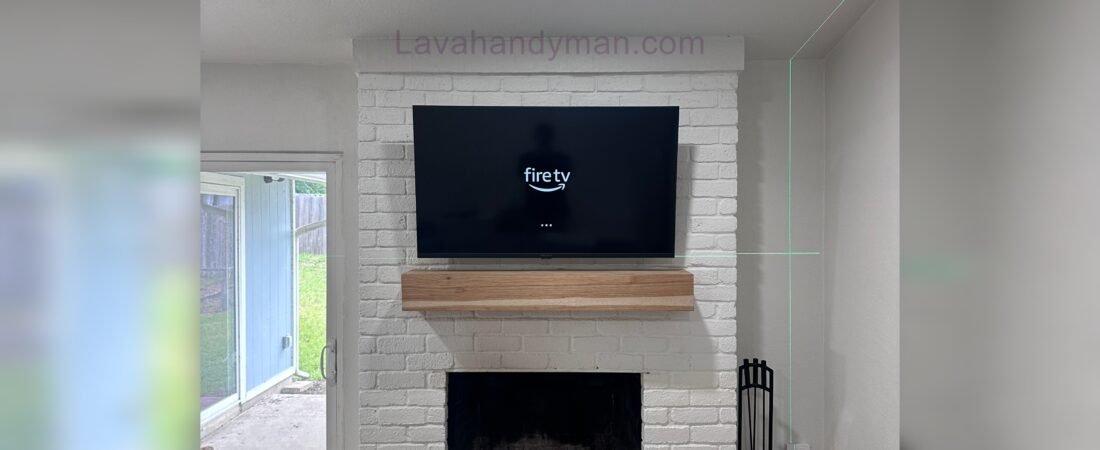
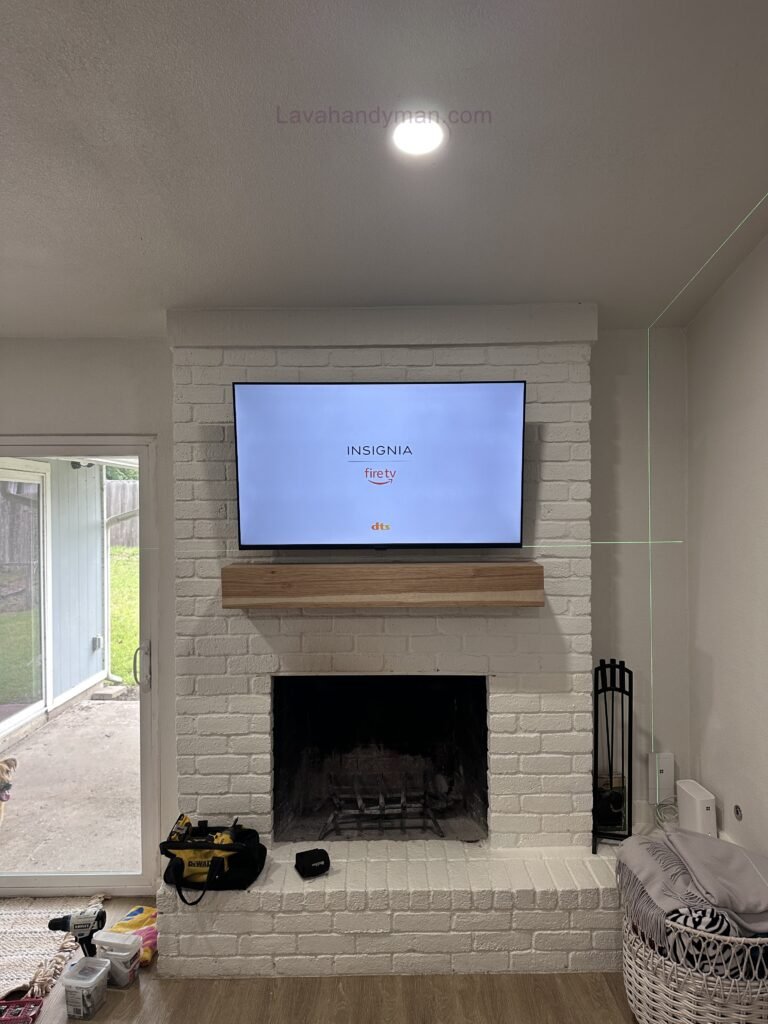
TV Above Fireplace: A Popular but Problematic Trend
Mounting a television above a fireplace remains a popular design trend. While visually appealing, it often creates several ergonomic issues.
Common TV Mounting Height Mistake
Common problems include:
- Excessive screen height
- Neck strain
- Poor viewing angles
- Heat exposure
If a fireplace installation is unavoidable, a tilting wall mount can help improve viewing comfort.
Common TV Mounting Height Mistake
How TV Height Affects Interior Design
Proper TV placement contributes significantly to a balanced and attractive living space.
When installed correctly:
- The room feels more harmonious.
- Furniture and technology work together visually.
- The TV wall appears professionally designed.
- The space looks cleaner and more modern.
By contrast, a TV mounted too high can make the room feel awkward and incomplete.
Common TV Mounting Height Mistake
How to Determine the Ideal TV Mounting Height
A simple method can help you find the perfect location:
- Sit in your primary viewing position.
- Look straight ahead naturally.
- Identify where your eyes naturally focus on the wall.
- Position the center of the TV screen at that height.
This approach closely matches professional ergonomic recommendations.
Why Professional TV Installation Matters
Professional installers evaluate several factors before mounting a television, including:
Common TV Mounting Height Mistake
- Screen size
- Viewing distance
- Seating height
- Room layout
- Wall structure
- Viewing angles
Their expertise helps ensure both safety and comfort.
Other Common TV Mounting Mistakes
Homeowners who mount TVs too high often make other installation errors as well:
- Poor cable management
- Incorrect bracket selection
- Improper wall placement
- Excessive glare from windows
- Lack of coordination with media furniture
Avoiding these mistakes can dramatically improve the final result.
Common TV Mounting Height Mistake
Why Is TV Mounting Height Important?
TV mounting height is one of the most critical elements of creating a comfortable and functional entertainment space. If a television is mounted too high or too low, the viewer’s natural line of sight is disrupted, making extended viewing less comfortable.
Some of the key benefits of proper TV mounting height include:
Improved viewing comfort
Reduced neck and shoulder strain
Less eye fatigue
Better viewing angles
Enhanced visual balance in interior design
A more attractive TV wall setup
This is why interior designers and professional TV installers consistently emphasize the importance of correct TV placement.
How Incorrect TV Height Affects Your Health
One of the biggest problems associated with improper TV installation is the strain it places on the body, particularly the neck and spine.
When a television is mounted too high, viewers must tilt their heads upward for extended periods. Over time, this can contribute to several issues.
Common TV Mounting Height Mistake
Neck Pain
The most common complaint associated with an improperly positioned TV is neck pain. Many people experience discomfort after long viewing sessions without realizing that the TV’s height is the actual cause.
Shoulder Tension
Maintaining an awkward viewing angle can place unnecessary stress on the shoulders and upper back muscles.
Eye Strain
When the screen is not positioned within a comfortable viewing angle, the eyes must work harder to focus, leading to fatigue and reduced viewing comfort.
Standard TV Mounting Height Guidelines
Ergonomic experts generally recommend that:
The center of the television screen should be positioned at seated eye level.
On average:
Seated eye level: 100–110 cm (39–43 inches) from the floor
Center of the TV screen: Approximately 105 cm (41 inches) from the floor
This placement allows viewers to watch comfortably without raising or lowering their heads.
Common TV Mounting Height Mistake
What Is the Best Height for Mounting a Large TV?
As 75-inch, 85-inch, and even 98-inch televisions become increasingly popular, proper mounting height becomes even more important.
A common misconception is that larger TVs should be mounted higher on the wall. In reality, the opposite is often true.
Because large TVs have taller screens, they generally need to be installed slightly lower to keep the center of the display within the viewer’s natural line of sight.
If a large TV is mounted too high:
Viewing angles become less comfortable.
Neck strain increases.
The overall viewing experience suffers.
How Viewing Distance Affects TV Mounting Height
The distance between your seating area and the television also plays a significant role in determining the ideal mounting height.
The closer you sit to the screen:
The more important viewing angles become.
The more noticeable mounting errors will be.
For this reason, professional TV installers always consider viewing distance before deciding on the final installation height.
The Impact of TV Height on Interior Design
Proper TV placement is not just about comfort—it also plays a major role in interior design.
When a television is mounted at the correct height:
The TV wall appears more balanced.
Visual harmony between the television and media console is maintained.
The living room looks more organized and professionally designed.
The space feels more modern and cohesive.
By contrast, mounting a TV too high can create excessive empty space on the wall and disrupt the room’s visual balance.
Mounting a TV Above a Fireplace: A Common Mistake
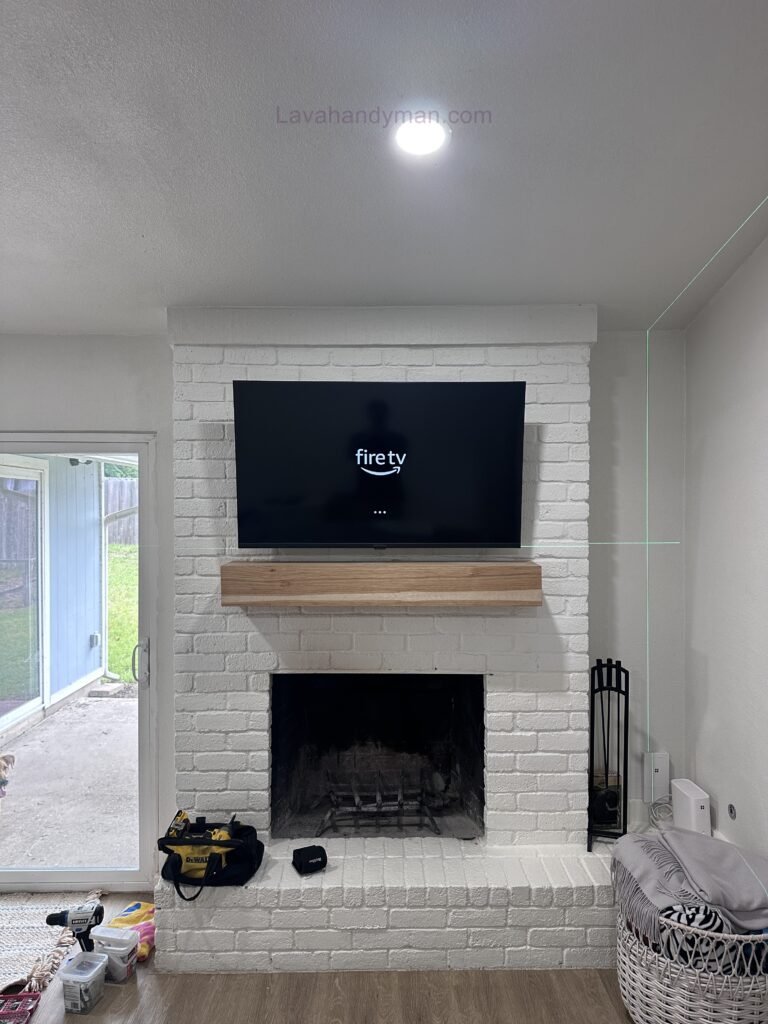
One of the most common mistakes in modern home design is mounting a television above a fireplace.
Common TV Mounting Height Mistakep
Although this setup may look attractive, it often results in:
Excessive screen height
Poor viewing angles
Neck discomfort
Potential heat-related damage to the television
If a fireplace installation is unavoidable, using an adjustable or tilting wall mount is highly recommended.
How to Find the Ideal TV Mounting Height
You can determine the best TV mounting height by following these simple steps:
Sit on your primary sofa or seating area.
Relax in your normal viewing position.
Look straight ahead naturally.
Mark the point on the wall where your eyes naturally focus.
Position the center of the TV screen near that point.
This simple technique provides results that closely match professional ergonomic recommendations.
Why Is Choosing the Right TV Wall Mount Important?
Common TV Mounting Height Mistake
A TV wall mount is responsible for securely attaching your television to the wall. A high-quality bracket not only improves safety but also enhances your viewing experience and interior design.
Benefits of using a quality TV wall mount include:
- Improved installation safety
- Better viewing angles
- Easier cable management
- A cleaner and more modern appearance
- Greater flexibility in screen positioning
- Better use of available space
For these reasons, professional TV installers always recommend selecting a mount that matches your TV’s size, weight, and installation requirements.
Types of TV Wall Mount Brackets
Common TV Mounting Height Mistake
There are several types of TV wall mounts available, each designed for specific installation needs.
1. Fixed TV Wall Mount
A fixed TV wall mount is one of the most common and affordable mounting solutions.
With this type of bracket:
- The TV sits close to the wall.
- No movement or adjustment is possible.
- It creates a sleek and minimalist appearance.
A fixed mount is ideal for homeowners who plan to install their TV at the correct viewing height directly in front of their seating area.
Common TV Mounting Height Mistake
Advantages of Fixed TV Mounts
- Affordable pricing
- Easy installation
- Strong and secure design
- Minimal distance between the TV and wall
- Clean, modern appearance
Disadvantages of Fixed TV Mounts
- No angle adjustment
- Limited access to cables and ports behind the TV
Common TV Mounting Height Mistake
2. Full Motion TV Wall Mount
A full motion TV wall mount, also known as an articulating or swivel mount, is one of the most versatile options available.
This type of bracket allows:
- Left and right rotation
- Extension away from the wall
- Adjustable viewing angles
If you have a large living room or need to watch the television from multiple seating positions, a full motion mount is often the best solution.
Advantages of Full Motion TV Mounts
Common TV Mounting Height Mistake
- Maximum flexibility
- Easy viewing angle adjustments
- Convenient access to cables and connections
- Ideal for large-screen televisions
- Helps reduce screen glare
Disadvantages of Full Motion TV Mounts
- Higher cost
- More complex installation process
Common TV Mounting Height Mistake
3. Tilting TV Wall Mount
A tilting TV wall mount offers a balance between fixed and full motion mounts.
This design allows the television to tilt slightly upward or downward.
Tilting mounts are commonly used for:
- TVs mounted above fireplaces
- Installations at higher wall positions
- Reducing glare from windows and lighting
Advantages of Tilting TV Mounts
- Cost-effective
- Adjustable vertical viewing angle
- Improved viewing comfort
- Reduced screen reflections
Best TV Wall Mount for Large TVs
As 75-inch, 85-inch, and even 98-inch TVs become more common, choosing the right mount becomes increasingly important.
For large televisions, heavy-duty TV wall mounts are generally recommended.
These mounts offer:
- Higher weight capacity
- Increased durability
- Enhanced stability
- Greater safety for expensive televisions
Using an undersized wall mount for a large TV can create serious safety risks and potentially damage both the television and the wall.
Common TV Mounting Height Mistake
What Is the VESA Standard?
One of the most important factors to consider when purchasing a TV wall mount is VESA compatibility.
VESA refers to the standardized hole pattern located on the back of a television. This pattern determines which wall mounts are compatible with your TV.
Before purchasing a bracket, make sure to:
- Check your TV’s VESA dimensions
- Verify the mount’s weight capacity
- Confirm the supported screen size range
Selecting a VESA-compatible wall mount ensures a safe and secure installation.
How to Choose the Best TV Wall Mount
Several factors should be considered when selecting a TV wall mount.
TV Size
Every wall mount is designed to support specific screen sizes. Always verify compatibility before purchasing.
TV Weight
The mount’s weight capacity should exceed the actual weight of your television.
Wall Type
The type of wall—whether concrete, brick, wood stud, or drywall—can influence the installation method and mount selection.
Common TV Mounting Height Mistake
Viewing Angle Requirements
If you regularly watch TV from multiple seating positions, a full motion wall mount is usually the best option.
TV Mounting Height
When the television is installed at the recommended viewing height, a fixed wall mount often provides the cleanest and most professional appearance.
Which TV Wall Mount Is Best?
The best TV wall mount depends on your specific needs:
- For a simple and clean installation: Fixed TV Wall Mount
- For vertical angle adjustment: Tilting TV Wall Mount
- For maximum flexibility: Full Motion TV Wall Mount
- For 75-inch TVs and larger: Heavy-Duty Full Motion TV Mount
Common TV Mounting Height Mistake
In many modern homes, full motion mounts have become increasingly popular because they offer greater flexibility and improved viewing comfort.
Conclusion
The most common TV mounting height mistake homeowners make is placing the television too high on the wall. Although this may seem visually appealing at first, it often leads to neck strain, eye fatigue, poor viewing angles, and an unbalanced room design.
📞 Need Help?
Let us take care of the hard work while you sit back and relax.
📍 Serving: Austin, Round Rock, Cedar Park & more
📱 Call or Text: (737) 420-6992
🌐 Visit: https://lavahandyman.com