Best TV Wall Mounting Angle + Standard Mounting Height
Introduction
If you’re planning to mount your TV on the wall, choosing the best TV wall mounting angle and following the standard TV mounting height are essential for achieving the best viewing experience. Even if you own a high-end 4K, OLED, or QLED television, improper installation can lead to poor picture quality, eye strain, neck pain, and an overall uncomfortable viewing experience.
Wall mounting has become increasingly popular because it saves space, enhances your home’s interior design, and creates a clean, modern look. However, many homeowners focus only on aesthetics while overlooking important factors such as the TV viewing angle, optimal viewing distance, wall mount height, and TV wall bracket selection. These elements directly affect both viewing comfort and picture performance.
In this comprehensive guide, you’ll learn everything you need to know about the best TV wall mounting angle, the ideal TV mounting height for different screen sizes, the recommended viewing distance, and the essential installation tips that ensure maximum comfort and outstanding picture quality.
Best TV Wall Mounting Angle
Why Is the TV Wall Mounting Angle Important?
Choosing the right TV mounting angle is about much more than appearance. It has a significant impact on your comfort, posture, and overall viewing experience. If your television is mounted too high or too low, you’ll naturally tilt your head upward or downward while watching. Over time, this can cause neck pain, muscle fatigue, headaches, and eye strain.
In addition to physical discomfort, viewing angle also affects image quality. Many LED and LCD TVs experience reduced brightness, lower contrast, and color distortion when viewed from steep angles. By installing your television at the optimal viewing angle, you’ll enjoy more accurate colors, better contrast, and a consistently sharp picture from your primary seating position.
Benefits of Choosing the Best TV Wall Mounting Angle
- Reduces neck and back strain during extended viewing sessions.
- Minimizes eye fatigue and improves long-term viewing comfort.
- Preserves picture quality, brightness, and color accuracy.
- Provides an optimal viewing angle for everyone in the room.
- Creates a better experience for watching movies, sports, gaming, and streaming.
- Gives your living space a cleaner, more professional appearance.
Best TV Wall Mounting Angle
What Is the Best TV Wall Mounting Angle?
According to ergonomics experts and television manufacturers, the best TV wall mounting angle is achieved when the center of the screen is approximately at eye level while you’re seated.
For most living rooms, the recommended viewing angle falls between 0° and 15° below your natural line of sight. In certain situations, an angle of up to 20° may still provide a comfortable viewing experience, but exceeding this range is generally not recommended.
In simple terms, you should never have to tilt your head noticeably upward or downward while watching TV. When your eyes naturally align with the center of the screen, your television is positioned at its ideal height and angle for comfortable viewing.
Standard TV Mounting Height by Screen Size
Choosing the best TV wall mounting angle is only one part of creating the perfect viewing experience. Equally important is selecting the correct TV mounting height. Even if your television is installed at the ideal angle, mounting it too high or too low can cause neck strain, eye fatigue, and reduced viewing comfort.
Many homeowners assume that a larger TV should automatically be mounted higher on the wall. However, professional installers recommend determining the ideal TV mounting height based on eye level, viewing distance, seating position, and screen size, rather than the television’s size alone.
The universal rule is simple:
The center of your TV screen should be positioned at approximately eye level when you’re seated.
For most adults sitting on a standard sofa, eye level falls between 40 and 43 inches (102–110 cm) from the floor. Aligning the center of the display within this range provides the best TV viewing angle, reduces muscle strain, and delivers the most natural viewing experience.
Best TV Wall Mounting Angle
TV Mounting Height Chart by Screen Size
The following TV mounting height chart provides recommended center-of-screen measurements for the most common television sizes. These guidelines are based on average sofa height and a standard seated viewing position.
| TV Size | Recommended Center Height | Approximate Bottom Edge Height |
|---|---|---|
| 32-inch | 39–41 in (99–104 cm) | 28–30 in (71–76 cm) |
| 43-inch | 40–42 in (102–107 cm) | 27–29 in (69–74 cm) |
| 50-inch | 41–43 in (104–109 cm) | 26–28 in (66–71 cm) |
| 55-inch | 42–43 in (107–109 cm) | 25–27 in (64–69 cm) |
| 65-inch | 42–44 in (107–112 cm) | 23–25 in (58–64 cm) |
| 75-inch | 43–45 in (109–114 cm) | 22–24 in (56–61 cm) |
| 85-inch | 44–46 in (112–117 cm) | 21–23 in (53–58 cm) |
Best TV Wall Mounting Angle
How to Calculate the Ideal TV Mounting Height
Instead of relying solely on standard recommendations, measuring your room ensures the best TV wall mounting height for your setup.
Step 1: Measure Your Eye Level
Sit in your normal viewing position and measure the distance from the floor to your eyes.
For most adults, seated eye level ranges between:
- 40–43 inches (102–110 cm)
This measurement represents the target height for the center of your TV screen.
Best TV Wall Mounting Angle
Step 2: Measure Your Television
Every television has a different physical height depending on its screen size and bezel design.
For example:
A standard 65-inch TV is approximately 32 inches (81 cm) tall.
Half of the TV’s height equals:
16 inches (40.5 cm)
Step 3: Calculate the Mounting Position
Use the following formula to determine the ideal installation height:
Bottom of TV = Eye Level − Half of TV Height
Example
Eye Level = 42 inches
Half TV Height = 16 inches
Bottom of TV = 26 inches
This means the bottom edge of your television should be mounted approximately 26 inches (66 cm) above the floor.
This simple calculation helps achieve both the correct TV mounting height and the best TV viewing angle.
Best TV Wall Mounting Angle
Best Viewing Distance by TV Size
Selecting the right viewing distance is just as important as choosing the proper TV wall mounting height.
Sitting too close may reveal individual pixels and increase eye strain, while sitting too far reduces immersion and makes it difficult to appreciate the full resolution of your television.
Below is a recommended TV viewing distance chart for modern 4K Ultra HD televisions.
| TV Size | Recommended Viewing Distance |
|---|---|
| 43-inch | 3.5–5.5 ft (1.1–1.7 m) |
| 50-inch | 4–6 ft (1.2–1.8 m) |
| 55-inch | 4.5–7 ft (1.4–2.1 m) |
| 65-inch | 5.5–8 ft (1.7–2.4 m) |
| 75-inch | 6–9.5 ft (1.8–2.9 m) |
| 85-inch | 7–10.5 ft (2.1–3.2 m) |
Maintaining the correct TV viewing distance improves image clarity, enhances immersion, and reduces eye fatigue during extended viewing sessions.
Best TV Wall Mounting Angle
Does Room Type Affect TV Mounting Height?
The best TV wall mounting height depends on how you use the room.
Living Room
For most living rooms, the television should be mounted so the center of the screen is at seated eye level. This position provides the best viewing angle for movies, TV shows, and sports.
Bedroom
Televisions installed in bedrooms are often mounted slightly higher because viewers watch while lying down.
Using a tilting TV wall mount allows you to angle the screen downward, improving comfort and reducing neck strain.
Home Office
If the TV is used for video conferences, presentations, or as a secondary monitor, keeping the display close to eye level promotes better posture and minimizes fatigue.
Home Theater
Dedicated home theaters prioritize immersion. Depending on seating arrangements, the display may be mounted slightly higher, but the vertical viewing angle should ideally remain within 15 degrees.
Best TV Wall Mounting Angle
Choosing the Right TV Wall Mount
The type of TV wall mount bracket you choose directly affects your viewing experience.
Fixed TV Wall Mount
A fixed mount keeps the television close to the wall and is ideal when the TV mounting height is already perfect.
Tilting TV Wall Mount
A tilting mount lets you angle the screen downward, making it an excellent choice for fireplaces or higher wall installations.
Full-Motion TV Wall Mount
A full-motion mount offers maximum flexibility by allowing you to tilt, swivel, and extend the television. It is the best option for large living rooms, open-concept spaces, or homes with multiple seating areas.
Common TV Wall Mounting Mistakes That Affect Viewing Comfort
Even if you’ve selected the best TV wall mounting angle and followed the recommended TV mounting height, a few installation mistakes can significantly reduce your viewing comfort.
Many homeowners focus on aesthetics while overlooking ergonomics, viewing distance, and proper wall mount placement. As a result, they experience neck pain, eye fatigue, poor picture quality, or limited viewing angles.
Avoiding the following mistakes will help you achieve a professional installation while maximizing both comfort and picture performance.
Best TV Wall Mounting Angle
1. Mounting the TV Too High
One of the biggest mistakes people make is installing the television too high on the wall.
This often happens when the TV is mounted above a fireplace or positioned primarily for decorative purposes rather than comfortable viewing.
According to ergonomic guidelines, the center of the TV screen should remain close to seated eye level. Looking upward for extended periods places unnecessary stress on your neck and shoulders.
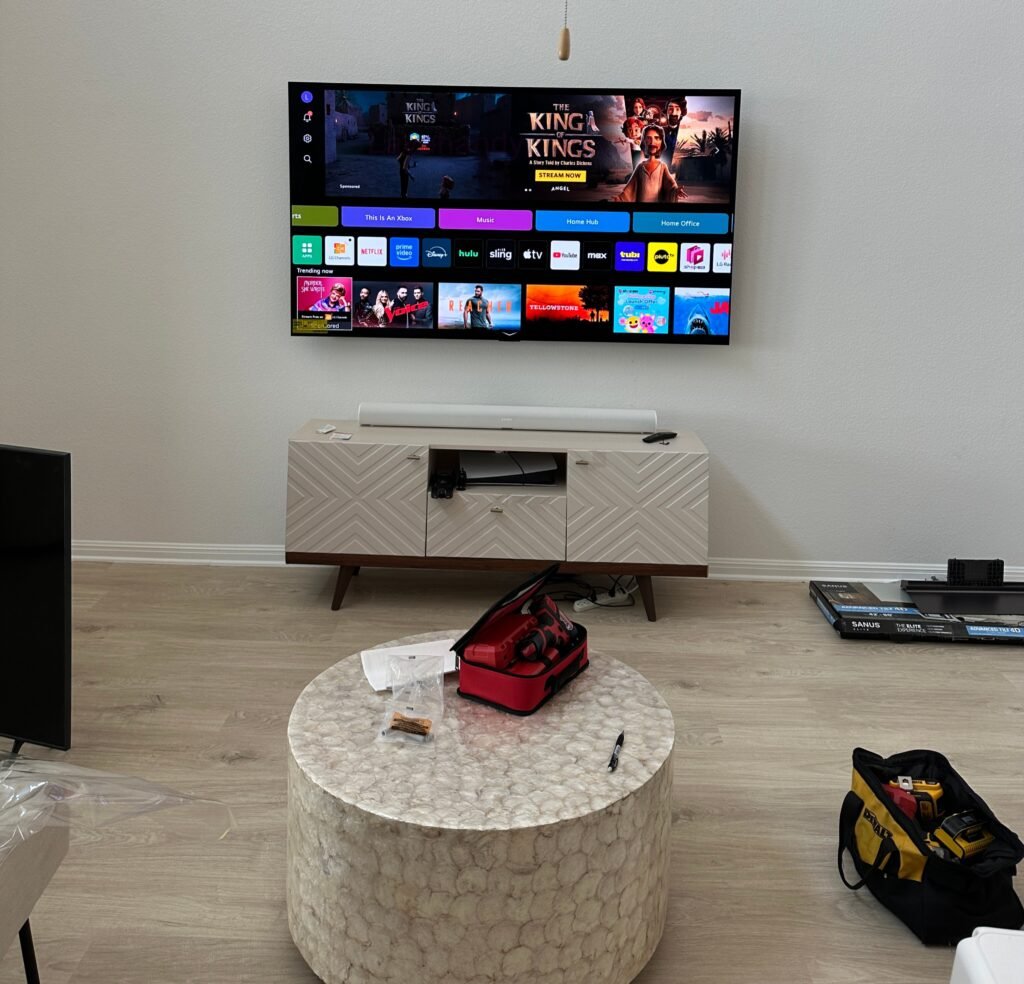
Problems caused by mounting a TV too high
- Neck and shoulder pain
- Eye fatigue during long viewing sessions
- Reduced viewing comfort
- Poor vertical viewing angle
- Lower picture quality on some LED and LCD TVs
For the best TV wall mounting angle, avoid placing the screen significantly above your natural line of sight.
Best TV Wall Mounting Angle
2. Ignoring the Best TV Viewing Angle
A television should always face your primary seating position.
If your sofa sits directly in front of the screen, a fixed wall mount is usually sufficient.
However, if you frequently watch TV from different areas of the room, using a tilting or full-motion TV wall mount provides greater flexibility and maintains the best TV viewing angle from multiple seating positions.
Proper positioning also ensures more accurate colors, improved contrast, and better overall picture quality.
Best TV Wall Mounting Angle
3. Choosing the Wrong TV Wall Mount
Selecting the correct TV wall mount bracket is just as important as choosing the right installation height.
Different wall mounts are designed for different applications.
Fixed TV Wall Mount
Ideal for:
- Living rooms
- Eye-level installations
- Minimalist designs
Provides the cleanest appearance but offers no angle adjustment.
Tilting TV Wall Mount
Recommended when:
- The TV is mounted slightly above eye level
- Installing above furniture
- Reducing glare from overhead lighting
A slight downward tilt can dramatically improve viewing comfort.
Full-Motion TV Wall Mount
Best suited for:
- Large living rooms
- Open floor plans
- Corner installations
- Multiple seating positions
A full-motion bracket allows you to swivel, extend, and tilt the display for the optimal TV viewing angle.
Best TV Wall Mounting Angle
4. Poor Cable Management
One of the easiest ways to make a professional TV installation look unfinished is leaving cables exposed.
Professional installers typically use:
- In-wall cable routing
- Cable raceways
- HDMI cable organizers
- Hidden power management systems
Besides improving aesthetics, proper cable management makes future upgrades and maintenance much easier.
5. Ignoring Room Lighting
Room lighting plays a major role in picture quality.
Even if you’ve installed your television at the ideal TV mounting height, excessive glare can reduce visibility.
For the best results:
- Avoid mounting the TV directly opposite large windows.
- Minimize reflections from ceiling lights.
- Use blackout curtains in bright rooms.
- Position lamps away from the display.
Proper lighting helps preserve contrast while reducing eye fatigue.
Best TV Wall Mounting Angle
How TV Wall Mounting Angle Affects Picture Quality
The best TV wall mounting angle doesn’t just improve comfort—it also improves image quality.
Different display technologies respond differently when viewed off-axis.
LED TVs
Standard LED televisions often have narrower viewing angles.
Watching from the side may reduce:
- Brightness
- Contrast
- Color accuracy
Installing the TV at the proper height and angle minimizes these issues.
Best TV Wall Mounting Angle
QLED TVs
QLED televisions generally provide wider viewing angles and higher brightness.
However, they still perform best when viewed close to the center of the screen.
OLED TVs
OLED displays offer the widest viewing angles currently available.
Although image quality remains excellent from almost any position, maintaining the ideal TV wall mounting height creates the most comfortable viewing experience.
How to Prevent Eye and Neck Strain
One of the primary goals of choosing the best TV wall mounting angle is improving long-term comfort.
Following these expert recommendations helps reduce physical fatigue.
Keep the Screen at Eye Level
The center of your TV should align closely with your eyes while seated.
This simple adjustment significantly reduces pressure on your neck and shoulders.
Maintain the Correct Viewing Distance
Choosing the proper TV viewing distance helps reduce eye strain while maximizing picture clarity.
Always follow the recommended distance based on your screen size.
Reduce Screen Reflections
Glare forces your eyes to work harder.
To improve visibility:
- Adjust room lighting.
- Close curtains when necessary.
- Avoid positioning bright lights directly behind the seating area.
Best TV Wall Mounting Angle
Follow the 20-20-20 Rule
Eye care professionals recommend looking at an object approximately 20 feet away for 20 seconds every 20 minutes.
This simple habit helps reduce digital eye strain during long viewing sessions.
Expert TV Installation Tips
Professional TV installers follow a few simple principles that dramatically improve the final result.
- Measure twice before drilling.
- Locate wall studs before installing the wall mount.
- Test the viewing angle before tightening every bolt.
- Leave enough space for ventilation behind the television.
- Hide cables whenever possible for a clean, professional appearance.
- Verify that every HDMI port remains accessible after installation.
Following these best practices ensures a safer installation while improving both functionality and aesthetics.
Frequently Asked Questions
What is the best TV wall mounting angle?
The ideal TV viewing angle is between 0° and 15° below eye level, with the center of the screen positioned close to seated eye level.
How high should a TV be mounted on the wall?
For most living rooms, the center of the television should be approximately 40–43 inches (102–110 cm) above the floor.
Is mounting a TV above a fireplace a good idea?
Although popular in modern homes, mounting a TV above a fireplace is generally not recommended because the television is usually positioned too high, reducing viewing comfort.
Which TV wall mount is best?
- Fixed Mount: Best for eye-level installations.
- Tilting Mount: Ideal for slightly elevated TVs.
- Full-Motion Mount: Perfect for flexible viewing angles and multiple seating positions.
Conclusion
Finding the best TV wall mounting angle and the ideal TV mounting height is essential for creating a comfortable and immersive viewing experience.
By considering screen size, eye level, viewing distance, room layout, lighting conditions, and the right wall mount, you can improve picture quality, reduce eye and neck strain, and enjoy your television exactly as it was designed to be viewed.
📞 Need Help?
Let us take care of the hard work while you sit back and relax.
📍 Serving: Austin, Round Rock, Cedar Park & more
📱 Call or Text: (737) 420-6992
🌐 Visit: https://lavahandyman.com