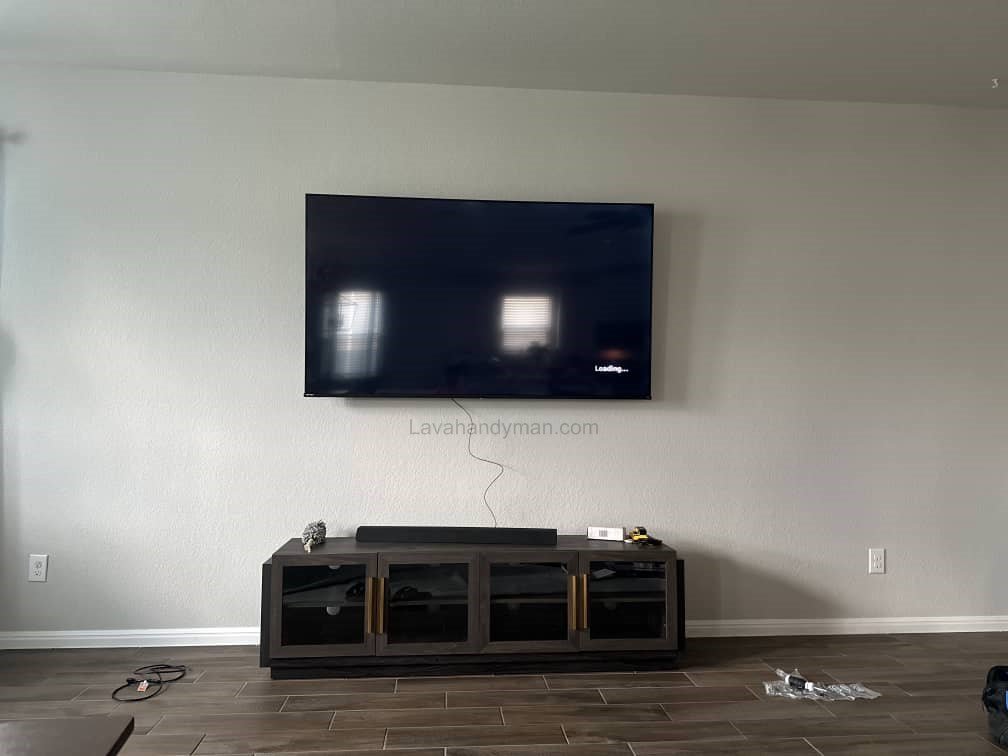
Best Location for Wall-Mounting a TV in the Living Room and Bedroom
Introduction
Wall-mounting a TV is one of the best ways to enhance your interior décor while saving valuable space in your home. Many users who purchase a new TV immediately ask: “What is the best way to mount a TV on the wall?”
Why Wall-Mounting a TV Matters
Proper installation offers multiple benefits. It not only improves the overall look of your home but also increases safety and enhances your viewing experience. This section targets high-intent search queries such as “benefits of wall-mounting a TV.”
1. Increased Safety and Prevention of TV Falls
Using a low-quality mount or installing it incorrectly can lead to the TV falling, which can cause serious damage to the device and even harm individuals.
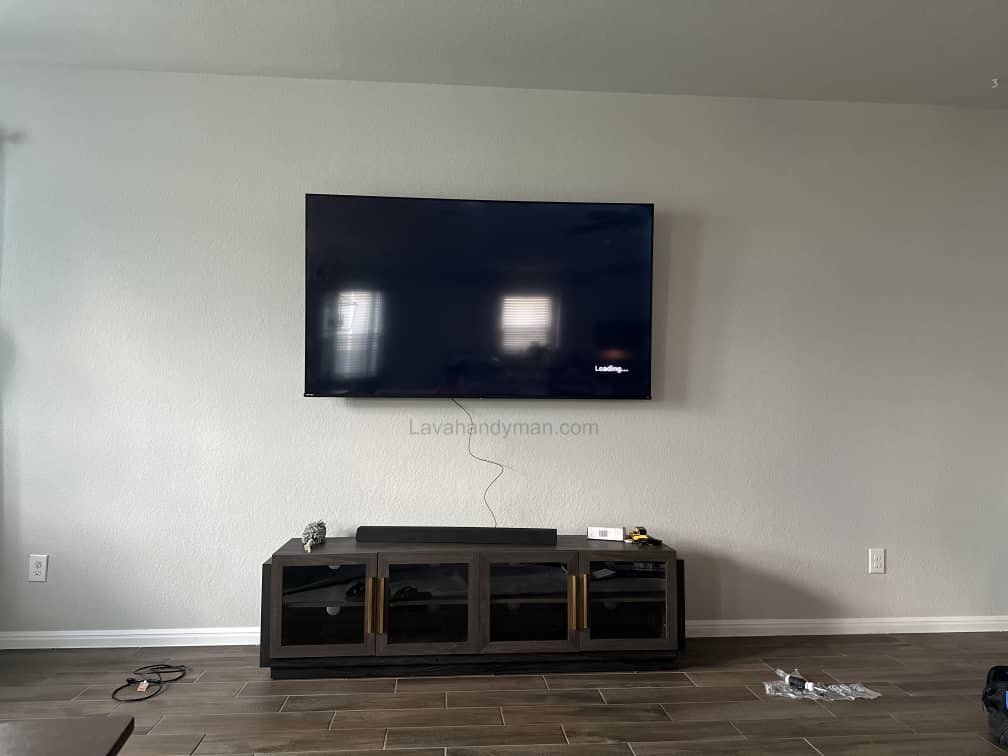
Best Location for Wall-Mounting a TV
2. Improved Viewing Experience
Positioning the TV at the correct viewing angle reduces neck and eye strain. Most experts recommend aligning the center of the screen with the viewer’s eye level.
3. Enhanced Aesthetic and Better Interior Design
Mounting the TV on the wall frees up floor space and creates a clean, modern look—especially useful for small apartments or minimalist décor styles.
Choosing the Best TV Wall Mount (The Key to Professional Installation)
One of the most frequently searched phrases on Google is “best TV wall mount” and “buy TV bracket.”
This section explains each type in a clear, SEO-optimized format.
Types of TV Wall Mounts
1. Fixed Wall Mount
Best Location for Wall-Mounting a TV
- More affordable
- Simple installation
- Ideal for solid walls
A good choice if you want the TV permanently placed at one fixed height.
2. Tilt Wall Mount
- Allows vertical angle adjustment
- Reduces screen glare
- Ideal for higher placements such as above a fireplace
3. Full-Motion / Articulating Mount
(Highly searched term: “What is a full-motion wall mount?”)
- Swivels left and right
- Extends outward from the wall
- Perfect for large rooms or multiple viewing angles
Best Location for Wall-Mounting a TV
How to Choose the Right TV Mount
Three major factors determine whether a mount is compatible with your TV:
1. VESA Standard
This specifies the distance between the mounting holes on the back of your TV.
Your wall mount must match the exact VESA pattern.
2. TV Weight
A wall mount should support at least 30% more than the actual weight of the TV for maximum safety.
3. Screen Size
For example, a 55-inch TV needs a mount rated for 40–65 inches to ensure proper fit and stability.
Best Location for Wall-Mounting a TV
Finding the Best Location to Mount Your TV
This section is optimized for searches like “What height should I mount my TV?”
1. Standard Mounting Height
The recommended height is when the center of the screen is aligned with your eye level.
For couch viewing, this is typically 100 to 115 cm (39–45 inches) from the floor.
2. Avoid Direct Light
Never mount the TV opposite a window or direct light source to prevent glare.
3. Choose a Strong Wall
Concrete or brick walls provide the strongest support.
Plasterboard/drywall requires a special mount and reinforced anchors.
Best Location for Wall-Mounting a TV
Tools You Need for Wall-Mounting a TV
A frequently searched topic: “tools needed to mount a TV.”
Essential tools include:
- Drill
- Proper drill bits
- Wall plugs/anchors
- Screws
- Measuring tape
- Level
- Allen key
- Compatible wall mount
Best Location for Wall-Mounting a TV
Step-by-Step Guide to Mounting a TV on the Wall
This section is optimized for the common search query: “how to mount a TV on the wall.”
Step 1: Measure and Mark
- Choose the correct height
- Use a level for a straight line
- Mark the screw holes accurately
Step 2: Drill the Holes
- Choose drill bits based on wall type
- Ensure holes are straight and consistent
Step 3: Install the Wall Plate
- Align the plate with the wall
- Insert anchors and tighten all screws firmly
- Recheck with a level
Best Location for Wall-Mounting a TV
Step 4: Attach the Mounting Arms to the TV
Use the proper VESA screws supplied with the mount.
Step 5: Hang the TV on the Wall Mount
This step must be done by two people to avoid damaging the TV.
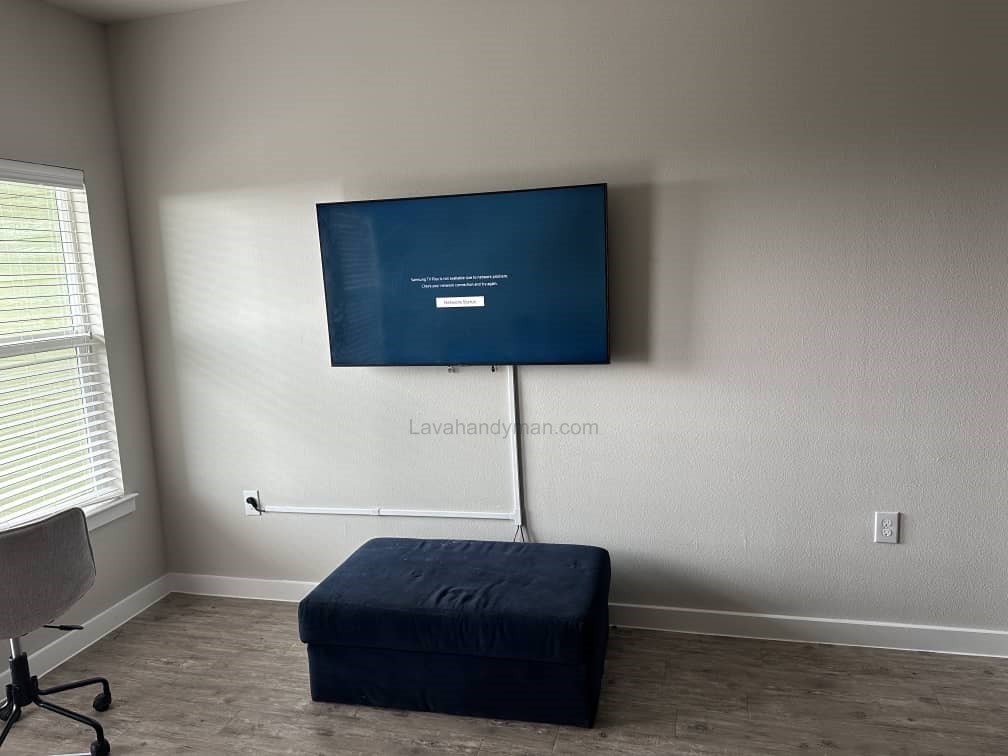
Step 6: Cable Management
A top SEO keyword: “how to hide TV cables.”
Methods include:
- Wall cable ducts
- In-wall cable routing
- Decorative cable covers
Best Location for Wall-Mounting a TV
Common Mistakes When Mounting a TV
- Using cheap, low-quality mounts
- Incorrect installation height
- Ignoring the VESA standard
- Drilling holes inaccurately
- Mounting on weak walls without reinforcement
Frequently Asked Questions
1. What is the best height for mounting a TV?
Typically between 100–115 cm from the floor for seated viewing.
2. Can I mount a TV on drywall?
Yes, but you must use a drywall-specific mount and reinforced anchors.
3. Which wall mount is best for my TV?
Best Location for Wall-Mounting a TV
A full-motion mount is the most flexible and suitable for most setups.
4. How can I hide the cables behind the TV?
You can use wall ducts, in-wall wiring, or cable covers.
5. Does a full-motion mount damage the wall?
No, as long as the wall is sturdy and installation is done properly.
Important Tips for Installing a TV on the Wall
Best Location for Wall-Mounting a TV
Important Tips Before Installing a TV on the Wall
1. Choosing the Right TV Wall Mount (Bracket)
Selecting a high-quality and compatible wall mount is one of the most crucial steps.
Important factors to consider:
- The VESA standard must match your TV exactly.
- The mount’s weight capacity should be at least 30% higher than the TV’s weight.
- If you need angle adjustment, choose a tilting or articulating mount.
- For a closer and fixed installation, a fixed (flat) mount is ideal.
2. Checking the Wall Type
The wall material greatly affects installation safety:
- Concrete or brick walls are the safest options.
- For drywall/gypsum board, use special mounts and toggle anchors designed for lightweight walls.
- Avoid installing the TV on cracked or weak walls.
Best Location for Wall-Mounting a TV
3. Setting the Correct Installation Height
To achieve the best viewing experience:
- The center of the TV should be at eye level.
- Recommended installation height when seated: 100–115 cm (39–45 inches) from the floor.
- If the TV is mounted higher, use a tilting bracket so you can adjust the viewing angle.
4. Selecting the Best Wall Position
Before attaching the mount, make sure the location is suitable:
- Avoid placing the TV facing direct sunlight to prevent glare.
- Ensure access to nearby outlets: power, HDMI, antenna, and internet.
- Leave enough space for airflow behind the TV.
Best Location for Wall-Mounting a TV
Important Tips During TV Installation
5. Using the Proper Tools
The essential tools include:
- Drill
- Correct drill bits
- Standard screws and wall anchors
- Level
- Measuring tape
- Allen wrench or adjustable wrench
Using proper tools improves accuracy and safety.
6. Ensuring the Mount Is Level
One of the most important steps is making sure the wall mount is perfectly level.
- Check alignment with a level before drilling.
- Check again after tightening the screws.
- Even a slight tilt becomes permanent and is hard to fix later.
Best Location for Wall-Mounting a TV
7. Using High-Quality Screws and Wall Anchors
- Use anchors designed specifically for the type of wall you’re mounting on.
- Screws must be tightened firmly and securely.
- Low-quality anchors increase the risk of the TV falling.
8. Attaching the Bracket Arms to the TV
While attaching the bracket to the back of the TV:
- Use the standard VESA screws that match your TV.
- Screws should be neither too loose nor overly tight.
- Use washers when needed to prevent damage to the TV body.
Best Location for Wall-Mounting a TV
9. Mounting the TV onto the Wall Bracket
- This step should always be done by two people.
- One person holds the TV while the other secures the locks or safety latches.
- Double-check that the safety mechanism is fully engaged.
Important Tips After Installing the TV
10. Managing and Hiding the Cables
To keep the setup clean and organized, you can use:
- Wall surface cable ducts
- Cable management covers
- In-wall cable routing (if possible)
This enhances both appearance and safety.
Best Location for Wall-Mounting a TV
11. Periodically Checking Screws and Connections
Especially for articulating mounts:
- Inspect screws every few months.
- Tighten any loose parts immediately.
12. Ensuring Proper Ventilation
Do not place the TV too close to the wall.
At least 5 cm (2 inches) of space is necessary for proper airflow and to prevent overheating.
Standard TV Wall Mount Height :
Best Location for Wall-Mounting a TV
1. General Principles for TV Wall Mount Height
The most important principle is to align the center of the TV screen with the viewer’s eye level.
- Average seated eye level: 95–110 cm (37–43 inches) from the floor
- Therefore, the TV center should roughly fall within this range.
This rule provides the best viewing experience and applies to almost any TV size.
2. Standard Height Based on TV Size
Larger TVs have their center higher from the bottom edge. The table below shows the recommended center height for wall-mounted TVs:
Recommended TV Center Height
| TV Size | Recommended Height from Floor (cm) |
|---|---|
| 32 inches | 95–105 |
| 43 inches | 100–110 |
| 50 inches | 105–115 |
| 55 inches | 110–120 |
| 65 inches | 115–125 |
| 75 inches | 120–130 |
These heights are optimized for seated viewing and provide the best visual comfort.
3. Ideal TV Height for Seated Viewing
For viewers sitting on a sofa or chair:
- The center of the screen should be aligned with the eyes.
- Recommended height: 100–115 cm from the floor
Mounting the TV too high can lead to neck strain, eye fatigue, and reduced focus.
4. Recommended Height for Bedrooms
In a bedroom, viewers often watch TV in a semi-reclined or lying position:
- Recommended height: 125–140 cm from the floor
- Using a tilt wall mount is recommended so the TV can angle slightly downward for comfortable viewing.
This setup reduces neck strain and enhances comfort.
5. Mounting TV Above a Fireplace
Mounting a TV above a fireplace is visually appealing but requires careful height consideration:
- Typical height: 140–155 cm from the floor
- To compensate for the higher position, use a tilting or full-motion mount with 10–15° downward tilt
Without tilt, the viewing angle may be uncomfortable and cause eye strain.
6. Recommended Viewing Distance
The proper height is directly related to the distance between the viewer and the TV.
Recommended Viewing Distance
- 43 inches → ~2 meters
- 50 inches → 2.3–2.5 meters
- 55 inches → 2.5–2.8 meters
- 65 inches → 3–3.2 meters
Longer distances allow slightly higher TV placement.
7. Key Considerations When Setting TV Height
For the best results, consider the following factors:
✔ Viewer height
✔ Sofa or bed height
✔ Natural viewing angle
✔ Mount type (fixed, tilt, or full-motion)
✔ TV size
✔ Location of power outlets and cable ports
Using a full-motion mount allows height and angle adjustments later.
8. Common Mistakes When Choosing TV Height
Avoid these mistakes to prevent discomfort or damage:
❌ Mounting the TV too high
❌ Mounting too close to the ceiling
❌ Ignoring the viewer’s eye level
❌ Not using a level
❌ Neglecting airflow behind the TV
These mistakes can cause neck pain, reduce image quality, and shorten TV lifespan.
Conclusion
Wall-mounting a TV is a great way to modernize your space, free up room, and enhance your viewing experience. With the right mount, proper measurements, and correct installation techniques, you can achieve a safe, stable, and visually appealing setup.
📞 Need Help?
Let us take care of the hard work while you sit back and relax.
📍 Serving: Austin, Round Rock, Cedar Park & more
📱 Call or Text: (737) 420-6992
🌐 Visit: https://lavahandyman.com