How to Mount a TV on a Drywall: Advantages, Disadvantages, and Complete Guide
Mounting a TV on drywall is one of the most effective ways to enhance home aesthetics and save space. Drywall is lightweight and easy to install, but it cannot bear heavy weight without proper preparation. Mounting a TV on drywall requires attention to detail, correct tools, and safety precautions to avoid damage to both the wall and the TV.
Drywall, also known as Plasterboard or Gypsum Board, is commonly used in modern buildings. It consists of a gypsum core sandwiched between two layers of cardboard or fiberglass. While drywall is lightweight, easy to install, and versatile for interior design, it is sensitive to heavy loads, moisture, and impact. This guide covers everything about mounting a TV on drywall, including advantages, disadvantages, installation methods, professional tips, and safety precautions.
Mount a TV on a Drywall
Benefits of Mounting a TV on Drywall
1. Enhances Room Aesthetics and Organization
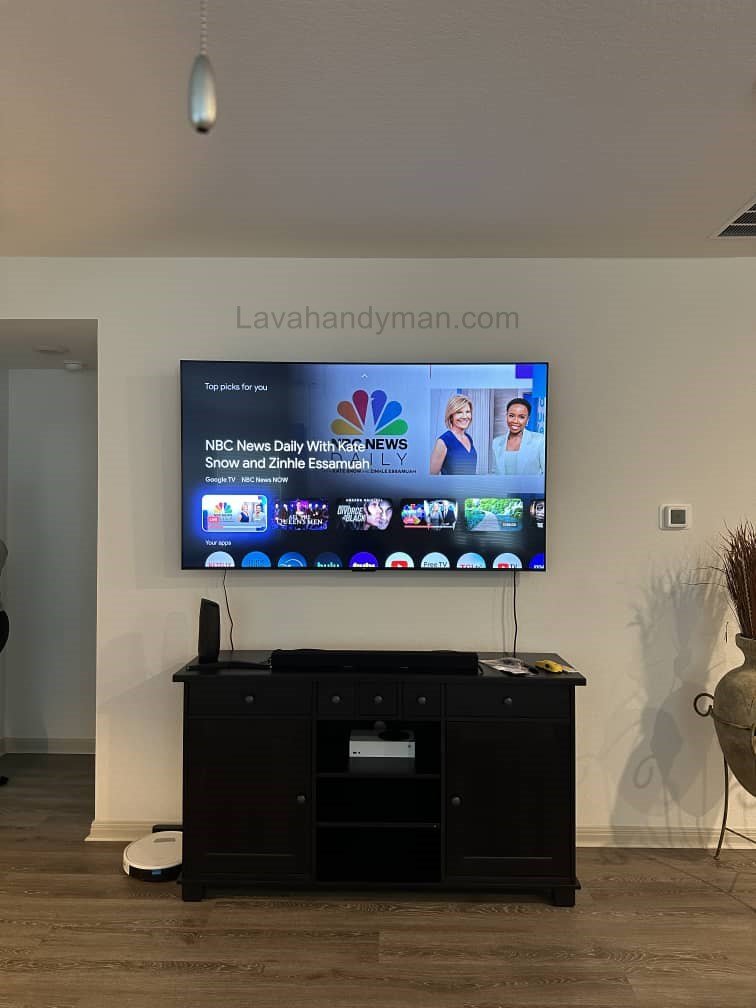
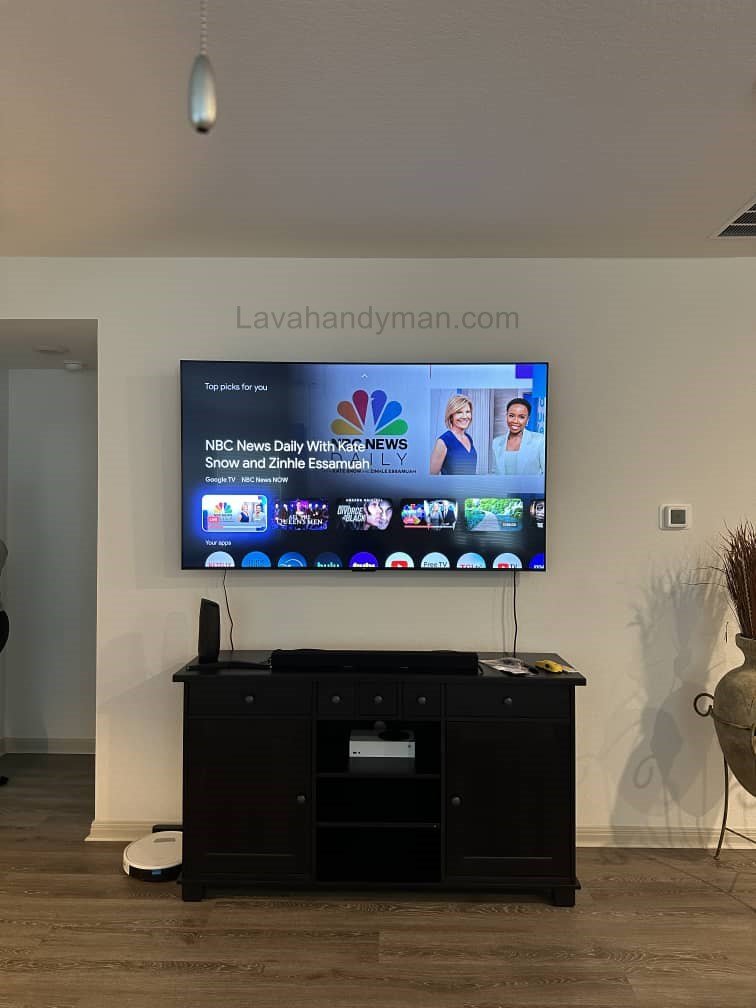
Mounting a TV on drywall frees up floor space and creates a clean, modern look. Properly positioning the TV at eye level improves viewing comfort and provides a better visual experience.
2. Saves Space
Using drywall for TV mounting is especially beneficial for small apartments or rooms. Freeing up floor space allows for better furniture arrangement and a more open layout.
Mount a TV on a Drywall
3. Flexible Interior Design
A wall-mounted TV on drywall can be adjusted in height and position, allowing easy interior design changes without major renovations.
4. Lower Cost Compared to Concrete or Brick Walls
Mounting a TV on drywall requires lighter tools, standard screws, and anchors, reducing installation costs compared to brick or concrete walls. It also makes moving or repositioning the TV easier in the future.
Disadvantages of Mounting a TV on Drywall
1. Weight Limitations
Drywall cannot support very heavy TVs without additional reinforcement. Installing a large TV without proper support may lead to wall damage or TV falling.
2. Requires Reinforcement
To safely mount a TV, brackets must be attached to the studs behind the drywall. Without securing to studs, the wall may crack under pressure.
3. Sensitive to Moisture and Impact
Drywall is vulnerable to water damage and impact. Mounting a TV on a damp or cracked wall can be dangerous and compromise safety.
4. Limitations on Multiple Heavy Installations
Installing several heavy objects on drywall increases localized stress, reducing the safety of the wall and risking structural failure.
Mount a TV on a Drywall
Methods for Mounting a TV on Drywall
1. Mounting with Screws and Anchors
- Locate the wall studs using a stud finder.
- Attach the TV bracket securely to the studs with appropriate screws and anchors.
- Mount the TV and check for stability.
Tip: Never attach the bracket to drywall only; it will not support the TV’s weight.
2. Mounting with Industrial Adhesive
For lightweight TVs, strong industrial adhesives can be used. This method avoids drilling, but it is not suitable for large or heavy TVs.
3. Free-Standing TV Stands
Mount a TV on a Drywall
If the drywall cannot support the TV, free-standing stands are a safe alternative. They hold the TV securely without placing pressure on the wall and allow easy relocation.
4. Weight-Distribution Systems
Some TV brackets feature wide plates that distribute the TV’s weight across a larger surface area, reducing localized stress and increasing mounting safety.
Safety and Professional Tips
- Verify the weight of the TV and bracket.
- Always attach brackets to studs.
- Use quality tools and certified brackets.
- Heavy TVs should be mounted by at least two people.
- Manage cables properly to prevent strain or accidental pulls.
- Avoid mounting on cracked or damp drywall.
Mount a TV on a Drywall
Case Studies
Example 1: 45-inch TV in a 60 m² apartment
- Bracket attached to studs
- Two-person installation
- Result: secure installation with floor space preserved
Example 2: Lightweight TV in a bedroom
- Industrial adhesive used
- Quick, drill-free installation
- Result: suitable for lightweight TVs, weight limitation applies
Example 3: TV on impact-resistant drywall in a living room
- Weight-distribution system used
- Even weight distribution on the wall
- Result: professional and safe installation
Mount a TV on a Drywall
Frequently Asked Questions (FAQ)
1. Can a heavy TV be mounted on drywall?
Yes, with a professional bracket attached to studs.
2. Is it possible to mount without drilling?
Yes, for lightweight TVs using industrial adhesive, but not recommended for heavy TVs.
3. What is the best height to mount a TV?
Eye level when seated, typically 120–130 cm from the floor.
4. How do I find studs behind drywall?
Use a stud finder to locate studs easily.
5. Is it safe to mount a TV on a damp wall?
No, damp walls can damage the drywall and cause the TV to fall.
Mount a TV on a Drywall
Step-by-Step Guide to Mounting a TV on Drywall
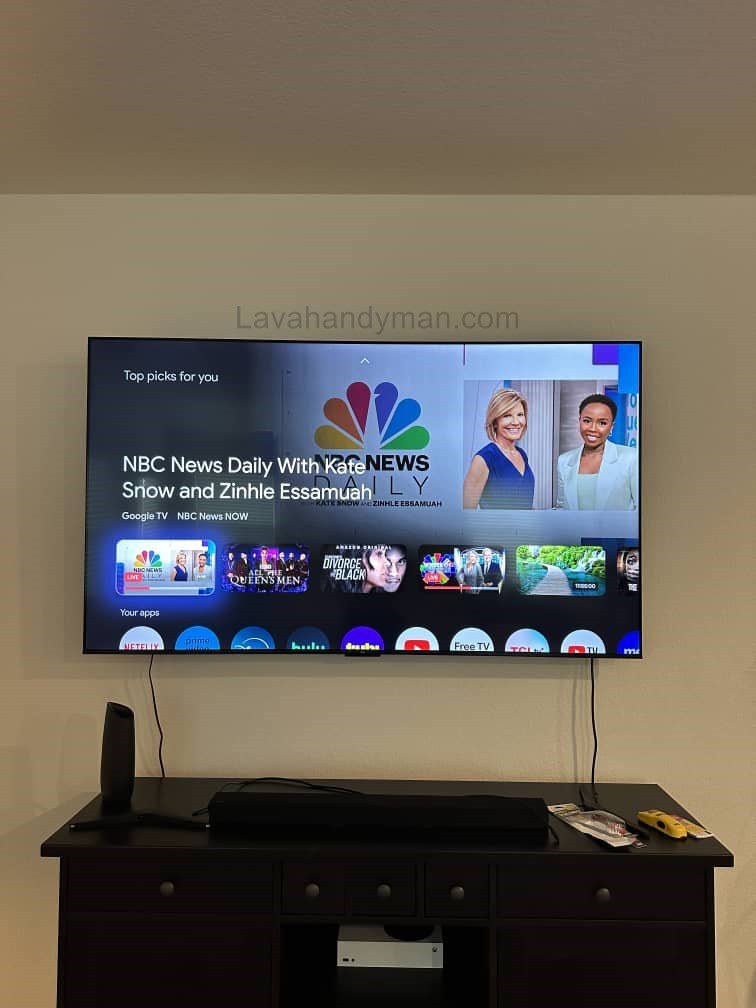
Mounting a TV on drywall is one of the most popular ways to improve home décor, save space, and organize cables efficiently. By following safety tips and precise steps, you can install your TV professionally and securely. Here is a step-by-step guide to mounting a TV on drywall.
Mount a TV on a Drywall
Step 1: Inspect the Wall and Choose the Installation Location
- Choose a suitable wall
- Select a flat, dry wall without cracks.
- Avoid damp or cracked walls to reduce the risk of the TV falling.
- Determine the proper height
- The best height is at eye level while seated (approximately 120–130 cm from the floor).
- Ensure the TV is positioned away from direct light or windows to minimize glare.
- Plan cable routing
- Identify the path for power, HDMI, and other cables.
- Avoid tension or pressure on cables to maintain safety.
Mount a TV on a Drywall
Step 2: Locate the Studs
- Use a Stud Finder
- Identify the wooden or metal studs behind the drywall.
- Studs are typically spaced 40–60 cm apart.
- Mark the stud locations
- Mark the stud positions with a pencil on the wall.
- The TV bracket must be attached to the studs to support the weight safely.
Step 3: Choose the Right Bracket
- Drywall-compatible TV bracket
- Ensure the bracket fits the size and weight of your TV.
- Wide plate brackets are ideal for distributing weight evenly, especially for heavy TVs.
- Match the bracket to the TV weight
- Verify that the bracket can support your TV.
- For heavy TVs, use a professional-grade bracket or a weight-distribution system.
Mount a TV on a Drywall
Step 4: Install the Bracket on the Wall
- Position the bracket on the studs
- Place the bracket on the marked locations and mark the screw holes.
- Drill holes and secure the screws
- Use a drill suitable for drywall.
- Insert screws and anchors into the studs securely.
- Check bracket stability
- Press on the bracket gently to ensure there is no wobbling or movement.
Mount a TV on a Drywall
Step 5: Mount the TV on the Bracket
- Prepare the TV
- Check the attachment points for the bracket on the back of the TV.
- Attach screws or mounting hardware as required.
- Get help from another person
- Never attempt to mount a heavy TV alone. At least two people are recommended.
- Place the TV on the bracket
- Carefully position the TV on the bracket and ensure it locks securely in place.
Step 6: Cable Management and Final Checks
If your bracket allows tilting or swiveling, adjust the angle for optimal viewing.
Mount a TV on a Drywall
Organize cables
Route cables through channels or cable covers.
Prevent any tension or pulling on the cables.
Final safety check
Gently move the TV forward and backward to check for stability.
Tighten any loose screws if necessary.
Adjust viewing angle
Guide to Mounting a TV on Different Wall Types
Mounting a TV on a wall is one of the best ways to enhance home aesthetics, save space, and organize cables efficiently. Each wall type requires specific tools, methods, and safety precautions. Below is a comprehensive guide for mounting a TV on drywall, brick, concrete, and glass/stone walls.
1. Mounting a TV on Drywall
Features:
Mount a TV on a Drywall
- Lightweight and easy to cut
- Limited weight capacity
- Sensitive to impact and moisture
Installation Method:
- Use a bracket attached to studs
- Secure with drywall screws and anchors
- For lightweight TVs: you can use industrial adhesive or no-drill brackets
Safety Tips:
- Never attach the bracket to drywall alone
- Heavy TVs require a weight-distribution system
- Use at least two people for heavy TV installation
2. Mounting a TV on a Brick Wall
Features:
- Very strong and can handle heavy TVs
- Suitable for large TVs
Mount a TV on a Drywall
Installation Method:
- Use a standard wall bracket
- Drill holes with a masonry bit and insert metal anchors
- Secure the bracket and then mount the TV
Safety Tips:
- Ensure anchors are the correct size and high quality
- Use a masonry drill bit for precise drilling
3. Mounting a TV on a Concrete Wall
Features:
- Extremely strong, ideal for large and heavy TVs
- Requires specialized drilling tools
Mount a TV on a Drywall
Installation Method:
- Use a standard bracket with concrete anchors
- Drill with a hammer drill
- Attach the bracket and mount the TV
Safety Tips:
- Check the wall’s load capacity if multiple heavy objects are installed
- Holes may remain visible if the TV is relocated later
4. Mounting a TV on Glass or Stone Walls
Features:
- Fragile or very hard surface
- Requires specialized tools and methods
Mount a TV on a Drywall
Installation Method:
- Use special brackets with pressure distribution systems
- Use anchors or clamps designed for glass/stone
- In some cases, a free-standing TV stand is safer
Safety Tips:
- Avoid mounting directly on glass
- Use specialized tools and anchors
- Consult a professional to prevent cracks or wall damage
Comparison Table for TV Installation on Different Wall Types
| Wall Type | Weight Capacity | Required Tools | Recommended Method |
|---|---|---|---|
| Drywall | Light to medium | Screws, anchors, bracket | Mount on studs; adhesive for light TVs |
| Brick | Heavy | Masonry bit, metal anchors | Standard bracket + anchors |
| Concrete | Very heavy | Hammer drill, anchors | Standard bracket + anchors |
| Glass / Stone | Limited | Specialized tools, clamps | Pressure distribution system or free-standing stand |
Mount a TV on a Drywall
Conclusion
Mounting a TV on drywall is a modern, efficient, and visually appealing solution for small apartments and homes. By following professional guidelines, using proper tools, and mounting on studs, homeowners can enjoy the benefits of aesthetics, space-saving, and flexible interior design while ensuring safety.
📞 Need Help?
Let us take care of the hard work while you sit back and relax.
📍 Serving: Austin, Round Rock, Cedar Park & more
📱 Call or Text: (737) 420-6992
🌐 Visit: https://lavahandyman.com