
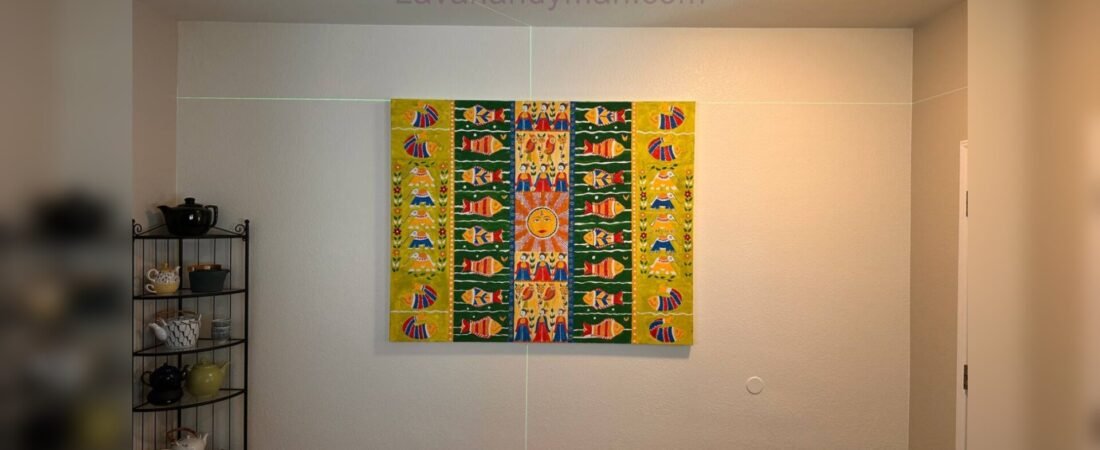
How to Hang a Painting Based on the Type of Wall: Exploring the Best Methods and Tools for Every Wall Type
Introduction
Knowing how to hang a painting correctly can make a significant difference in the appearance, safety, and functionality of your interior space. Whether you are decorating a living room, displaying artwork in a bedroom, or creating a gallery wall in an office, choosing the right installation method is essential.
However, hanging a painting involves more than selecting the perfect position and hammering a nail into the wall. Different wall materials have different structural properties, which means the tools, screws, anchors, and hanging techniques that work on one surface may not be suitable for another.
For example, a lightweight canvas may hang securely using a picture hook on drywall, while a large framed painting may require a screw installed into a wall stud. Brick and concrete walls generally need masonry-compatible fasteners, whereas plaster and tiled surfaces require additional care to prevent cracking and surface damage.
How to Hang a Painting
The weight and dimensions of the painting also matter. A heavy frame with glass needs a more secure mounting system than a small decorative canvas. Choosing inappropriate hardware can lead to loose fittings, damaged walls, or artwork falling unexpectedly.
In this complete guide, you will learn how to hang a painting on different wall types, including drywall, plaster, brick, concrete, tile, and wood paneling. You will also discover which tools and wall anchors to use, how to hang heavy paintings safely, and how to achieve a balanced, professional-looking display.
1. Why Choosing the Right Picture Hanging Method Matters
How to Hang a Painting
The best way to hang a painting depends on three main factors: wall material, artwork weight, and mounting hardware.
Each wall type has different strengths and limitations. Drywall is relatively easy to work with but may not support heavy objects without appropriate anchors or structural support. Plaster can crack under concentrated force, while brick and concrete usually require specialized drilling equipment and masonry fasteners.
Understanding these differences helps you choose a suitable installation method before making holes in your wall.
The main benefits of choosing the correct picture hanging hardware include:
- Better stability: Suitable fasteners help keep paintings securely attached to the wall.
- Reduced wall damage: The right tools and drilling techniques help prevent cracks, chipped surfaces, and unnecessary holes.
- Improved safety: Correctly installed hardware reduces the risk of artwork falling.
- Long-term reliability: Appropriate mounting systems are less likely to loosen when installed according to their specifications.
- A professional finish: Accurate positioning and secure mounting help create a neat and visually balanced display.
How to Hang a Painting
Before starting, determine the wall material, measure the complete weight of the framed artwork, and check the type of hanging hardware attached to the frame.
These simple steps will help you choose the most suitable way to hang your painting.
2. Essential Tools for Hanging a Painting
Having the right picture hanging tools makes installation easier and helps you achieve accurate results.
The equipment you need will depend on the wall material and the weight of the artwork, but several basic tools are useful for most installations.
Measuring Tape
A measuring tape helps you determine the ideal hanging height, measure the distance between mounting points, and maintain consistent spacing between multiple paintings.
How to Hang a Painting
Accurate measurements are particularly important when creating a gallery wall or hanging several frames in a straight line.
Spirit Level
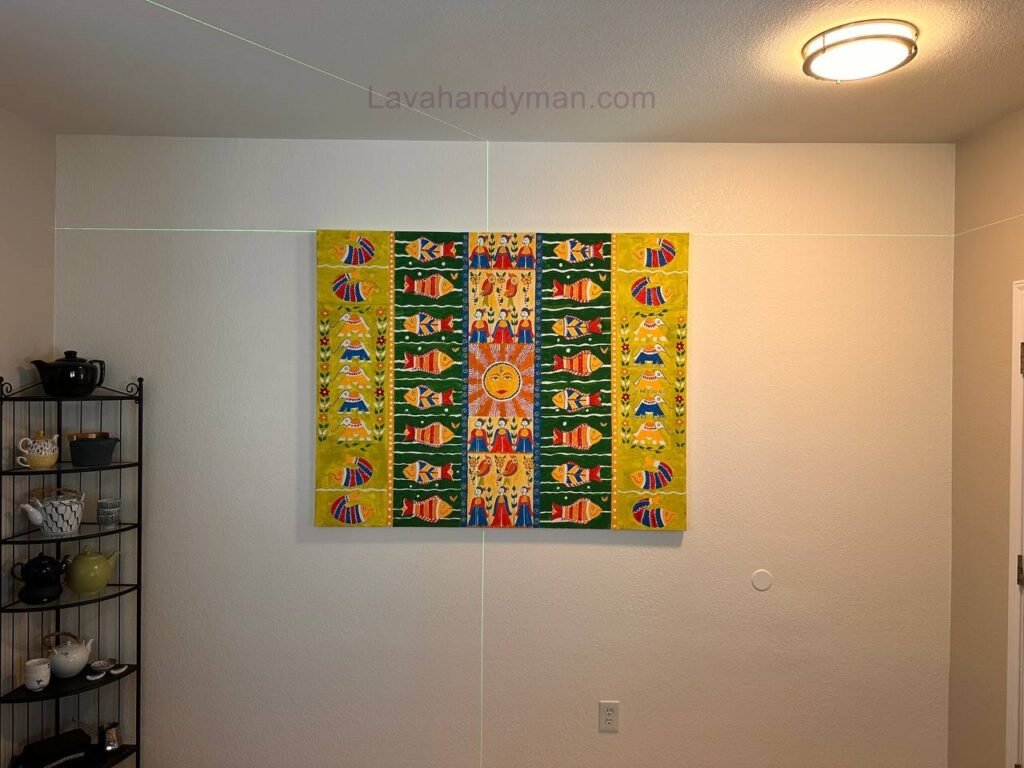
A spirit level helps you make sure the painting hangs straight. A laser level can be especially useful when installing multiple frames or aligning artwork across a large wall.
Pencil and Painter’s Tape
Use a pencil to mark drilling points and painter’s tape to create temporary guides. You can also cut paper templates the size of your frames and arrange them on the wall before installing any hardware.
This approach allows you to adjust the composition without creating unnecessary holes.
Stud Finder
How to Hang a Painting
A stud finder helps locate wooden or metal framing behind drywall. Securing suitable hardware into a structural stud can provide a stronger mounting point than relying on unsupported drywall alone.
Some wall scanners can also detect certain concealed services. However, these devices have limitations, so always follow the manufacturer’s instructions and investigate uncertain locations before drilling.
Drill and Appropriate Drill Bits
A drill may be necessary for installing wall anchors and screws. The drill bit must be suitable for the material you are drilling.
For example, masonry drill bits are designed for suitable brick and concrete applications, while tile-compatible bits are needed for ceramic and porcelain surfaces.
Using an unsuitable bit can damage the wall, create oversized holes, or compromise the installation.
How to Hang a Painting
Picture Hooks, Screws, and Wall Anchors
The right mounting hardware depends on the substrate and the artwork’s weight.
Common options include:
- Picture hooks for suitable lightweight frames.
- Drywall anchors for approved hollow-wall applications.
- Toggle anchors for compatible hollow walls.
- Masonry plugs and screws for suitable brick or concrete.
- Concrete screws for approved concrete applications.
- French cleats for distributing the load of larger frames across a mounting line.
- Adhesive picture-hanging strips for compatible surfaces and frames.
Always check the product’s load rating and installation requirements before choosing a fastener.
How to Hang a Painting
3. How to Identify Your Wall Type Before Hanging a Painting
Identifying the wall material is an important step in choosing the best way to hang a painting.
A painted wall does not necessarily reveal what lies underneath its surface. It may be constructed from drywall, traditional plaster, brick, concrete, or a combination of materials.
Drywall or Plasterboard
Drywall, also called plasterboard or gypsum board, is commonly used in modern homes and commercial buildings. It consists of a gypsum core covered with paper and attached to a supporting framework.
Because drywall has limited holding strength on its own, heavy paintings generally require appropriate anchors or attachment to suitable structural framing.
How to Hang a Painting
Traditional Plaster
Traditional plaster is frequently found in older buildings. It may be applied over wooden lath, metal lath, masonry, or another supporting structure.
Plaster can be hard but brittle, making it vulnerable to cracking during drilling or hammering.
Brick
Brick walls may consist of solid brick, hollow brick, or other masonry systems. The condition of the brick and mortar also affects the choice of fastener.
A suitable masonry fixing is essential for a secure installation.
Concrete
Concrete is dense and generally requires masonry-compatible drilling equipment and anchors.
How to Hang a Painting
The correct installation method depends on whether the surface is solid concrete, a concrete block, or another type of construction.
Tile
Ceramic and porcelain tiles have hard surfaces that can crack or chip when drilled incorrectly.
The material behind the tile is equally important because the final anchor must be suitable for the underlying wall.
Wood Paneling
Wood-paneled walls vary in thickness, strength, and construction. A decorative panel may not provide enough support for a heavy framed painting.
How to Hang a Painting
Whenever possible, identify the structural backing or framing before installing the mounting hardware.
4. How to Hang a Painting on Drywall
Drywall is one of the most common wall types in modern interiors. Fortunately, hanging a painting on drywall is relatively straightforward when you select the correct mounting hardware.
Step 1: Measure the Painting’s Weight
Weigh the complete artwork, including the frame, glass, backing, and hanging hardware.
Do not assume that a small frame is always lightweight. Glass, solid wood frames, and decorative materials can significantly increase the total weight.
Step 2: Locate a Wall Stud
How to Hang a Painting
For heavier paintings, use a stud finder to locate a suitable structural stud behind the drywall.
Fastening into structural framing generally provides a more reliable attachment than using a basic nail or screw directly in the gypsum board.
If the ideal position does not align with a stud, consider a drywall anchor specifically designed for the board and expected load.
Step 3: Choose the Correct Drywall Anchor
How to Hang a Painting
Different drywall anchors serve different purposes.
Some are suitable for lightweight decorative frames, while others are designed for greater loads or hollow-wall applications.
Select a product based on its published load rating, the wall construction, the frame’s weight, and the manufacturer’s installation instructions.
Step 4: Mark the Hanging Point
Measure the distance between the top of the painting and its hanging wire, D-rings, or other mounting hardware.
Transfer the measurement to the wall and mark the exact location with a pencil.
Check the position with a level before drilling.
How to Hang a Painting
Step 5: Install the Fastener
If a pilot hole is required, use the specified drill-bit diameter.
Install the anchor according to its instructions and avoid overtightening. Excessive force can damage the drywall or reduce the anchor’s holding ability.
Step 6: Hang and Level the Painting
Place the painting onto the installed hardware and confirm that the hanging mechanism is properly engaged.
Use a spirit level to make any final adjustments.
If the anchor moves, spins freely, or damages the board, remove the artwork and correct the installation before continuing.
How to Hang a Painting
5. How to Hang a Painting on Plaster Walls
Hanging a painting on plaster requires additional care because the surface may crack when exposed to excessive force.
Inspect the Wall
Before installing anything, check for cracks, loose plaster, crumbling areas, and signs of moisture damage.
Damaged plaster should not be treated as a reliable mounting surface without investigating the underlying structure.
Select Suitable Picture Hanging Hardware
How to Hang a Painting
Lightweight artwork may be suitable for a picture hook specifically designed for plaster.
For heavier paintings, identify the supporting structure or select an anchor approved for the actual wall construction.
Remember that plaster over wooden lath behaves differently from plaster applied directly over masonry.
Drill Carefully
If the installation requires a pilot hole, use the appropriate drill bit and a controlled drilling speed.
Avoid unnecessary impact or force, which may cause the plaster to crack or separate from its backing.
How to Hang a Painting
Install the Fastener
Follow the manufacturer’s instructions and avoid overtightening screws or expanding anchors inside fragile plaster.
If the surface begins to crumble or detach, stop and reassess the mounting location.
Hang the Painting and Check for Movement
Hang the frame gently and inspect the surrounding plaster.
How to Hang a Painting
Look for new cracks, movement, or visible deformation. For heavy or valuable artwork, consider a more secure mounting system that transfers the load to suitable structural support.
6. How to Hang a Painting on a Brick Wall
Brick walls can provide a durable mounting surface, provided the masonry is in good condition and the correct fasteners are used.
Step 1: Inspect the Brick and Mortar
Determine whether the brick is solid, hollow, soft, or deteriorating.
Check the mortar joints for crumbling or damage. The condition of the masonry will influence which fixing is appropriate.
Step 2: Choose a Masonry-Compatible Anchor
How to Hang a Painting
Use a wall plug, masonry screw, or another fastener specifically approved for the type of brick and the intended load.
Standard drywall anchors are not designed to replace masonry fasteners.
Step 3: Mark the Drilling Location
Measure the desired hanging height and account for the position of the frame’s mounting hardware.
Before drilling, check for concealed wiring, plumbing, or other services.
Step 4: Drill the Hole
How to Hang a Painting
Use a suitable masonry drill bit and follow the fastener manufacturer’s instructions for hole diameter and depth.
Maintain control of the drill and avoid excessive force. The appropriate drilling mode depends on the brick type and the fixing being installed.
Step 5: Clean the Hole and Install the Anchor
Remove drilling dust as directed by the manufacturer.
How to Hang a Painting
Insert the correct anchor and install the matching screw. An incorrectly sized hole can reduce the holding strength of the fixing.
Step 6: Hang the Painting
Place the painting onto the fastener and confirm that the frame sits securely against the wall.
For hollow brick or deteriorating masonry, use a fixing designed for the specific substrate rather than assuming that a standard solid-brick anchor will be suitable.
7. How to Hang a Painting on Concrete Walls
How to Hang a Painting
Concrete walls require suitable drilling equipment and compatible mounting hardware. The process becomes easier when the wall construction and artwork weight are assessed before installation.
Identify the Concrete Surface
Determine whether you are working with solid concrete, concrete blocks, or a surface covered with another material.
Different substrates may require different types of anchors.
Select the Correct Concrete Anchor
Suitable options may include concrete screws, masonry plugs and screws, or other approved concrete anchoring systems.
How to Hang a Painting
Check the manufacturer’s technical information to confirm that the fixing is appropriate for the substrate and expected load.
Check for Concealed Services
Before drilling, consider electrical wiring, plumbing, reinforcement, and structural components hidden within the wall.
Do not drill into suspected post-tensioning zones or locations where concealed services may be present without confirming that the area is safe.
Drill to the Specified Depth
Use the correct masonry drill bit and follow the installation requirements for diameter, depth, and hole cleaning.
How to Hang a Painting
Some fasteners require the hole to be cleaned before the anchor is installed. Ignoring this requirement may compromise the fixing.
Install the Anchor and Hang the Painting
Install the anchor according to the manufacturer’s instructions.
Once the fixing is secure, hang the artwork and check its alignment with a spirit level.
For large, heavy, or valuable paintings, professional installation may be advisable if the wall construction is uncertain.
8. How to Hang a Painting on Tiled Walls
How to Hang a Painting
Tiled walls require special attention because the tile surface can crack even when the material behind it is strong.
Identify the Underlying Wall
Determine whether the tiles are installed over drywall, cement board, masonry, or another substrate.
The mounting anchor must be suitable for the underlying material, not just the tile.
Choose a Tile-Compatible Drill Bit
How to Hang a Painting
Use a drill bit designed for the specific tile material.
Follow the bit manufacturer’s instructions for drilling speed and pressure. Avoid hammer mode while drilling through the tile itself.
Mark and Drill Carefully
Measure the mounting point before drilling. Avoid positioning holes too close to tile edges, where cracking may be more likely.
Apply controlled pressure and allow the bit to cut through the surface without forcing it.
Once through the tile, use the appropriate drilling method for the underlying wall.
How to Hang a Painting
Install the Correct Fastener
Choose an anchor suitable for the substrate and artwork weight.
For heavy artwork or expensive tile installations, professional assistance can help reduce the risk of cracking and costly repairs.
9. How to Hang a Painting Without Nails or Drilling
If you want to avoid drilling holes, several alternative picture-hanging methods may be suitable.
However, each option has specific limitations, and no method is appropriate for every wall or painting.
How to Hang a Painting
Adhesive Picture-Hanging Strips
Adhesive picture-hanging strips are designed for compatible surfaces and frames within their stated weight limits.
Before using them:
- Check the manufacturer’s maximum load and frame-size restrictions.
- Confirm that the wall surface is approved for the product.
- Prepare the surface according to the instructions.
- Apply the required number and arrangement of strips.
- Observe any specified waiting period before hanging the painting.
- Follow the recommended removal procedure.
Adhesive strips may be unsuitable for wallpaper, rough brick, heavily textured surfaces, weak paint, dusty walls, or freshly painted surfaces.
Do not exceed the published weight rating or assume that adding more strips automatically creates a predictable increase in load capacity.
How to Hang a Painting
Adhesive Picture Hooks
Adhesive hooks may be suitable for lightweight artwork when the surface and hook are compatible.
Always confirm that the product is intended for picture hanging and that its load rating is appropriate for the frame.
Picture Rails
Picture rails provide a convenient way to display artwork without drilling a new hole for every painting.
Compatible hooks and cords attach to the rail, allowing you to adjust the height and position of frames more easily.
Picture rails are particularly useful for gallery walls, art collections, and spaces where the displayed artwork changes frequently.
How to Hang a Painting
Displaying Paintings on Shelves
Another option is to place paintings on a stable shelf or console rather than mounting them directly on the wall.
Make sure the frame cannot easily slide or fall. Heavy or valuable artwork may still require appropriate securing measures.
10. How to Hang Heavy Paintings Safely
Heavy paintings need more careful planning than lightweight decorative frames.
How to Hang a Painting
The total weight includes the artwork, frame, glass, backing, and any attached mounting hardware. The strength of the wall and the arrangement of the fasteners are equally important.
For drywall, fastening into suitable structural framing is often preferable. If that is not possible, select an anchor designed for the wall construction and intended load.
For brick and concrete, choose a compatible masonry fixing. For plaster, investigate the supporting structure rather than relying on fragile surface material alone.
A French cleat can be useful for large paintings because it distributes the load across a longer mounting line. However, the cleat itself must be securely attached to suitable structural support or an appropriately rated anchoring system.
Before installing heavy artwork, consider where it will hang. A large frame above a bed, sofa, desk, or frequently used walkway presents a greater potential risk if the mounting system fails.
For oversized, expensive, fragile, or unusually heavy artwork, a qualified installer can assess the wall and recommend a suitable mounting system.
How to Hang a Painting
11. How High Should You Hang a Painting?
Choosing the correct height helps a painting look balanced and visually connected to the room.
A common starting point is to position the center of the artwork approximately 57 to 60 inches (145 to 152 centimeters) above the floor.
This is a guideline rather than a strict rule. The best height depends on the painting’s dimensions, ceiling height, furniture placement, and viewing conditions.
Hanging a Painting Above a Sofa
When hanging artwork above a sofa, aim for a visually connected arrangement rather than leaving an unnecessarily large gap between the frame and furniture.
How to Hang a Painting
Consider the width of the painting in relation to the sofa and leave enough space for the composition to feel balanced.
Hanging a Painting Above a Bed
Artwork above a bed should be positioned carefully, with particular attention to secure mounting.
Choose hardware suitable for the frame’s weight and wall construction. Avoid relying on unsuitable adhesive products or weak fixings for heavy artwork above sleeping areas.
Creating a Gallery Wall
For a gallery wall, plan the complete arrangement before drilling.
How to Hang a Painting
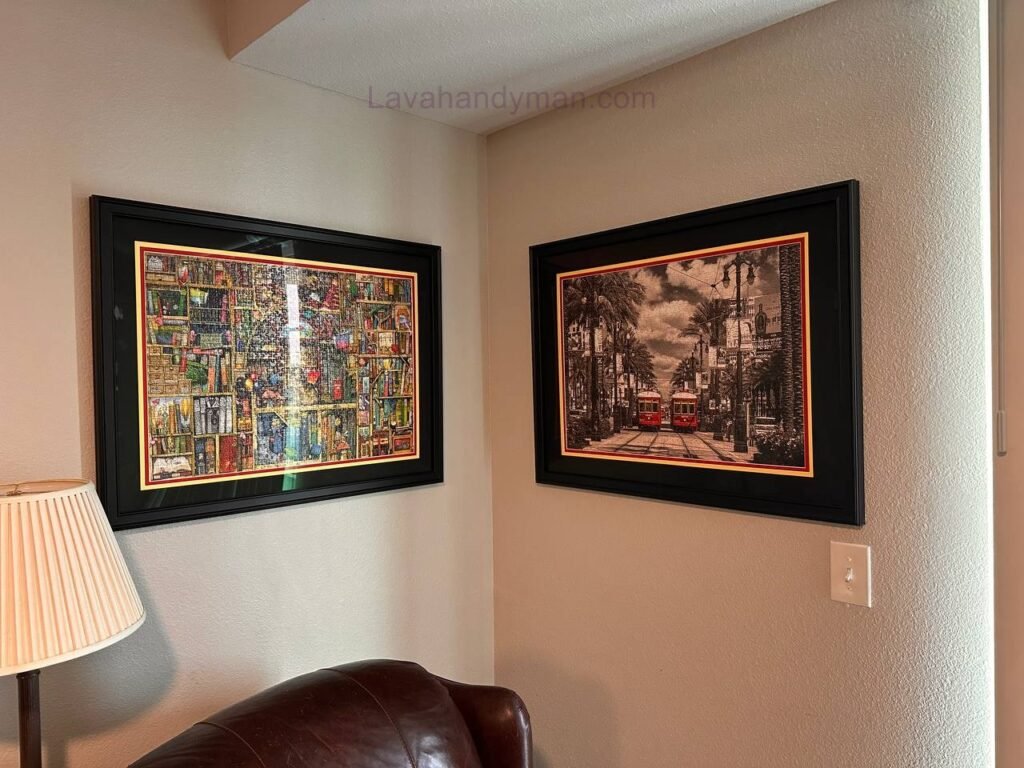
Use paper templates to test the positions of different frames. Maintain consistent spacing where appropriate, and use a level to align the artwork.
A well-planned arrangement reduces installation errors and helps create a more professional result.
Considering Lighting and Environmental Conditions
Avoid placing valuable artwork where direct sunlight, excessive heat, or moisture may damage it.
Glazed frames may also reflect windows or artificial lights, reducing visibility. Consider the lighting conditions before deciding on the final position.
12. Common Picture Hanging Mistakes to Avoid
Avoiding a few common mistakes can improve installation quality and reduce the risk of wall damage.
Using the Same Anchor for Every Wall
Drywall, plaster, brick, concrete, and tile have different properties. Always choose a fixing designed for the actual substrate.
Guessing the Artwork’s Weight
How to Hang a Painting
A framed painting may weigh considerably more than it appears to. Weigh the complete piece before selecting the hardware.
Ignoring Load Ratings
A fastener’s published capacity depends on the product, substrate, and installation conditions. Follow the manufacturer’s specifications rather than treating the maximum rating as a universal guarantee.
Drilling Without Checking the Wall
Concealed wiring, plumbing, reinforcement, and structural components may be present behind the surface.
Check the proposed location before drilling and seek professional advice when the construction is uncertain.
Overtightening Screws
Excessive tightening can damage drywall, strip threads, crack brittle surfaces, or compromise an anchor’s grip.
Install fasteners according to their instructions.
Hanging Artwork on Damaged Walls
Loose plaster, crumbling brick, deteriorated mortar, and damaged drywall may not provide reliable support.
Repair or assess the surface before installing the painting.
Skipping the Final Stability Check
After installation, confirm that the fixing is secure, the hanging hardware is properly engaged, and the frame sits level.
If the anchor moves or the painting shifts unexpectedly, remove the artwork and correct the problem before displaying it again.
13. Maintaining Your Painting After Installation
Regular inspection can help keep your artwork secure over time.
Check for loose screws, shifting frames, damaged hanging wire, cracks around mounting points, and signs that an anchor is moving.
Changes in humidity, accidental impacts, and building movement can affect the stability of wall-mounted artwork.
When removing a painting, support the frame with both hands and lift it carefully from the hanging hardware.
For valuable artwork, consider appropriate framing hardware, suitable environmental conditions, and professional advice on mounting and conservation.
Frequently Asked Questions About Hanging Paintings
What Is the Best Way to Hang a Painting on Drywall?
For lightweight paintings, a suitable picture hook may be sufficient. For heavier artwork, fastening into an appropriate wall stud or using a drywall anchor rated for the load is generally preferable. The correct choice depends on the frame’s weight, wall construction, and hardware specifications.
How Do You Hang a Painting on a Brick Wall?
Use a masonry-compatible fixing suitable for the type and condition of the brick. Drill with an appropriate masonry bit, follow the specified hole dimensions, and install the anchor according to the manufacturer’s instructions.
Can You Hang a Painting Without Drilling Holes?
Yes. Adhesive picture-hanging strips, compatible adhesive hooks, picture rails, and stable display shelves can provide alternatives. However, each method has specific surface and weight limitations.
What Is the Best Way to Hang a Heavy Painting?
The best method depends on the wall type and the artwork’s weight. Suitable structural fasteners, approved wall anchors, or a properly installed French cleat may be appropriate. Heavy artwork should never be supported by hardware that is not rated for the installation.
How Do You Hang a Painting on a Plaster Wall Without Cracking It?
Inspect the wall, choose a suitable fixing, and use a correctly sized pilot hole when required. Avoid aggressive hammering and stop if the plaster begins to crumble or separate from its backing.
Can You Hang a Painting on a Concrete Wall?
Yes. Use a fixing specifically designed for the concrete or masonry substrate. Select the appropriate drill bit and follow the manufacturer’s requirements for hole diameter, depth, and installation.
Are Adhesive Picture-Hanging Strips Reliable?
They can be reliable when the exact product is compatible with the surface and frame, and the installation follows the manufacturer’s instructions. They are not suitable for every wall or every painting.
How High Should a Painting Be Hung?
A common starting point is to position the center of the artwork approximately 57 to 60 inches above the floor. Adjust this guideline according to the room, furniture, painting dimensions, and viewing conditions.
What Tools Are Needed to Hang a Painting?
Common tools include a measuring tape, spirit level, pencil, suitable drill and drill bits, picture hooks, screws, and wall anchors. A stud finder or wall scanner may also be useful, depending on the wall construction.
Should You Hire a Professional to Hang a Painting?
Professional installation is worth considering for oversized or heavy artwork, valuable paintings, fragile plaster, historic buildings, tiled walls, or installations where a falling frame could cause injury.
Conclusion
Learning how to hang a painting on different wall types helps you create an attractive display while protecting your artwork and your home.
The best picture hanging method depends on the wall material, the weight of the complete frame, and the type of mounting hardware required. Drywall may need a suitable stud or wall anchor, plaster requires careful handling, and brick and concrete generally need compatible masonry fixings. Tiled surfaces require particular attention to prevent cracking.
Before starting, identify the wall material, measure the painting’s weight, select the correct tools, and check the manufacturer’s installation requirements. Accurate positioning, careful drilling, and a final stability check will help you achieve a secure and professional-looking result.
Whether you are installing a small decorative frame or a large statement painting, choosing the right hanging method makes all the difference. With appropriate hardware and careful preparation, you can display your artwork confidently while minimizing wall damage and reducing the risk of accidents.
📞 Need Help?
Let us take care of the hard work while you sit back and relax.
📍 Serving: Austin, Round Rock, Cedar Park & more
📱 Call or Text: (737) 420-6992
🌐 Visit: https://lavahandyman.com