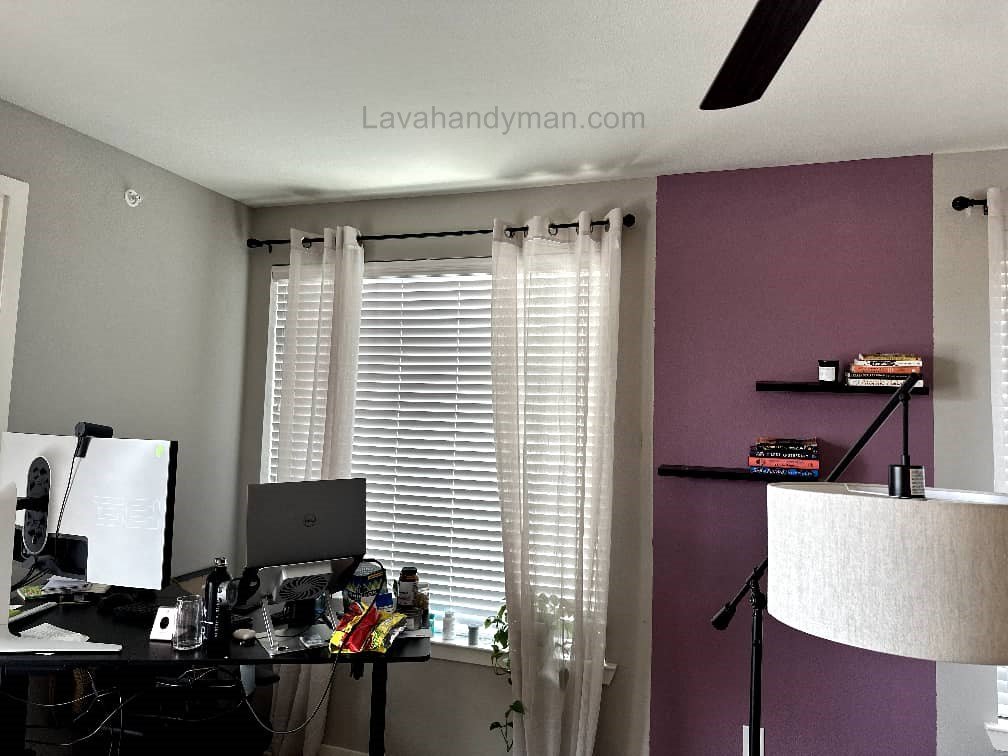
Professional Home Curtain Installation: Important Tips to Know Before and After Installation
Choosing the right curtains can transform the appearance of your home, improve privacy, control natural light, and add comfort to your living space. However, choosing high-quality curtains is only part of the process. Professional home curtain installation is equally important for achieving a clean, attractive, and long-lasting result.
Incorrect measurements, poorly positioned curtain rods, weak mounting hardware, or improper installation can affect both the appearance and functionality of your curtains. This is why many homeowners choose professional curtain installation services instead of attempting complicated installations themselves.
In this comprehensive guide, we explain everything you should know about home curtain installation, including how to prepare for installation, how to measure your windows, how to choose the right curtain hardware, what happens during professional installation, and what to check after the curtains have been installed.
Professional Home Curtain Installation
What Is Professional Home Curtain Installation?
Professional home curtain installation is a service in which an experienced curtain installer measures the window, determines the appropriate installation position, selects suitable mounting hardware, and securely installs the curtain rod, track, or other curtain system.
Depending on the type of curtains and the structure of the room, curtains can be installed on walls, ceilings, inside window frames, or outside the window frame.
Professional installation is particularly useful for large windows, floor-to-ceiling curtains, heavy blackout curtains, motorized curtains, custom-made curtains, and complicated installations.
Professional Home Curtain Installation
Why Is Professional Curtain Installation Important?
Installing curtains may seem like a straightforward task, but several small mistakes can have a major effect on the final result.
A professional curtain installer understands how to work with different wall materials, curtain weights, window sizes, and mounting systems. Professional installation can provide several advantages.
Accurate Curtain Measurements
Correct measurements are one of the most important parts of curtain installation at home. Curtains that are too short, too narrow, or incorrectly positioned may not provide adequate privacy or light control.
Professional installers can measure the window and determine the appropriate curtain width and length based on the style of curtain and the desired appearance.
Professional Home Curtain Installation
Secure Installation
Curtain rods and tracks need to support the weight of the curtains. Heavy blackout curtains or layered curtains can place considerable pressure on mounting brackets.
Using the correct screws, anchors, and brackets helps prevent loose hardware, sagging curtain rods, and damage to walls.
Professional Appearance
A properly installed curtain should hang evenly, open and close smoothly, and complement the proportions of the room.
Professional window curtain installation can help create a clean and polished appearance that may be difficult to achieve with inaccurate DIY measurements.
Professional Home Curtain Installation
Important Tips Before Home Curtain Installation
Preparing the installation area before the installer arrives can make the process easier and help prevent unnecessary problems.
1. Choose the Right Curtain Type
The first step is selecting a curtain that meets the needs of the room.
Different curtain styles provide different benefits:
Professional Home Curtain Installation
- Blackout curtains are ideal for bedrooms and rooms where light control is important.
- Sheer curtains allow natural light into the room while providing a degree of privacy.
- Roller shades offer a simple and modern appearance.
- Zebra shades provide flexible control over light and privacy.
- Traditional curtain panels are available in a wide range of fabrics, colors, and styles.
- Thermal curtains can help improve comfort by reducing heat transfer around windows.
Consider the purpose of the room, amount of sunlight, privacy requirements, window size, and interior design before choosing your curtains.
2. Measure Your Windows Correctly
Accurate measurement is essential for successful curtain measuring and installation.
Depending on the installation method, you may need to measure:
Professional Home Curtain Installation
- Window width
- Window height
- Wall space around the window
- Distance from the ceiling to the window
- Distance from the window to the floor
- Available space above and beside the window
It is also important to determine whether the curtains will be installed inside or outside the window frame.
How Wide Should Curtains Be?
Curtains usually need to be wider than the window itself. Additional fabric creates folds and allows the curtains to cover the window effectively when closed.
The amount of extra fabric depends on the fabric type, curtain heading, and desired fullness.
A professional installer can help determine the appropriate width based on the specific curtain style.
Professional Home Curtain Installation
3. Decide Between Wall and Ceiling Installation
One of the most important decisions in professional curtain installation is choosing the correct mounting location.
Wall-Mounted Curtain Installation
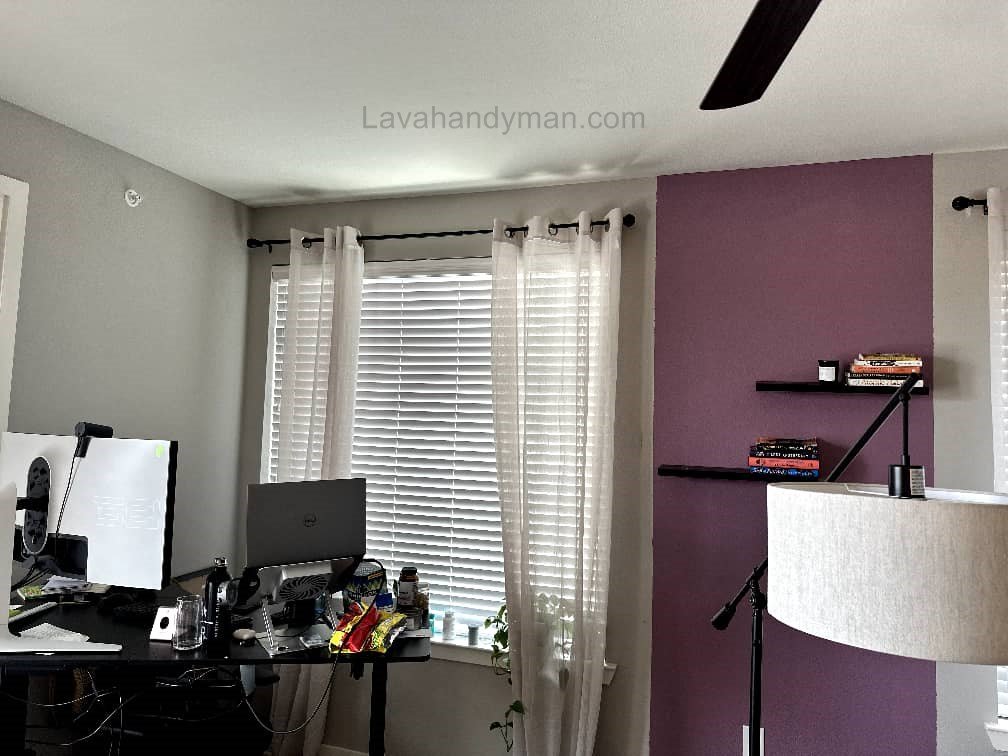
Wall-mounted curtain rods are one of the most common choices for residential properties. The rod is usually installed above the window and extends beyond both sides.
This option works well with traditional curtain panels and many decorative curtain styles.
Ceiling-Mounted Curtain Installation
Professional Home Curtain Installation
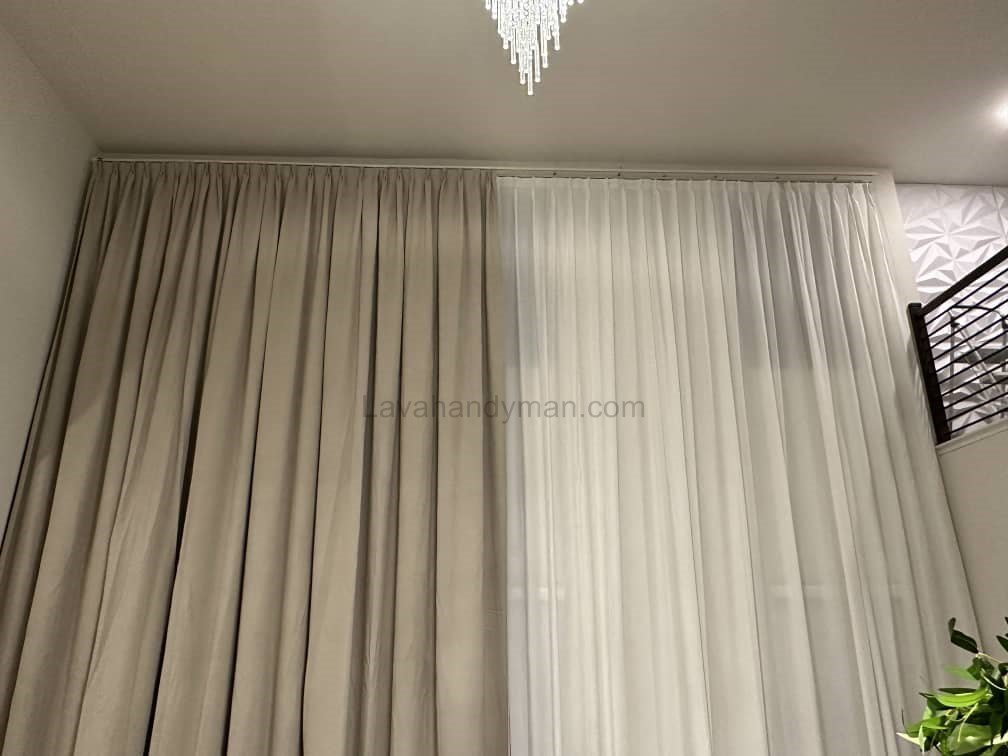
Ceiling-mounted tracks can provide a modern and streamlined appearance.
They are particularly useful for:
- Floor-to-ceiling windows
- Large glass doors
- Modern interiors
- Wide windows
- Minimalist spaces
Installing curtains closer to the ceiling can also create the visual impression of taller walls.
4. Check the Wall or Ceiling Material
Before installing a curtain rod or track, the installer should determine what type of material is behind the mounting surface.
Professional Home Curtain Installation
Common surfaces include:
- Drywall
- Concrete
- Brick
- Wood
- Plaster
- Suspended ceilings
Different materials require different anchors and screws.
For heavy curtains, it may be necessary to locate wall studs or use heavy-duty anchors. Choosing the correct hardware is an important part of safe and durable home curtain installation.
5. Choose the Right Curtain Hardware
The curtain rod, track, brackets, hooks, and other accessories should be appropriate for the curtain’s weight and design.
Professional Home Curtain Installation
Lightweight curtains may only require standard hardware, while heavy curtains may require reinforced brackets and stronger rods.
The hardware should also match the style of the room.
For example, decorative curtain rods may work well in traditional interiors, while slim curtain tracks are often preferred for modern and minimalist spaces.
Professional Curtain Installation Process
Once the measurements, curtains, and hardware have been prepared, the installation process can begin.
Professional Home Curtain Installation
Step 1: Mark the Installation Position
The installer determines the exact location of the curtain rod, track, or brackets.
The position should be measured carefully to ensure that the curtains are symmetrical and properly aligned with the window.
A spirit level or laser level can be used to ensure that the installation is perfectly straight.
Step 2: Install the Brackets or Track
The appropriate mounting hardware is then attached to the wall or ceiling.
The installer should use screws and anchors suitable for the surface material and the weight of the curtains.
For wide windows, additional brackets may be necessary to prevent the curtain rod from bending.
Professional Home Curtain Installation
Step 3: Install the Curtain Rod or Track
After the brackets are securely installed, the curtain rod or track is mounted.
The installer checks that it is stable, level, and capable of supporting the curtains.
Step 4: Hang the Curtains
The curtains are attached using the appropriate system, such as:
- Curtain hooks
- Rings
- Grommets
- Clips
- Rod pockets
- Track carriers
The attachment method depends on the curtain design.
Professional Home Curtain Installation
Step 5: Adjust and Test the Curtains
Finally, the curtains are opened and closed several times to make sure they move smoothly.
The fabric is also arranged so that the folds are evenly distributed.
What to Check After Curtain Installation
Once the installation is complete, don’t immediately consider the job finished. A few final checks can help identify potential problems.
Check the Curtain Alignment
Stand back from the window and check the curtains from different angles.
Make sure:
Professional Home Curtain Installation
- The curtain rod is level.
- Both panels are the same length.
- The curtains are positioned correctly.
- The folds are evenly distributed.
- The brackets are securely attached.
Test Curtain Movement
Open and close the curtains several times.
They should move smoothly without excessive pulling or resistance.
If the curtains stick or the rod moves when the curtains are opened, the installation may need adjustment.
Check the Mounting Hardware
Inspect the brackets and mounting points to make sure they are secure.
This is especially important when installing heavy curtains or large curtain panels.
Professional Home Curtain Installation
Common Home Curtain Installation Mistakes
Avoiding common mistakes can improve both the appearance and durability of your curtains.
Installing the Curtain Rod Too Low
Installing the rod directly above the window can make the window appear smaller.
In many rooms, mounting the rod higher can create a more spacious and elegant appearance.
Professional Home Curtain Installation
Choosing the Wrong Curtain Length
Curtains that are too short may look unfinished, while excessively long curtains can collect dust and create maintenance problems.
Common curtain lengths include:
- Window-sill length
- Below-sill length
- Floor length
- Slightly pooling on the floor
The best choice depends on the room and design style.
Using Inappropriate Mounting Hardware
Professional Home Curtain Installation
Weak brackets or incorrect wall anchors can cause the curtain rod to become loose or fall.
Always choose hardware based on both curtain weight and wall material.
Ignoring Window Handles and Furniture
Curtains should not interfere with window handles, doors, furniture, radiators, or other objects.
Before installation, check the surrounding area to ensure there is enough clearance.
Professional Installation for Different Types of Curtains
Different curtain styles may require different installation techniques.
Professional Home Curtain Installation
Blackout Curtain Installation
Blackout curtains are commonly installed in bedrooms, children’s rooms, and media rooms.
For maximum light control, blackout curtains should generally extend beyond the window and cover gaps around the sides as effectively as possible.
Sheer Curtain Installation
Sheer curtains are lightweight and often used for decoration and natural light control.
They can be installed alone or combined with heavier curtains for a layered look.
Zebra Shade Installation
Professional Home Curtain Installation
Zebra shades use alternating transparent and opaque fabric sections to provide flexible light control.
Accurate installation is particularly important because the fabric needs to move correctly and align properly.
Roller Shade Installation
Roller shades offer a clean and contemporary appearance.
Depending on the window design, they can be installed inside or outside the window frame.
Floor-to-Ceiling Curtain Installation
Floor-to-ceiling curtains can make a room appear taller and more luxurious.
Because of their size and weight, professional installation is often recommended, especially when ceiling tracks or large curtain rods are required.
Professional Home Curtain Installation
How Much Does Professional Curtain Installation Cost?
The curtain installation cost depends on several factors, so there is no single price that applies to every project.
Important factors include:
- Type of curtain
- Number of windows
- Window dimensions
- Curtain weight
- Installation height
- Wall or ceiling mounting
- Type of curtain rod or track
- Required hardware
- Installation complexity
- Location
- Additional measuring or customization services
For example, installing a lightweight curtain on a standard window may be relatively simple, while installing heavy floor-to-ceiling curtains across multiple large windows can require additional labor and specialized hardware.
For an accurate price, it is best to request a professional assessment based on your specific requirements.
Professional Home Curtain Installation
DIY vs. Professional Curtain Installation
Some simple curtain installations can be completed as DIY projects. However, professional installation can be a better option for complex or heavy installations.
DIY Installation May Be Suitable When:
- The curtains are lightweight.
- The window is small.
- The mounting surface is easy to work with.
- Standard hardware is being used.
- You have the necessary tools and experience.
Professional Installation Is Recommended When:
- Curtains are heavy.
- Windows are very large.
- Curtains are floor-to-ceiling.
- Ceiling tracks are required.
- Multiple windows need installation.
- The wall material is difficult to drill.
- Custom curtains are being installed.
- Motorized curtain systems are involved.
Professional installation can save time and reduce the risk of incorrect measurements or damage to the wall.
How to Maintain Curtains After Installation
Proper maintenance can help extend the life of your curtains and keep them looking their best.
Clean Curtains According to the Fabric
Always follow the manufacturer’s cleaning instructions.
Some curtains can be machine washed, while others may require professional cleaning.
Remove Dust Regularly
Dust can accumulate on curtain fabric over time. Gentle vacuuming or appropriate dusting can help keep curtains clean.
Check Curtain Hardware
Periodically inspect curtain rods, brackets, hooks, and tracks.
If a bracket becomes loose, it should be repaired before the problem becomes more serious.
Avoid Pulling Curtains Forcefully
Curtains should open and close smoothly. Excessive force can damage the fabric, hooks, rod, or track.
If the curtains are difficult to move, inspect the installation rather than pulling harder.
Frequently Asked Questions About Professional Home Curtain Installation
How long does professional curtain installation take?
The installation time depends on the number of windows, curtain type, window size, and complexity of the project. A simple installation may take relatively little time, while large or custom installations can require significantly more work.
Should curtains be installed on the wall or ceiling?
Both options can work well. Wall mounting is common for traditional curtain rods, while ceiling mounting is often preferred for floor-to-ceiling curtains and modern interiors.
How high should curtain rods be installed?
There is no universal height for every room. The correct position depends on the window, ceiling height, curtain length, and desired appearance. In many cases, installing the rod higher than the window frame can make the room appear taller.
Do heavy curtains require special brackets?
Yes. Heavy curtains may require stronger rods, reinforced brackets, and suitable wall anchors. The mounting system should always be selected according to the total weight of the curtains.
Is professional curtain installation worth it?
For large, heavy, expensive, or custom curtains, professional installation can be worthwhile because it provides accurate measurements, secure mounting, and a more polished final result.
Can curtains be installed without drilling?
Some lightweight curtains can be installed using non-drilling solutions, but these methods are not suitable for every curtain or window. Heavy curtains generally require secure mounting hardware.
Final Checklist for Home Curtain Installation
Before your professional curtain installation, make sure you have:
- Selected the appropriate curtain style.
- Measured the window correctly.
- Determined the desired curtain length.
- Chosen wall or ceiling installation.
- Checked the wall or ceiling material.
- Selected suitable curtain rods or tracks.
- Chosen appropriate mounting hardware.
- Considered furniture and window handles.
- Confirmed the number and size of curtain panels.
After installation:
- Check that the curtain rod or track is level.
- Make sure all brackets are secure.
- Test the curtains several times.
- Check that the curtains open and close smoothly.
- Adjust the fabric folds.
- Inspect the final appearance from different angles.
- Follow the manufacturer’s cleaning instructions.
Conclusion
Professional home curtain installation plays an important role in the appearance, functionality, and durability of your window treatments. From accurate measurements and choosing the right curtain hardware to secure mounting and final adjustments, every step can affect the quality of the finished installation.
Before installing curtains, take time to consider the curtain type, window dimensions, mounting position, wall material, and overall interior design. After installation, test the curtains, inspect the mounting hardware, and make sure everything operates smoothly.
While simple curtain installations may be suitable for DIY projects, professional curtain installation services are often the best choice for large windows, heavy curtains, floor-to-ceiling designs, custom installations, and complex mounting systems.
By choosing the right curtains and having them professionally measured and installed, you can create a cleaner, more comfortable, and visually appealing interior while ensuring that your curtains function properly for years to come.
📞 Need Help?
Let us take care of the hard work while you sit back and relax.
📍 Serving: Austin, Round Rock, Cedar Park & more
📱 Call or Text: (737) 420-6992
🌐 Visit: https://lavahandyman.com