How to Install Paintings and Decorative Wall Art: A Complete Guide to the Best Installation Methods and Essential Tips
Installing paintings and decorative wall art is one of the simplest ways to transform an empty wall and improve the look of an interior. However, knowing how to install paintings and decorative wall art correctly is important if you want your artwork to look balanced, remain secure, and complement the rest of your room.
Choosing the right location, measuring the correct height, selecting suitable hanging hardware, and understanding your wall type can make a significant difference. A small mistake in positioning or installation can make an otherwise beautiful painting look unbalanced or even create a safety risk.
In this complete guide, you will learn how to hang paintings and wall art on different types of walls, which tools and mounting methods to use, how high to hang artwork, how to create a gallery wall, and how to safely install heavy decorative pieces.
Install Paintings and Decorative Wall Art
Why Proper Wall Art Installation Matters
Wall art is not only a decorative element. Its size, position, height, and relationship with nearby furniture can influence the overall appearance of a room.
A painting that is installed too high may appear disconnected from the furniture below it. Artwork that is too low can make a space feel crowded. Similarly, frames that are not properly aligned can make an otherwise carefully designed room look unfinished.
Install Paintings and Decorative Wall Art
Proper installation also protects the artwork and the wall. Choosing the correct screws, hooks, anchors, or other mounting hardware according to the wall type and artwork weight helps reduce the risk of the frame falling.
Before installing any painting or decorative wall art, consider three important factors:
- The size and weight of the artwork
- The material and condition of the wall
- The location and desired height of the artwork
Once these factors are clear, choosing the right wall art installation method becomes much easier.
Tools and Materials You Need to Hang Wall Art
The tools you need depend on the size of the artwork and the type of wall. For a typical installation, you may need:
Install Paintings and Decorative Wall Art
- Tape measure
- Pencil
- Spirit level
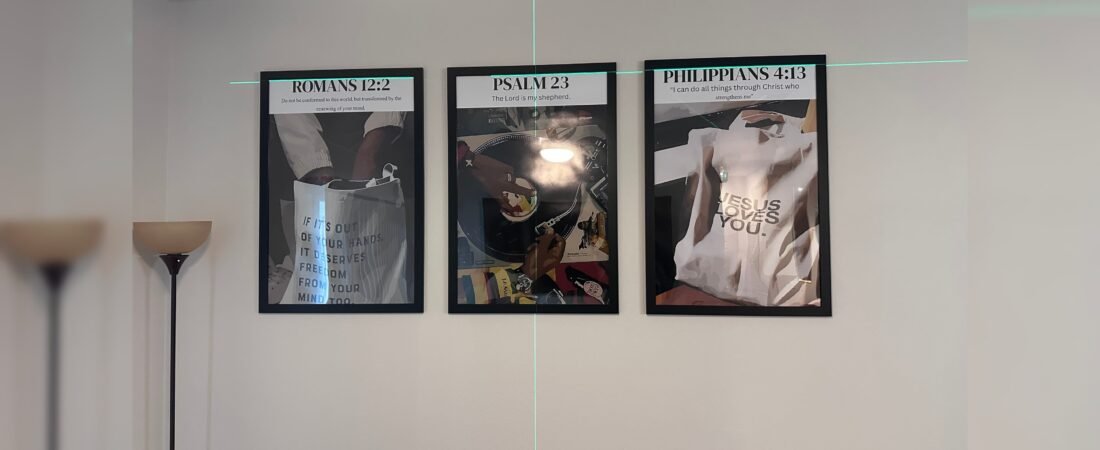
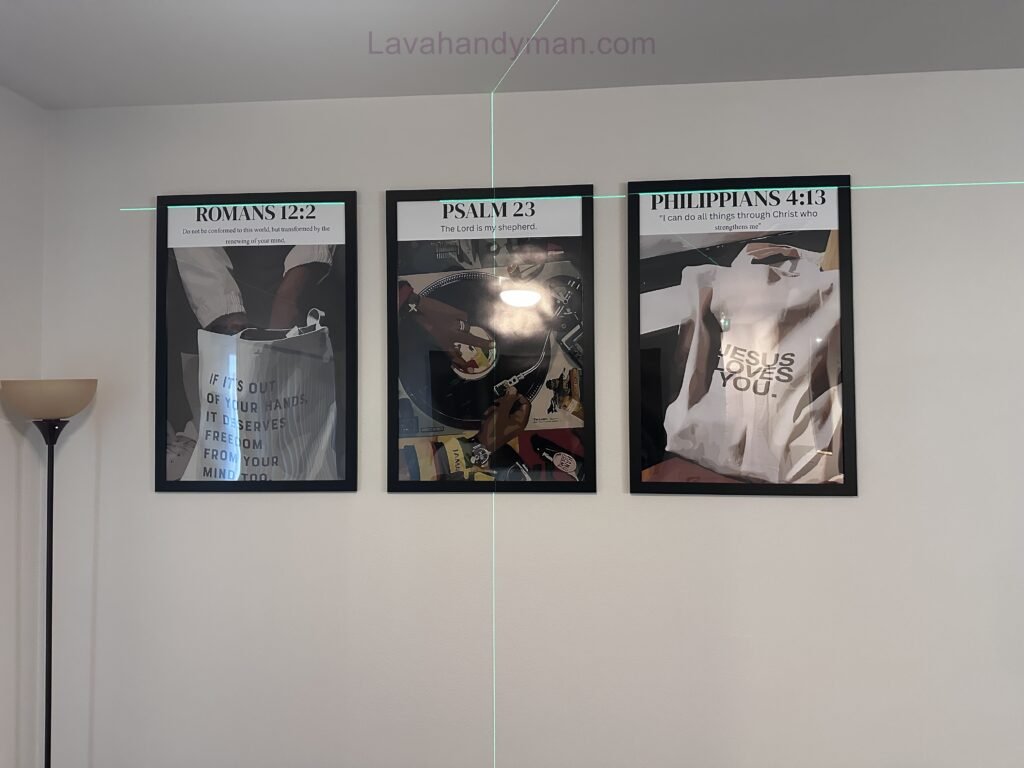
- Laser level
- Drill
- Appropriate drill bits
- Screwdriver
- Hammer
- Stud finder
- Wall anchors
- Screws
- Picture hooks
- Painter’s tape
- Safety glasses
Lightweight artwork may require only a suitable picture hook or hanging strip, while heavier paintings may need screws, wall anchors, or structural mounting points.
Always check the manufacturer’s weight rating before choosing a hanging product. The correct hardware should be selected according to the actual weight of the artwork and the construction of the wall.
For concrete and brick surfaces, you may also need masonry-specific drill bits and anchors.
How to Choose the Right Place for Your Painting
Before drilling any holes, determine where the artwork should be displayed.
The best location depends on the room layout, furniture, wall size, lighting, and the dimensions of the artwork.
Install Paintings and Decorative Wall Art
Common locations for paintings and decorative wall art include:
- Above sofas
- Above beds
- Above dining tables
- Above console tables
- Hallways
- Entryways
- Staircases
- Empty feature walls
When placing artwork above furniture, consider the relationship between the width of the artwork and the furniture below it. A commonly used design guideline is to choose artwork or a group of artworks that occupies roughly two-thirds to three-quarters of the furniture width.
For example, if a sofa is 80 inches wide, a painting or gallery arrangement with a combined width of approximately 53 to 60 inches can create a balanced appearance.
These measurements are guidelines rather than strict rules. The proportions of the room and the style of the artwork should also influence the final placement.
How High Should You Hang a Painting?
One of the most common questions about wall art installation is how high artwork should be positioned.
A widely used interior-design guideline is to place the center of the artwork approximately 57 inches, or 145 cm, above the floor. This measurement is often used because it places the center of the artwork around average eye level.
Install Paintings and Decorative Wall Art
However, the 57-inch guideline should not be treated as a universal rule.
When artwork is installed above furniture, the relationship between the artwork and furniture is often more important than the exact distance from the floor.
For example, a painting above a sofa should feel connected to the sofa rather than appearing to float near the ceiling.
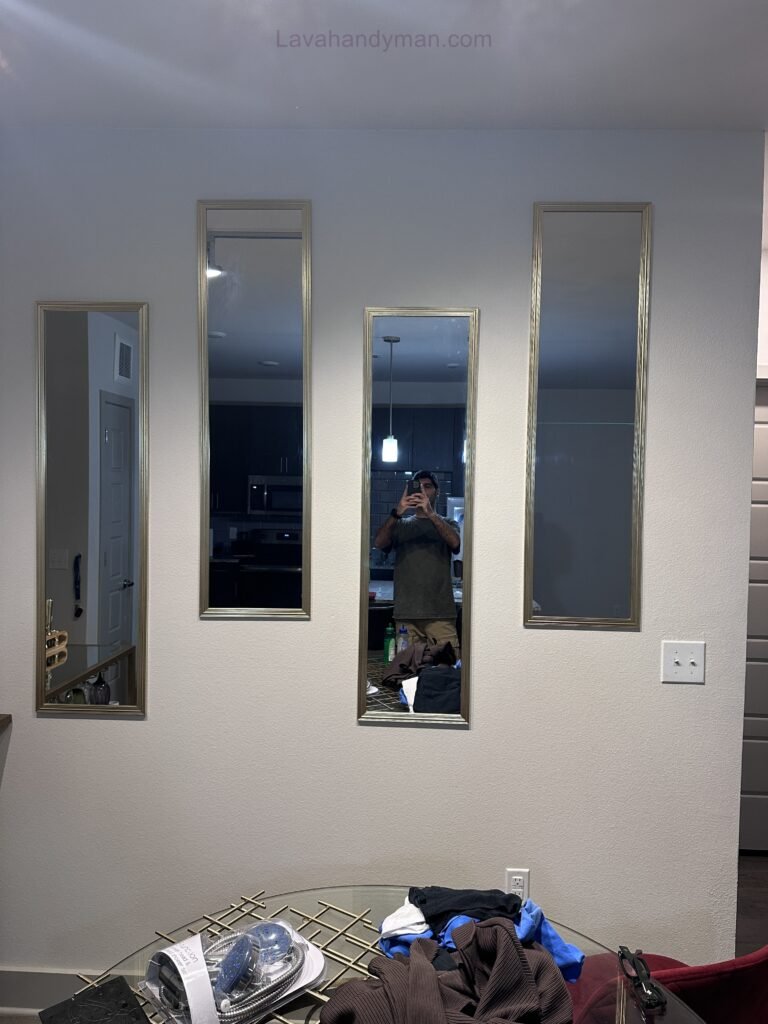
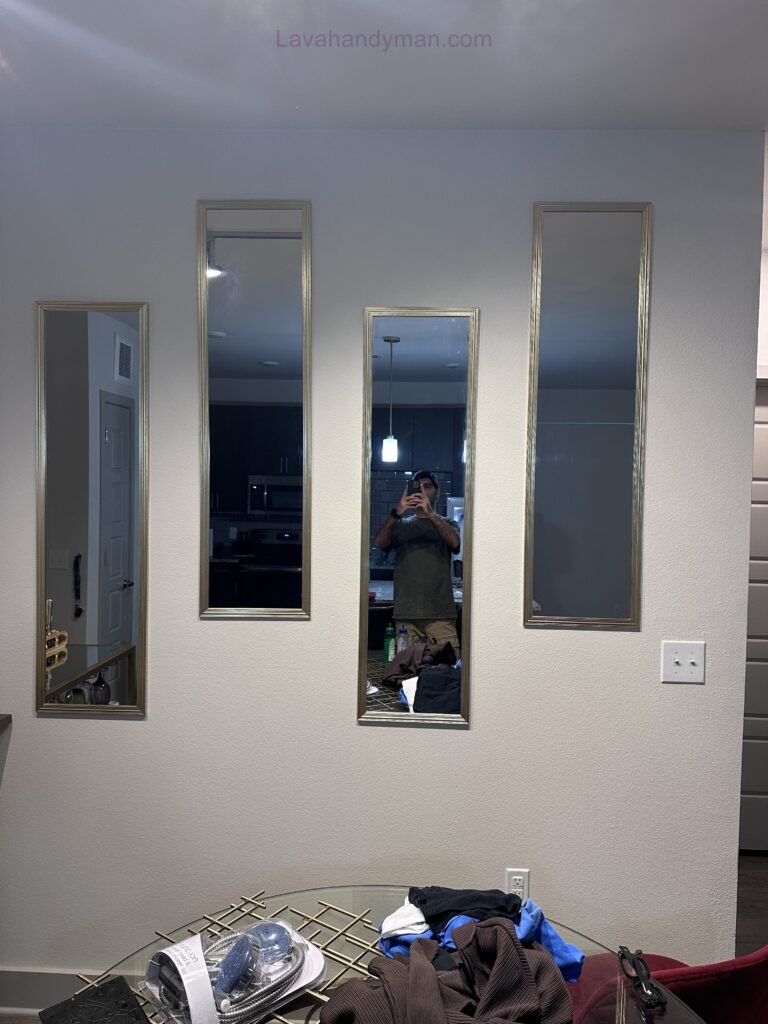
For a gallery wall, consider the entire collection as one visual unit. Instead of measuring each individual frame from the floor, determine the center of the overall arrangement and position that center appropriately.
Before drilling, step back and look at the proposed position from different parts of the room. This can help you identify whether the artwork feels too high, too low, or off-center.
How to Measure Artwork Before Installation
Accurate measurements are essential when hanging paintings and decorative wall art.
Install Paintings and Decorative Wall Art
Start by measuring:
- The overall height of the frame
- The overall width of the frame
- The distance between the top of the frame and the hanging hardware
- The distance between multiple hanging points
- The position of D-rings, picture wire, or sawtooth hangers
Do not assume that the hanging point is located at the top center of the frame.
For artwork with picture wire, pull the wire upward until it is reasonably taut and measure the distance between the highest point of the wire and the top of the frame.
For frames with two D-rings, measure the horizontal distance between the rings as well as their distance from the top of the frame.
These measurements allow you to transfer the exact hanging position to the wall before installing the hardware.
Taking a few minutes to measure everything carefully can prevent unnecessary holes and alignment problems.
Best Methods for Hanging Paintings and Decorative Wall Art
There are several ways to install wall art. The right method depends on the artwork’s weight, frame design, wall material, and the type of mounting hardware available.
Install Paintings and Decorative Wall Art
1. Picture Hooks
Picture hooks are a simple option for many lightweight and medium-weight framed artworks.
They can be especially useful when the artwork already has a picture wire or compatible hanging point.
To install a picture hook:
- Mark the desired position.
- Check the hook’s weight rating.
- Install the hook according to the manufacturer’s instructions.
- Place the artwork onto the hook.
- Check the frame with a level.
- Adjust the position if necessary.
Some picture hooks are specifically designed for drywall and can be installed without locating a wall stud. However, their weight limitations should always be respected.
Install Paintings and Decorative Wall Art
2. Screws and Wall Anchors
Screws and wall anchors are commonly used when additional support is needed.
For drywall, an appropriate anchor can distribute the load across a larger area of the wall material. Different anchor types are designed for different loads and installation conditions.
A typical installation involves:
- Marking the desired location.
- Checking the manufacturer’s required hole size.
- Drilling a pilot hole if necessary.
- Installing the wall anchor.
- Installing the screw.
- Leaving the appropriate amount of the screw exposed.
- Hanging the artwork and checking that it is level.
Never assume that every drywall anchor can support a heavy painting. Weight capacity varies by anchor type, wall condition, and installation method.
Install Paintings and Decorative Wall Art
3. Installing Artwork on a Wall Stud
For heavier artwork, mounting directly into a wall stud can provide strong support when the wall construction allows it.
A stud finder can help identify the position of studs behind the wall surface.
If a stud is located in the desired position, an appropriate screw or mounting system can be attached to it.
For large artwork, using two mounting points may provide better stability and help prevent the frame from tilting.
The mounting hardware must still be suitable for the artwork and wall construction.
4. D-Ring Hangers
D-ring hangers are commonly used on the back of framed paintings and decorative artwork.
When using two D-rings, accurate measurements are particularly important.
Install Paintings and Decorative Wall Art
Measure:
- The distance between the two D-rings
- The distance from each D-ring to the top of the frame
- The desired position of the artwork on the wall
Transfer these measurements to the wall and use a level to ensure the mounting points are aligned.
Two properly positioned D-rings can provide greater stability for suitable larger frames than a single central hanging point.
5. Picture Wire
Picture wire is another popular method for hanging framed artwork.
The wire is usually attached between two points on the back of the frame and supported by one or more wall hooks.
Install Paintings and Decorative Wall Art
To install artwork using picture wire:
- Measure the height of the frame.
- Pull the wire upward until it is taut.
- Measure from the top of the frame to the highest point of the wire.
- Transfer this measurement to the wall.
- Install the appropriate hook or hooks.
- Hang the artwork.
- Check that the frame is level.
For larger pieces, using two suitable hanging points may improve stability.
6. Sawtooth Hangers
Sawtooth hangers are commonly found on smaller framed artworks.
They are designed to fit over a nail, screw, or picture hook.
To install artwork using a sawtooth hanger:
Install Paintings and Decorative Wall Art
- Determine the center of the frame.
- Position the hanger correctly on the back.
- Secure the hanger according to its design.
- Measure the distance between the hanger and the top of the frame.
- Transfer the measurement to the wall.
- Install the appropriate wall fastener.
- Hang the artwork and check its alignment.
For larger or heavier artwork, another mounting method may be more appropriate.
How to Hang Artwork on Different Types of Walls
The type of wall plays an important role in choosing the correct installation method.
How to Hang Artwork on Drywall
Drywall is common in modern homes and offices.
Install Paintings and Decorative Wall Art
Lightweight frames may be suitable for picture hooks or other lightweight hanging solutions. Medium-weight artwork may require a screw and suitable drywall anchor.
For heavier artwork, consider mounting into a stud or using a properly rated heavy-duty anchoring system.
Always check the actual weight capacity of the hardware rather than relying on the appearance or size of the anchor.
How to Hang Paintings on Plaster Walls
Plaster walls require additional care because drilling can sometimes cause cracking or chipping.
Use hardware designed for plaster or the underlying wall structure.
Install Paintings and Decorative Wall Art
When drilling, creating an appropriate pilot hole can help reduce damage. One recommended approach is to place tape over the area before creating a pilot hole.
Avoid installing heavy artwork into damaged or unstable sections of plaster.
How to Install Wall Art on Brick
Brick walls require masonry-compatible installation hardware.
Depending on the artwork’s weight, you may need a masonry drill bit, masonry anchor, screw, or another suitable fixing system.
Before drilling, determine whether you are drilling into brick or mortar and select the hardware accordingly.
For valuable or very heavy artwork, professional installation may be appropriate.
Install Paintings and Decorative Wall Art
How to Install Artwork on Concrete
Concrete is significantly different from drywall and requires suitable masonry tools and fasteners.
A masonry drill bit is commonly used to create the required hole before installing an appropriate concrete or masonry anchor.
The correct hardware depends on:
- The weight of the artwork
- The type of concrete
- The frame construction
- The required load capacity
- The manufacturer’s instructions
Wear appropriate eye protection when drilling into masonry and follow the instructions supplied with the mounting hardware.
Install Paintings and Decorative Wall Art
How to Hang Artwork on Wood
Wood surfaces can often provide a solid mounting point.
Depending on the artwork and surface, an appropriate screw or picture hanger may be sufficient.
However, decorative wood panels and thin materials may have different load-bearing characteristics, so avoid assuming that every wood surface can support a heavy frame.
Install Paintings and Decorative Wall Art
How to Hang Heavy Artwork Safely
Heavy paintings require more planning than lightweight decorative pieces.
Before installation, determine the exact weight of the artwork and choose hardware rated for that load.
For large frames, two or more mounting points may distribute the load and improve stability.
If the artwork is particularly large, valuable, or difficult to handle, having another person assist with positioning can make installation safer and more accurate.
Install Paintings and Decorative Wall Art
Never exceed the manufacturer’s recommended load capacity for hooks, anchors, screws, or hanging systems.
If you are uncertain about the structural strength of the wall, professional installation is a sensible option.
How to Create a Gallery Wall
A gallery wall combines several paintings, photographs, prints, or decorative objects into a single composition.
The most important step is planning the layout before drilling.
One effective method is to create paper templates that match the dimensions of each frame. Attach the templates to the wall with painter’s tape and experiment with different arrangements.
Install Paintings and Decorative Wall Art
This allows you to test:
- Frame spacing
- Overall width
- Overall height
- Alignment
- Frame sizes
- Horizontal and vertical layouts
Once you are satisfied with the composition, mark the exact location of each hanging point.
Planning the arrangement first can significantly reduce unnecessary holes and make the final gallery wall look more intentional.
How Much Space Should You Leave Between Frames?
Install Paintings and Decorative Wall Art
There is no single spacing measurement that works for every gallery wall.
The most important principle is consistency.
If the frames are arranged close together, maintain similar gaps throughout the composition. If the artwork is larger and the arrangement is more spacious, keep the spacing visually balanced.
Consider the entire gallery wall as one piece of artwork rather than treating every frame as a separate decoration.
Before installation, step back and look at the complete arrangement from several angles.
How to Hang a Large Statement Painting
Install Paintings and Decorative Wall Art
A large statement painting can become the main focal point of a room.
Before installing it, consider:
- The width of the wall
- The height of the ceiling
- The furniture below the painting
- The weight of the artwork
- The available mounting points
- The lighting conditions
If the artwork is positioned above a sofa, console, or dining table, center it relative to the furniture rather than automatically centering it on the entire wall.
Large artwork should be supported with a mounting system suitable for its weight and frame construction.
Install Paintings and Decorative Wall Art
How to Hang Wall Art Without Nails
If you want to avoid drilling holes, some lightweight decorative wall art can be installed using adhesive hanging strips or other removable mounting products.
However, these products have specific weight and surface limitations.
Before using an adhesive hanging system:
- Check the maximum weight rating.
- Confirm that the product is compatible with your wall surface.
- Prepare the surface according to the manufacturer’s instructions.
- Apply the product correctly.
- Follow any required waiting period.
- Never exceed the recommended load.
Adhesive systems are generally more suitable for lightweight artwork than heavy framed paintings.
Install Paintings and Decorative Wall Art
How to Keep Wall Art Straight
Even when the mounting hardware is correctly installed, artwork can sometimes tilt.
After hanging the frame, place a spirit level along its top edge.
If the frame is not level, carefully adjust it until it is straight.
For artwork that frequently moves, suitable two-point mounting systems or small protective pads on the lower corners can help improve stability.
The goal is not only to hang the artwork securely but also to keep it aligned over time.
Install Paintings and Decorative Wall Art
How to Choose the Right Size of Wall Art
Choosing the correct artwork size can make a major difference to the appearance of a room.
A very small painting on a large empty wall may appear visually lost, while an oversized piece can dominate a smaller space.
When artwork is positioned above furniture, a useful guideline is to choose a piece or collection that is approximately two-thirds to three-quarters of the furniture’s width.
For large empty walls, consider whether a single oversized painting, several coordinated pieces, or a gallery wall would create the best visual balance for the space.
Install Paintings and Decorative Wall Art
The artwork should relate to the surrounding architecture and furniture without making the room feel overcrowded.
Common Wall Art Installation Mistakes
Hanging Artwork Too High
One of the most common mistakes is placing artwork too close to the ceiling.
Consider eye level and the relationship between the artwork and nearby furniture instead.
Install Paintings and Decorative Wall Art
Choosing the Wrong Hardware
A mounting product designed for lightweight frames may not be suitable for a heavy painting.
Always check the weight rating.
Ignoring the Wall Material
Drywall, plaster, brick, concrete, and wood require different approaches.
Identify the wall type before selecting the mounting system.
Install Paintings and Decorative Wall Art
Skipping Measurements
Guessing the position of the hanging hardware can result in crooked artwork and unnecessary holes.
Measure the frame and hanging points before drilling.
Not Using a Level
Even a small angle can become noticeable once the frame is mounted.
A spirit level is a simple tool that can significantly improve the final result.
Ignoring Furniture Placement
Install Paintings and Decorative Wall Art
Artwork should generally relate visually to the furniture beneath it.
Consider the sofa, bed, console, or dining table when determining the final position.
Using Adhesive Products for Heavy Artwork
Adhesive hanging systems have weight and surface limitations.
Use them only when the manufacturer confirms that the product is appropriate for your artwork and wall.
Install Paintings and Decorative Wall Art
Wall Art Installation Safety Tips
Safety should always be part of the installation process.
Before drilling or hammering:
- Identify the wall material.
- Check for possible pipes and electrical wiring.
- Use appropriate protective equipment.
- Follow the instructions provided with the mounting hardware.
- Never exceed the hardware’s weight capacity.
- Use anchors designed for the specific wall type.
- Ask for assistance when handling large artwork.
- Use a stable ladder or step stool when working at height.
For very heavy or valuable artwork, professional installation can help reduce the risk of damage or injury.
Install Paintings and Decorative Wall Art
How to Make Your Wall Art Look More Professional
Correct installation is only one part of creating a successful wall display.
Create a Focal Point
Use a large painting or carefully planned gallery wall to create a clear visual focus.
Consider Proportion
Artwork should relate to the size of the wall and the furniture surrounding it.
Install Paintings and Decorative Wall Art
Coordinate Colors
Your artwork does not need to match every color in the room. However, repeating one or two colors from the artwork in cushions, rugs, curtains, or other decorative elements can create a more cohesive appearance.
Mix Different Textures
Combining paintings with wood, metal, photography, textiles, or other decorative materials can add visual depth.
Leave Some Empty Space
Not every section of a wall needs decoration. Empty space can help important pieces stand out.
Install Paintings and Decorative Wall Art
Wall Art Installation Checklist
Before finishing your project, check the following:
- The artwork is positioned at an appropriate height.
- The artwork is centered correctly.
- The wall type has been identified.
- The mounting hardware is suitable for the wall.
- The hardware is rated for the artwork’s weight.
- All measurements have been checked.
- The frame is level.
- Heavy artwork has adequate support.
- Gallery-wall spacing is consistent.
- The artwork is secure.
- The wall has not been unnecessarily damaged.
Install Paintings and Decorative Wall Art
Frequently Asked Questions About Installing Wall Art
How high should a painting be hung?
A commonly used guideline is to position the center of a painting approximately 57 inches, or 145 cm, above the floor. However, the ideal height depends on the room, furniture, artwork size, and viewing conditions.
How far above a sofa should wall art be?
There is no single distance that works for every room. The artwork should have a clear visual relationship with the sofa without appearing either crowded or disconnected. The size of the artwork and sofa should be considered together.
Install Paintings and Decorative Wall Art
Can I hang heavy artwork on drywall?
Yes, but the installation method must be appropriate for the artwork’s weight and the construction of the drywall. Depending on the situation, you may need a wall stud or a properly rated drywall anchor.
Can I install wall art without drilling?
Some lightweight artwork can be installed using adhesive hanging strips or specialty hooks. Always check the product’s weight limit and compatibility with the wall surface before installation.
Is it better to use one hook or two?
It depends on the size, weight, and hanging system of the artwork. Larger frames may benefit from two mounting points because they can improve stability and reduce tilting.
What is the best way to hang a gallery wall?
Install Paintings and Decorative Wall Art
Plan the entire arrangement before drilling. Paper templates can help you test different layouts, spacing, and alignment. Once the arrangement is finalized, mark the hanging points and install the frames carefully.
What tools do I need to install wall art?
For a basic installation, you may need a tape measure, pencil, level, drill or hammer, screwdriver, and suitable wall hardware. Masonry walls may require additional tools such as a masonry drill bit.
How do I prevent a painting from becoming crooked?
Use a level during installation and make sure the hanging hardware is correctly aligned. For larger artwork, a two-point mounting system can provide additional stability.
Install Paintings and Decorative Wall Art
Conclusion
Learning how to install paintings and decorative wall art correctly can make a significant difference to the appearance, safety, and overall balance of your interior.
The process starts with choosing the right location and artwork size. From there, accurate measurements, the correct hanging height, suitable hardware, and an understanding of your wall type will help you achieve a secure and professional installation.
Lightweight artwork may require only a picture hook or suitable adhesive system, while heavier paintings may require screws, wall anchors, studs, D-rings, picture wire, or other dedicated mounting hardware.
If you are creating a gallery wall, plan the entire arrangement before making permanent holes. For large or valuable artwork, pay particular attention to the weight capacity of the mounting system and consider professional installation when necessary.
With careful planning and the right wall art installation methods, paintings and decorative artwork can become attractive focal points that enhance the style, balance, and character of almost any interior space.
📞 Need Help?
Let us take care of the hard work while you sit back and relax.
📍 Serving: Austin, Round Rock, Cedar Park & more
📱 Call or Text: (737) 420-6992
🌐 Visit: https://lavahandyman.com