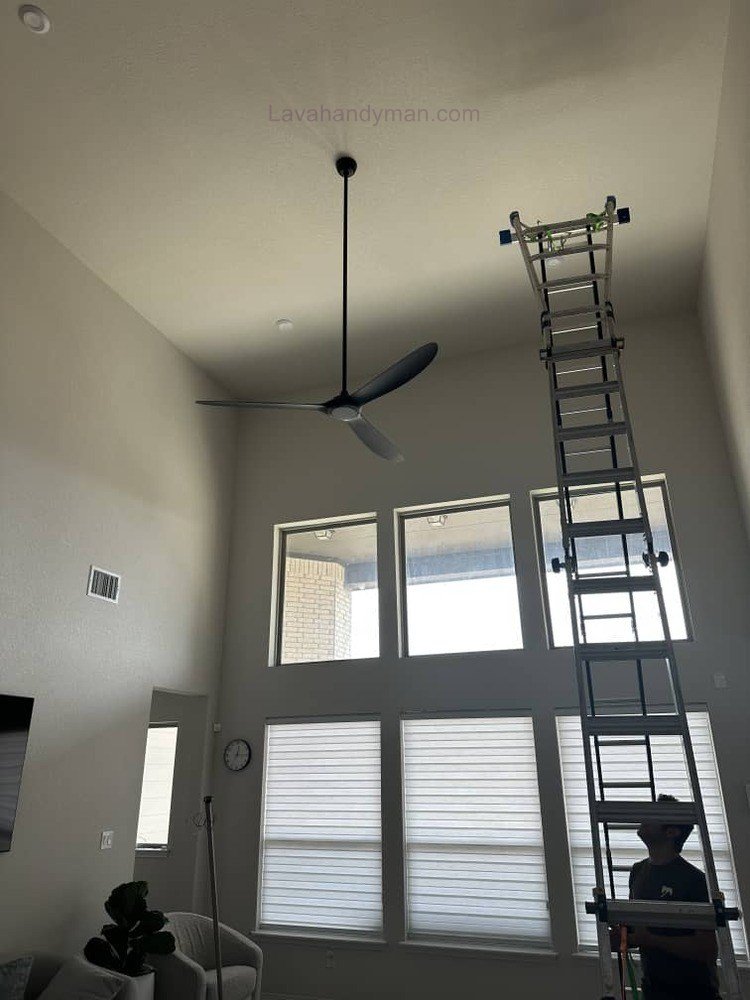
Important Ceiling Fan Installation Tips You Should Know: A Guide to Safe, Standard, and Proper Installation
Installing a ceiling fan is one of the most effective ways to improve air circulation in residential, commercial, and office spaces. However, ceiling fan installation is not simply a matter of attaching the fan to the ceiling and connecting the electrical wires. Choosing the right installation location, checking the strength of the ceiling, maintaining proper clearances, securely installing the mounting bracket, and making the electrical connections correctly are all essential factors that should be considered.
Improper installation can lead to fan wobbling, excessive noise, reduced motor performance, loose connections, and, in some situations, safety concerns. For this reason, understanding the key ceiling fan installation tips can help ensure that the fan operates safely and efficiently.
In this guide, we will cover the most important aspects of how to install a ceiling fan, including choosing the right location, determining the appropriate mounting height, installing fans on different ceiling types, handling electrical connections, avoiding common installation mistakes, and understanding installation costs.
Fan Installation
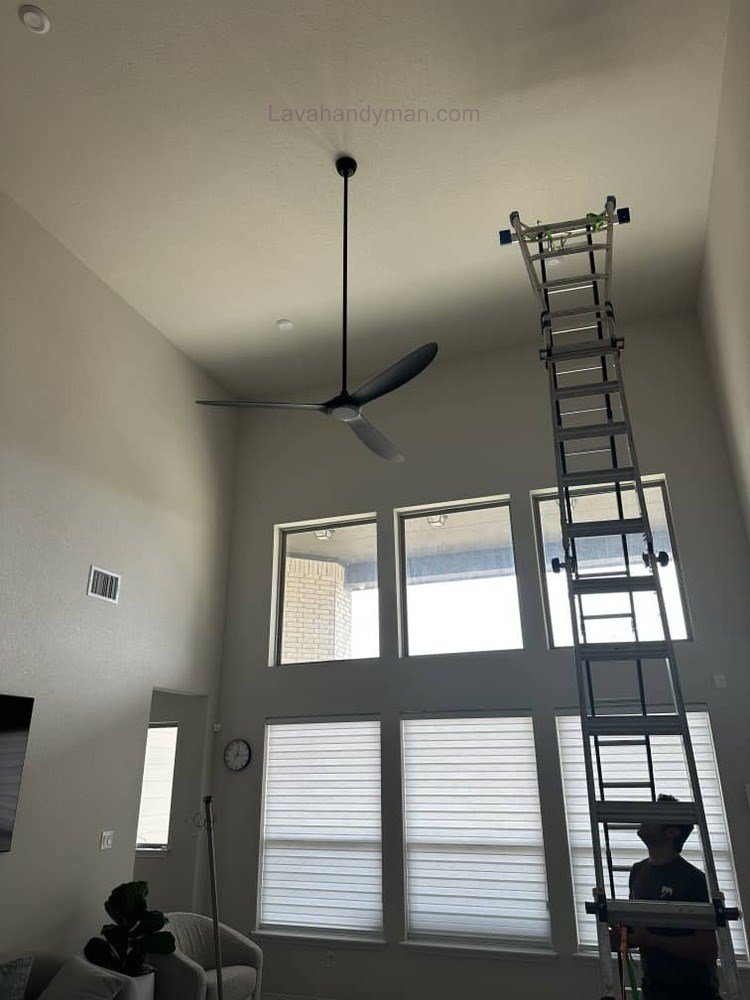
Why Is Proper Ceiling Fan Installation Important?
A ceiling fan operates continuously while its blades rotate, creating movement and airflow. Therefore, the mounting point must be strong enough to support the fan and handle the forces generated during operation.
If the fan bracket is attached to an unsuitable surface or the screws and connections are not properly secured, the fan may begin to wobble during operation. In addition to creating unwanted noise, continuous vibration can place additional stress on certain components over time.
Proper ceiling fan installation offers several important benefits, including:
- Improved safety during operation
- Reduced vibration and unusual noise
- Better air circulation
- Improved motor and blade performance
- Reduced risk of loose connections
- Longer equipment lifespan
- Reduced risk of damage to the ceiling and surrounding equipment
Fan Installation
For this reason, ceiling fan installation should be taken just as seriously as choosing the right fan.
What Should You Check Before Installing a Ceiling Fan?
Before starting the installation, it is important to inspect the installation area carefully. Doing so can help prevent many problems that might otherwise occur after installation.
1. Choose the Right Installation Location
The fan should be installed in a location where it can distribute air effectively throughout the room. In many rooms, the center of the ceiling is a suitable option. However, depending on the layout and furniture placement, the fan does not always need to be installed exactly in the center.
The position of furniture such as cabinets, lighting fixtures, chandeliers, and other equipment should also be taken into consideration.
The fan blades must have enough clearance to rotate freely without coming into contact with walls or nearby objects.
Fan Installation
2. Check the Strength of the Ceiling
One of the most important steps in ceiling fan installation is checking the strength of the mounting surface.
The weight of the fan and the forces generated by its rotation must be safely transferred to the building structure through a secure mounting system. Attaching the fan to a weak surface or unsuitable ceiling covering can therefore create problems.
This is particularly important when installing a fan on drywall or a suspended ceiling, where an appropriate structural support system may be required.
3. Consider the Fan Size
Before installation, check the fan’s blade span and overall dimensions. Larger blades require more clearance to rotate freely.
For smaller rooms, choosing a fan that is appropriately sized for the space can also help provide more effective air circulation.
What Is the Proper Ceiling Fan Installation Height?
One of the most common questions homeowners ask is: What is the proper ceiling fan installation height?
The fan should be installed at a height that provides effective airflow while maintaining a safe distance from people and nearby objects. The appropriate height depends on factors such as ceiling height, fan model, downrod length, and the design of the fan.
Fan Installation
If the fan is installed too low, it may create a safety concern. On the other hand, installing it too close to the ceiling can affect airflow and overall performance.
For this reason, the final installation height should be determined according to the manufacturer’s instructions and the specific conditions of the room.
How Much Clearance Should a Ceiling Fan Have From the Walls?
Maintaining adequate clearance from walls is another important part of ceiling fan installation.
The blades need enough open space to rotate freely. Installing a fan too close to a wall or other equipment can restrict airflow and increase the risk of the blades coming into contact with nearby objects.
Before installation, measure the fan’s blade span and the available space in the room to ensure that the blades can rotate freely.
If the fan will be installed near a light fixture or chandelier, the distance between these fixtures should also be considered.
How to Install a Ceiling Fan on Different Types of Ceilings
The installation method depends partly on the type and structure of the ceiling. The same installation method cannot necessarily be used for concrete, drywall, and suspended ceilings.
Installing a Ceiling Fan on a Concrete Ceiling
Concrete ceilings generally provide a strong mounting surface, but the installation point must still be selected carefully. The mounting bracket should be secured to a structurally sound area using suitable hardware.
Before drilling, it is also important to consider the possibility of electrical wires, pipes, or other building services being located inside the ceiling.
Installing a Ceiling Fan on a Drywall Ceiling
Fan Installation
Extra care is required when installing a ceiling fan on drywall. The drywall itself may not be strong enough to support the weight and vibration of a ceiling fan.
For this reason, the fan bracket should be secured to an appropriate structural support behind the drywall. If the structure behind the ceiling is unclear, the installation should be inspected by a qualified professional.
Installing a Ceiling Fan on a Suspended Ceiling
Installing a ceiling fan on a suspended ceiling requires additional attention. The ceiling covering itself should not be treated as the primary structural support for the fan.
An appropriate support system should be used based on the structure of the ceiling so that the weight and forces generated by the fan are safely transferred to a suitable structural point.
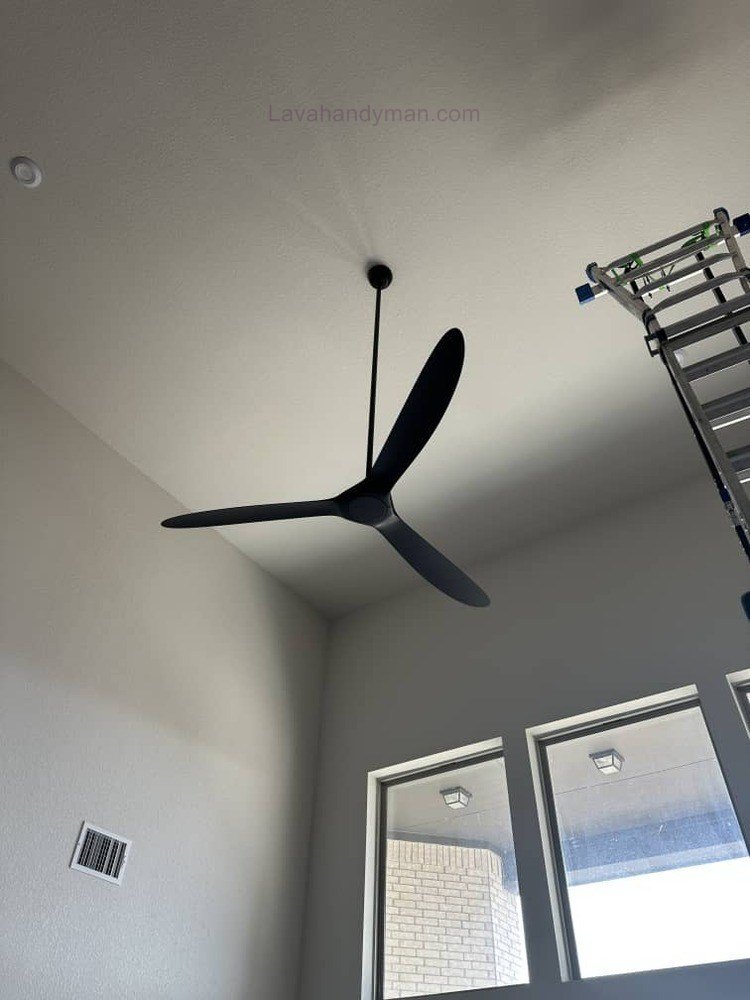
Take Ceiling Fan Electrical Connections Seriously
A ceiling fan is an electrical appliance, so its electrical connections must be completed according to the manufacturer’s instructions and applicable safety practices.
Before working on any electrical wiring, the relevant circuit must be switched off and isolated from the power supply. Damaged wires, improper connections, or low-quality electrical components can create safety hazards.
If you do not have sufficient knowledge of residential electrical systems, it is best to have the wiring and electrical connection performed by a qualified electrician or professional installer.
Fan Installation
Installing the Ceiling Fan Mounting Bracket
The mounting bracket is one of the most important components of the installation. It connects the fan to the ceiling and supports the weight and movement of the unit.
The bracket must be securely and correctly aligned. If it is not installed properly, the fan may wobble during operation.
After installing the bracket, its connections should be checked before the remaining components of the fan are attached.
How Should Ceiling Fan Blades Be Installed?
The blades should be installed exactly according to the manufacturer’s instructions for the specific fan model. Loose blade screws or incorrectly installed blades can cause vibration and unusual noise.
All blades should be inspected to ensure that they are in good condition and properly secured. None of the blades should be cracked, bent, or damaged.
If a blade is damaged, it should be replaced before the fan is used.
Fan Installation
Why Does a Ceiling Fan Wobble After Installation?
One of the most common problems that may occur after ceiling fan installation is excessive wobbling.
Possible causes include:
- An unbalanced fan
- Loose screws or connections
- Incorrectly installed blades
- Uneven blade positioning
- An improperly installed mounting bracket
- Mechanical problems with the fan
- An unsuitable mounting point
If the fan wobbles severely or behaves abnormally, it should be turned off and the installation should be inspected.
How Can You Reduce Ceiling Fan Noise?
Fan Installation
A properly functioning ceiling fan normally produces only a moderate amount of sound. Excessive or unusual noise may indicate an installation or mechanical problem.
The first things to check are the tightness of the screws, the condition of the blades, and whether the fan is properly aligned.
Using quality components and ensuring correct installation can also help reduce vibration and unnecessary noise.
If unusual noise continues after checking the connections, the motor and other components should be inspected by a professional.
Common Ceiling Fan Installation Mistakes
Certain installation mistakes can reduce fan performance or create safety concerns.
Fan Installation
Some of the most common mistakes include:
- Choosing an unsuitable installation location
- Ignoring the structural strength of the ceiling
- Mounting the fan directly to a weak ceiling surface
- Failing to maintain sufficient clearance from walls
- Improperly installing the mounting bracket
- Leaving screws or connections loose
- Installing the blades incorrectly
- Ignoring the manufacturer’s instructions
- Performing electrical wiring without following proper safety procedures
- Using damaged components
- Ignoring excessive vibration or unusual noise
Avoiding these mistakes can have a significant impact on the safety and performance of the ceiling fan.
Fan Installation
What Should You Check After Installing a Ceiling Fan?
After installation is complete, the fan should be inspected before regular use.
Check the following:
- Make sure the mounting bracket is securely attached.
- Check that all screws are properly tightened.
- Make sure the blades are correctly installed.
- Confirm that the fan has sufficient clearance from walls and surrounding objects.
- Inspect the wiring and electrical connections.
- Make sure the fan does not wobble excessively when turned on.
- Listen for unusual sounds.
- Check that the different fan speeds operate correctly.
- Test the remote control or wall switch if applicable.
If you notice severe vibration, unusual noise, or abnormal operation, turn the fan off and have the installation inspected.
Fan Installation
Should You Install a Ceiling Fan Yourself?
If you have experience with tools, ceiling structures, and basic electrical work, you may be able to handle certain assembly steps yourself. However, mounting the fan to the ceiling and making electrical connections require additional care and technical knowledge.
If you are unsure about the strength of the ceiling or how the fan should be mounted, hiring a professional ceiling fan installer is generally the safer option.
A professional installer can inspect the ceiling, determine the most suitable installation location, select the appropriate mounting method, and properly install and test the fan.
Fan Installation
How Much Does Ceiling Fan Installation Cost?
The cost of ceiling fan installation depends on the specific project and the amount of work required. There is no single fixed price that applies to every installation.
Factors that can affect the installation cost include:
- Fan type and model
- Ceiling type
- Ceiling height
- Installation location
- Accessibility of the installation area
- Need for new electrical wiring
- Need for additional mounting hardware
- Installation of switches, controls, or remote systems
- Preparation required before installation
For this reason, an accurate installation price is usually determined after assessing the specific installation conditions.
When Should You Hire a Professional Ceiling Fan Installer?
Professional installation is recommended in situations such as:
- You have a suspended or structurally complex ceiling.
- You are unsure whether the ceiling can safely support the fan.
- New electrical wiring is required.
- The fan is particularly large or heavy.
- The fan experiences excessive vibration after installation.
- The fan produces unusual or persistent noise.
- You do not have sufficient experience installing electrical equipment.
Professional installation can help reduce the likelihood of future problems and ensure that the fan operates properly.
Types of Ceiling Fans and How to Install Each Model: A Complete Ceiling Fan Installation Guide
Choosing the right ceiling fan is not only about its appearance or motor power. The type of ceiling fan, its size, weight, installation location, and ceiling structure can all affect the installation process. For this reason, the ceiling fan installation method may vary depending on the model. Understanding the different types of ceiling fans before starting the installation can help you choose the right equipment and complete the installation more accurately.
Below, we will discuss the most common types of ceiling fans and the key points related to installing each model, making it easier to choose and install the right ceiling fan for residential, commercial, and office spaces.
Installing a Standard Ceiling Fan
A standard ceiling fan is one of the most common models used in homes, bedrooms, living rooms, and offices. This type of fan generally consists of a motor, blades, mounting bracket, and downrod.
In a standard ceiling fan installation, the first step is to determine the appropriate installation location. The mounting bracket is then secured to a structurally suitable part of the ceiling, and the fan body is attached to it. After connecting the motor, the blades are installed in their designated positions and all connections are checked.
Finally, the fan should be tested to make sure the blades rotate properly and there is no unusual wobbling.
How to Install a Ceiling Fan With a Light
A ceiling fan with a light serves two purposes: circulating air and providing illumination. Therefore, installing a ceiling fan with a light requires attention to both the mechanical installation and the electrical connections for the lighting system.
First, the mounting bracket is secured to the ceiling and the fan body is positioned correctly. The motor connections are then completed, followed by installation of the lighting assembly according to the manufacturer’s instructions.
For models that have separate controls for the fan and light, the wiring should be completed exactly according to the wiring diagram provided with the fan. Once installation is complete, the light, fan speeds, and control functions should all be tested.
How to Install a Remote-Controlled Ceiling Fan
A remote-controlled ceiling fan typically includes a receiver that allows users to control the fan’s speed and power remotely. Some models also allow the light to be controlled with the same remote.
The installation process for a remote-controlled ceiling fan is generally similar to that of a standard model when it comes to mounting the bracket and motor. However, the receiver must also be installed in its designated location. In many models, the receiver is placed inside the upper canopy of the fan.
After the fan has been installed, the remote control may need to be paired with the receiver according to the manufacturer’s instructions. If the remote does not work correctly, the connections and receiver placement should be checked.
Installing a Low-Profile Ceiling Fan
A low-profile ceiling fan, also known as a Low Profile or Hugger fan, is designed for rooms with limited ceiling height. These models usually have a more compact structure and sit closer to the ceiling.
When installing a low-profile ceiling fan, selecting a suitable mounting point is particularly important. The appropriate bracket is first secured to a structurally sound part of the ceiling, after which the fan body is attached. Once the blades are installed, the surrounding space should be checked to make sure the blades will not come into contact with walls, cabinets, or other obstacles.
This type of ceiling fan can be a practical choice for rooms where using a fan with a long downrod is not suitable.
How to Install a Decorative Ceiling Fan
Decorative ceiling fans are often selected for spaces where the appearance of fixtures is an important part of the interior design. These fans may feature distinctive bodies, blades, finishes, or integrated lighting systems.
When installing a decorative ceiling fan, both the strength of the mounting point and the weight of the unit should be considered. The mounting hardware must be suitable for the specific fan model.
Since some decorative ceiling fans have unusual designs or heavier components, installation should always follow the manufacturer’s instructions.
How to Install an Industrial Ceiling Fan
Industrial ceiling fans are commonly used in large halls, workshops, warehouses, commercial facilities, and other spacious environments. Compared with residential models, these fans generally have larger dimensions and heavier components and are designed to move larger volumes of air.
Industrial ceiling fan installation requires careful evaluation of the mounting point, supporting structure, and installation hardware. Before installation, it should be confirmed that the selected structure can safely support the fan and the forces generated while it is operating.
After the support structure is installed, the motor and other fan components are secured in position. The blades are then installed and the fan is checked for proper alignment. Because industrial ceiling fans can be large and heavy, professional installation can provide greater safety and better results.
Installing a Multi-Blade Ceiling Fan
The number of blades can vary depending on the design and model of a ceiling fan. When installing a multi-blade ceiling fan, the correct positioning of each blade is important, and all blades should be installed evenly around the motor.
If one blade is installed incorrectly, the fan may wobble while rotating. Therefore, the fan should be tested at a low speed after assembly.
The blade mounting screws should also be checked according to the manufacturer’s instructions to ensure that the blades remain securely in place during operation.
How to Install a Smart Ceiling Fan
A smart ceiling fan is a modern type of fan that can be controlled through a remote control, smartphone application, or home automation system. The physical installation is generally similar to other ceiling fan models, but the control system also needs to be configured.
During smart ceiling fan installation, the mounting bracket and mechanical components are installed first. The electrical connections and electronic components are then installed according to the manufacturer’s instructions.
After installation, the fan may need to be connected to a smartphone application or smart home system. The exact setup process depends on the brand and model.
Installing a Dual-Motor Ceiling Fan
Dual-motor ceiling fans are designed for certain larger spaces and generally have a more complex structure than standard models. These fans may contain two motor or blade assemblies that need to be properly secured to the supporting structure.
For a dual-motor ceiling fan installation, the mounting bracket and support structure are prepared first. The motors and blades are then assembled in the specified order, and the connections for each section are checked.
Because these models have a more complicated design, following the manufacturer’s installation instructions is particularly important. Components should never be connected or assembled based on guesswork.
Differences Between Ceiling Fan Installation Methods
Although the basic principles of ceiling fan installation are similar for many models, the specific installation requirements can vary. For example, remote-controlled fans include a receiver, ceiling fans with lights have an additional lighting system, and industrial ceiling fans generally require stronger supporting structures.
For this reason, before starting a ceiling fan installation, it is important to check the exact model, weight, dimensions, mounting system, and manufacturer’s installation instructions.
Which Type of Ceiling Fan Is Right for Your Space?
Choosing the best ceiling fan depends on the characteristics of the room. For rooms with limited ceiling height, low-profile models may be a suitable option. If you need both air circulation and lighting, a ceiling fan with an integrated light can be a practical choice.
For users who want convenient control, remote-controlled or smart ceiling fans may offer greater flexibility. For large halls and spacious environments, however, the fan should be selected according to the size of the space and the required airflow capacity.
Therefore, before purchasing and installing a ceiling fan, make sure the technical specifications of the unit are appropriate for the intended environment.
Frequently Asked Questions About Ceiling Fan Installation
What is the best location for installing a ceiling fan?
The installation location should provide enough space for the blades to rotate freely and maintain sufficient clearance from walls, tall furniture, lighting fixtures, and other obstacles. In many rooms, the center of the ceiling is a suitable location.
Can a ceiling fan be installed on a suspended ceiling?
Yes, but the installation method must be appropriate for the structure of the suspended ceiling. The fan should not rely solely on the ceiling covering for support.
Why does a ceiling fan wobble after installation?
An unbalanced fan, loose screws, incorrectly installed blades, or an improperly installed mounting bracket can cause excessive wobbling.
Is an electrician required to install a ceiling fan?
If the installation requires new wiring or modifications to an existing electrical circuit, it is recommended that the electrical work be performed by a qualified professional.
How is the cost of ceiling fan installation calculated?
The cost depends on factors such as the fan type, ceiling structure, ceiling height, installation conditions, electrical work, and any additional equipment required.
Conclusion: Install Your Ceiling Fan the Right Way
Ceiling fan installation should always be performed with the specific conditions of the room and the manufacturer’s instructions in mind.
Choosing the right location, checking the structural strength of the ceiling, maintaining adequate clearance from walls and surrounding objects, selecting the appropriate installation height, securely installing the mounting bracket, correctly attaching the blades, and completing the electrical connections properly are among the most important factors to consider.
The type of ceiling and the specific fan model also play an important role in determining the correct installation method. Therefore, there is no single installation method that is suitable for every building.
If you are unsure about how to install a ceiling fan, whether your ceiling can support it, or how the electrical connections should be handled, hiring a professional installer can help prevent many potential problems. Proper installation can improve safety, reduce unwanted vibration and noise, and help the fan operate more efficiently.
📞 Need Help?
Let us take care of the hard work while you sit back and relax.
📍 Serving: Austin, Round Rock, Cedar Park & more
📱 Call or Text: (737) 420-6992
🌐 Visit: https://lavahandyman.com