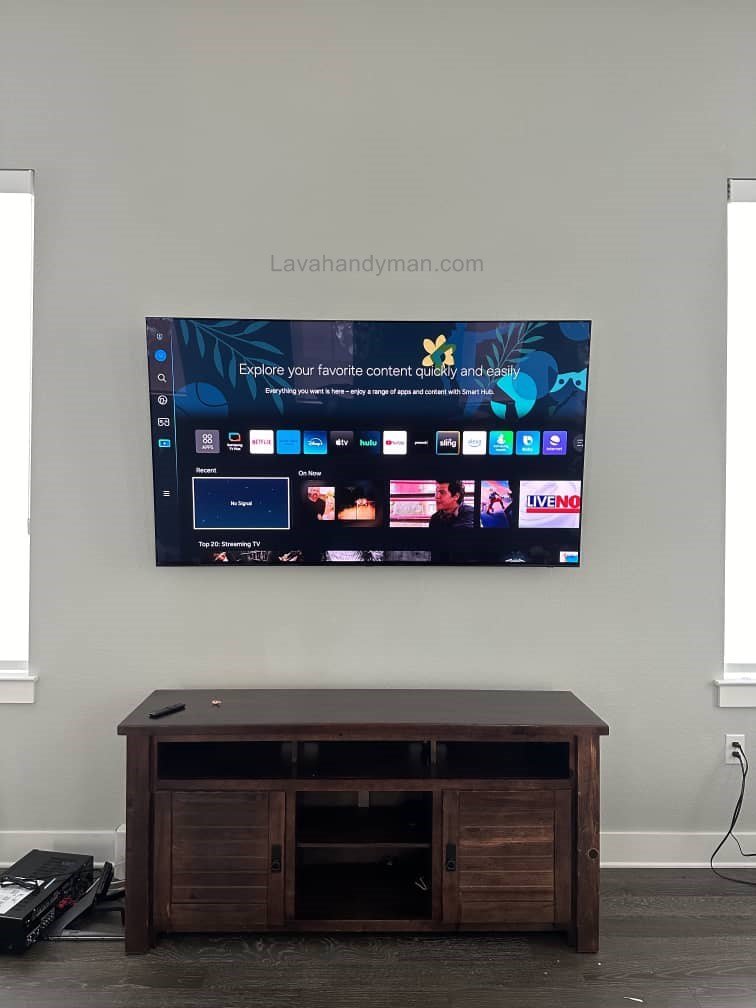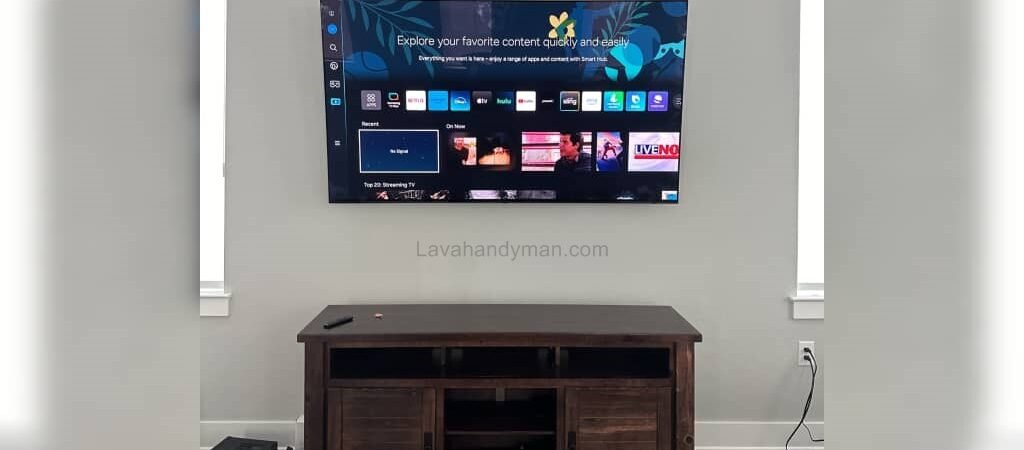
Complete Guide to Choosing the Right TV Size for Your Home
Introduction
Choosing the right TV size is one of the most important steps when buying a television for your home. Many people focus mainly on brand, price, or smart features, but if the TV size is not proportional to your room space, viewing distance, and usage needs, even the best 4K or OLED TV will fail to deliver a satisfying viewing experience.
Why Is Choosing the Right TV Size Important?
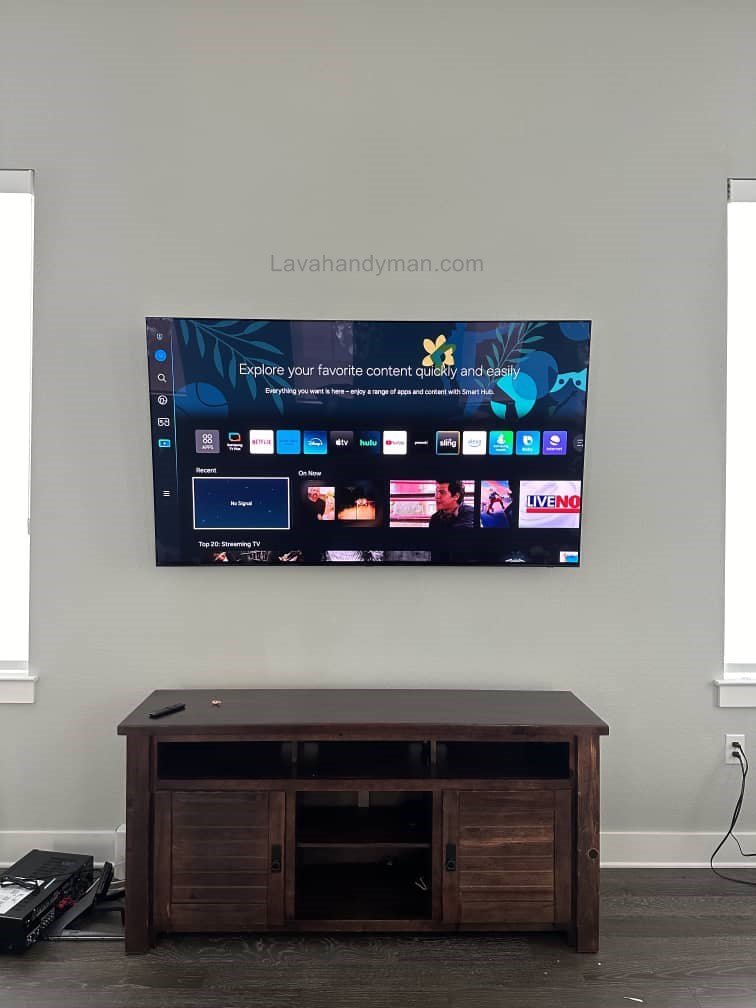
Selecting an inappropriate TV size can lead to several problems, including:
- Eye fatigue and discomfort
- Reduced image quality due to improper viewing distance
- Taking up too much living space
- Poor harmony with interior décor
- Spending more money without improving the viewing experience
That’s why choosing the correct TV size should be done scientifically and according to your home conditions.
Choosing the Right TV Size
How Is TV Size Measured?
TV size is measured based on the diagonal length of the screen, expressed in inches. This measurement does not include the bezel or frame—only the display area itself.
For example, a 55-inch TV means the diagonal screen size is 55 inches.
The Most Important Factor: Viewing Distance
The key factor in choosing the right TV size is the distance between your eyes and the TV screen. If the distance is short and the TV is too large, your eyes will quickly become tired. If the distance is long and the TV is too small, image details will be difficult to see.
Choosing the Right TV Size
Recommended TV Size by Viewing Distance (Full HD)
- 1.5 to 2 meters: 32 to 40 inches
- 2 to 2.5 meters: 40 to 43 inches
- 2.5 to 3 meters: 43 to 50 inches
- 3 to 3.5 meters: 50 to 55 inches
- 3.5 to 4 meters: 55 to 65 inches
Recommended TV Size by Viewing Distance (4K)
Thanks to higher pixel density, 4K TVs allow you to choose larger screen sizes at shorter distances:
- 1.5 to 2 meters: 43 to 50 inches
- 2 to 2.5 meters: 50 to 55 inches
- 2.5 to 3 meters: 55 to 65 inches
- 3 to 3.5 meters: 65 to 75 inches
- More than 3.5 meters: 75 inches and above
How Display Resolution Affects TV Size Selection
HD and Full HD TVs
With these TVs, choosing a very large screen can make pixels visible and reduce overall image quality.
4K TVs
4K TVs are the best option for modern homes and are ideal for larger screen sizes.
8K TVs
These TVs are designed for very large spaces and long viewing distances and are not yet necessary for typical home use.
Choosing the Right TV Size
Choosing the Right TV Size Based on Home Size
Small Homes (Under 70 m²)
- Recommended size: 32 to 43 inches
- Suggested resolution: Full HD or 4K
Medium-Sized Homes (70 to 120 m²)
- Recommended size: 43 to 55 inches
- Suggested resolution: 4K
Large Homes (Over 120 m²)
- Recommended size: 55 to 75 inches
- Suggested resolution: 4K or higher
Choosing TV Size Based on Installation Location
Living Room TV
TVs between 50 and 65 inches are usually the best choice.
Bedroom TV
A screen size of 32 to 43 inches is more suitable.
Kitchen TV
TVs between 24 and 32 inches are more practical.
Choosing the Right TV Size Based on Usage Type
Watching Movies and TV Series
Larger TVs provide a more cinematic viewing experience.
Watching Sports and Football
TVs 55 inches and larger are recommended for better detail visibility.
Gaming (PS5 and Xbox)
A 43 to 55-inch 4K TV offers the best balance between immersion and comfort.
Choosing the Right TV Size
The Role of Interior Design in TV Size Selection
The TV should match the wall width, TV stand, and furniture layout. The center of the TV screen should be positioned roughly at eye level when seated to avoid neck and eye strain during long viewing sessions.
Common Mistakes When Choosing a TV Size
- Buying a TV that is too large for a small room
- Ignoring standard viewing distance guidelines
- Focusing only on price
- Overlooking display resolution
A Simple Formula to Choose the Right TV Size
A quick and practical method:
Viewing distance (in centimeters) ÷ 2.5 ≈ TV size (in inches)
For 4K TVs, you can safely choose a slightly larger screen than the calculated result.
What Is the Correct Height to Mount a TV on the Wall?
Choosing the correct height to mount a TV on the wall is one of the most important factors affecting viewing comfort, eye health, and neck posture. Mounting a TV at the wrong height can cause eye strain, neck pain, and reduce the overall viewing experience.
In this guide, we explain in detail the ideal height to install a TV on the wall and the key factors you should consider.
Choosing the Right TV Size
Why Is TV Mounting Height Important?
Incorrect TV height can lead to several issues, including:
- Eye fatigue during long viewing sessions
- Neck and shoulder pain
- Poor vertical viewing angle
- Reduced visual comfort
- Poor integration with interior décor
That’s why following proper TV mounting standards is essential.
Standard Height for Wall-Mounted TVs
The golden rule is simple:
The center of the TV screen should be approximately at eye level when you are seated.
Standard Measurement:
- Average seated eye height: 100 to 110 cm (39–43 inches) from the floor
- Therefore:
The center of the TV screen should be 100–110 cm from the floor
This height is ideal for most living rooms and home environments.
Choosing the Right TV Size
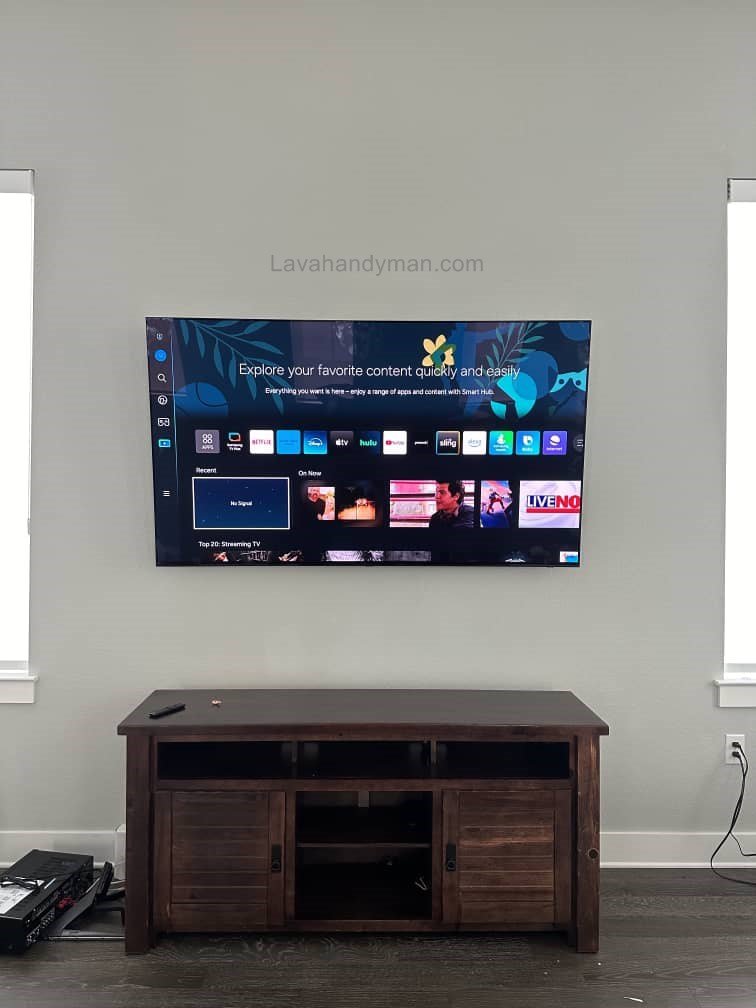
Recommended TV Mounting Height by Screen Size
| TV Size | Bottom Edge Height | Approx. Screen Center |
|---|---|---|
| 32 inch | 60–65 cm | 100 cm |
| 43 inch | 65–70 cm | 105 cm |
| 50 inch | 70–75 cm | 105–110 cm |
| 55 inch | 75–80 cm | 110 cm |
| 65 inch | 80–90 cm | 110–115 cm |
These measurements are based on standard seated viewing positions.
TV Mounting Height for Different Rooms
Living Room TV
- Best position: screen center at eye level
- Recommended vertical viewing angle: no more than 15 degrees
- Avoid mounting the TV too high
Bedroom TV
Since TVs in bedrooms are often viewed in a reclined position:
- The TV can be mounted slightly higher
- Screen center height: 110–120 cm
Mounting a TV Above a Fireplace
- Generally not recommended ❌
- If unavoidable:
- Use a tilting or adjustable wall mount
- Angle the TV downward
- Increase viewing distance to reduce neck strain
Choosing the Right TV Size
Optimal Viewing Angle When Mounting a TV
- Vertical viewing angle: maximum 15 degrees
- Horizontal viewing angle: directly facing the viewer
- You should not need to tilt your head upward while watching
If you feel the need to raise your chin while watching TV, the TV is mounted too high.
Common TV Mounting Mistakes
- Mounting the TV too close to the ceiling
- Installing a TV above a fireplace without proper tilt
- Ignoring seating height
- Copying TV placement from retail displays
- Not considering viewing distance
Simple Formula to Calculate TV Mounting Height
- Sit in your usual viewing position
- Measure your eye level from the floor
- Mount the center of the TV screen at that height
Example:
If your seated eye height is 105 cm, the center of the TV should also be at 105 cm.
Choosing the Right TV Size
The Role of Interior Design in TV Mounting Height
The TV should be aligned with:
- Wall width
- TV stand or console height
- Furniture layout
- Viewing distance
TV Dimensions for Wall Mounting | Choosing the Right TV Size for Your Wall
Choosing a TV for wall mounting is not just about screen size in inches. For a safe, professional, and visually appealing installation, you must consider the actual physical dimensions of the TV, its weight, thickness, VESA standard, and how it fits your wall space. Ignoring these factors can result in poor aesthetics or even safety risks.
In this guide, we take an in-depth look at TV dimensions from a wall-mounting perspective to help you make the right decision.
Choosing the Right TV Size
TV Screen Size vs. Actual TV Dimensions
The advertised TV size (such as 55 or 65 inches) only represents the diagonal measurement of the screen, not the real width or height of the TV.
For wall mounting, the following dimensions are crucial:
- Actual width of the TV
- Actual height of the TV
- TV thickness
- TV weight
📌 Always check the manufacturer’s physical specifications before installing your TV on the wall.
Approximate TV Dimensions by Screen Size
32-Inch TV
- Width: approx. 73 cm (28.7 in)
- Height: approx. 43 cm (16.9 in)
- Ideal for small walls and bedrooms
43-Inch TV
- Width: approx. 97 cm (38.2 in)
- Height: approx. 56 cm (22 in)
- Suitable for compact spaces and simple wall mounting
50-Inch TV
- Width: approx. 112 cm (44 in)
- Height: approx. 65 cm (25.6 in)
- A balanced choice for medium-sized walls
55-Inch TV
- Width: approx. 123 cm (48.4 in)
- Height: approx. 71 cm (28 in)
- One of the most popular sizes for living room wall mounting
65-Inch TV
- Width: approx. 145 cm (57 in)
- Height: approx. 83 cm (32.7 in)
- Best suited for large walls and spacious living areas
📌 These measurements are approximate and may vary slightly depending on the brand and bezel design.
Choosing the Right TV Size
Recommended Clearance Around a Wall-Mounted TV
For a proper and visually pleasing installation:
- Leave at least 20–30 cm (8–12 inches) of free space on each side of the TV
- Avoid covering the entire wall width with the TV
- Adequate spacing improves both aesthetics and ventilation
TV Thickness and Its Impact on Wall Mounting
Modern TVs (LED, QLED, and OLED):
- Feature slim designs (typically 3–6 cm thick)
- Are ideal for wall mounting
- Create a clean, modern, and minimalist look
When using a fixed wall mount, the TV sits very close to the wall, enhancing the overall interior design.
Choosing the Right TV Size
TV Weight and Choosing the Right Wall Mount
As TV size increases, so does weight—making this factor critical for wall mounting.
Approximate weights:
- 55-inch TV: 15–20 kg (33–44 lbs)
- 65-inch TV: 22–30 kg (48–66 lbs)
📌 The wall mount should support at least 20–30% more than the TV’s actual weight to ensure maximum safety.
VESA Standard and Wall Mount Compatibility
To mount a TV on the wall, it must support the VESA mounting standard, which defines the distance between the mounting holes on the back of the TV.
Common VESA sizes include:
- 200 × 200
- 300 × 300
- 400 × 400
The selected wall mount must fully support your TV’s VESA pattern for safe and secure installation.
Choosing the Right TV Size
Best TV Sizes for Wall Mounting Based on Wall Space
Small Walls
- Recommended sizes: 32 to 43 inches
Medium Walls
- Recommended sizes: 43 to 55 inches
Large Walls and Living Rooms
- Recommended sizes: 55 to 75 inches
Maintaining visual balance between the TV size and wall dimensions is essential for a professional look.
Choosing the Right TV Size
Common Mistakes When Choosing TV Dimensions for Wall Mounting
Using a wall mount incompatible with the VESA standard
Selecting a TV that is too large for the wall
Ignoring the TV’s weight and mount capacity
Mounting the TV too close to the ceiling
Failing to leave adequate side clearance
Final Thoughts
To choose the right TV size, you must consider viewing distance, room size, display resolution, and usage type together. Following these principles will help you achieve the best viewing experience and ensure complete satisfaction with your TV purchase.
📞 Need Help?
Let us take care of the hard work while you sit back and relax.
📍 Serving: Austin, Round Rock, Cedar Park & more
📱 Call or Text: (737) 420-6992
🌐 Visit: https://lavahandyman.com