
Best Methods for Installing Whiteboards and Art Frames on Walls
Introduction
Installing a whiteboard or an art frame on a wall is a common task in educational, office, and residential spaces. Although it may seem simple, improper installation can lead to wall damage, reduced safety, and even falling boards or frames. For this reason, learning the correct installation methods and following technical standards is very important.
In this guide, we provide a clear and practical explanation of how to install whiteboards and art frames, including required tools, wall types, safety considerations, and aesthetic principles.

Importance of Proper Installation
Correct and professional installation offers several advantages, including:
Installing Whiteboards and Art
- Improved safety for users
- Prevention of wall damage
- Increased lifespan of whiteboards and frames
- A clean, organized, and professional appearance
In educational environments, proper whiteboard installation is especially important due to frequent daily use.
Understanding Different Wall Types
Identifying the wall type is the first and most important step before installation.
Gypsum and Drywall (Drywall/Knaf)
These walls have limited load capacity. Special drywall anchors or toggle bolts should be used when installing whiteboards or frames.
Brick Walls
Brick walls provide good strength and are suitable for installing most whiteboards and art frames using standard screws and wall plugs.
Concrete Walls
Concrete walls are very strong but require a hammer drill and concrete drill bits for proper installation.
Installing Whiteboards and Art
Wooden or MDF Walls
Installation on wooden walls is easier, but screws should not be overtightened to avoid cracking or damage.
Required Tools and Equipment
For safe and professional installation, the following tools are recommended:
- Electric or cordless drill
- Drill bits suitable for the wall type
- Screws and wall anchors
- Spirit level or laser level
- Measuring tape and pencil
- Screwdriver or power driver
- Safety glasses and gloves
Installing Whiteboards and Art
Step-by-Step Whiteboard Installation
1. Choosing the Right Location
Select a place with proper lighting and minimal glare on the board surface. The height should allow comfortable use for most people.
2. Measuring and Leveling
Measure the installation area carefully and use a level to ensure the board will be mounted straight.
3. Drilling and Mounting
Mark the drilling points, drill the holes, insert wall plugs, and secure the mounting brackets with screws.
4. Final Safety Check
After installation, check that the whiteboard is firmly attached and properly aligned.
Installing Whiteboards in Different Environments
Educational Facilities
Safety and durability are top priorities. Strong mounting hardware and correct height placement are essential.
Office Spaces
Whiteboards should be positioned for easy use during meetings and aligned with the overall office design.
Residential Areas
Smaller whiteboards are often used for planning or children’s learning. Visual appearance and minimal wall damage are important.
Installing Whiteboards and Art
Installing Art Frames on Walls
Choosing the Right Spot
Art frames should be installed in visible locations that complement the surrounding décor.
Standard Installation Height
The center of the artwork should generally be placed at eye level for optimal visual impact.
Installing Multiple Frames
When hanging several frames together, maintain equal spacing and plan the layout before drilling.
Art Frame Installation Methods
- Nails or hooks for lightweight frames
- Screws and wall anchors for heavy frames
- Wall rail systems for galleries and exhibitions
- Adhesive strips for very light frames (not recommended for valuable artwork)
Installing Whiteboards and Art
Safety Tips
- Always match the weight of the board or frame with the wall’s load capacity
- Use appropriate and safe tools
- Periodically check mounting hardware
- Avoid installation near moisture or heat sources
Aesthetic Considerations
Matching frame colors with wall colors, choosing the right size, and maintaining visual balance significantly enhance the final appearance. Whiteboards with frames that match interior design also create a more professional look.
Standard Height for Installing a Whiteboard on the Wall
Installing Whiteboards and Art
What Is the Standard Height for Whiteboard Installation?
According to common standards, the bottom edge of a whiteboard should be installed 80 to 100 centimeters above the floor. This height allows most users to write comfortably without bending or excessively raising their arms.
It is also recommended that the center of the whiteboard be positioned approximately 140 to 150 centimeters from the floor, aligning with the natural eye level of most people.
Whiteboard Installation Height in Different Environments
Classroom Whiteboard Installation
In schools and educational centers, the installation height should match the students’ average height.
- Elementary schools: slightly lower than the standard height
- High schools and universities: standard height of 80–100 cm
This improves student interaction and teacher comfort.
Office Whiteboard Installation
In offices and meeting rooms, installing the whiteboard at the standard height ensures ease of use for both standing presentations and seated participants.
Home Whiteboard Installation
In residential spaces, especially when children use the whiteboard, the installation height can be reduced. For adult use, the standard height remains the best option.
Installing Whiteboards and Art
Factors Affecting Whiteboard Installation Height
When selecting the ideal whiteboard height, consider the following factors:
- Average height of users
- Purpose of use (educational, office, or home)
- Whiteboard dimensions
- Height and distance of desks and chairs
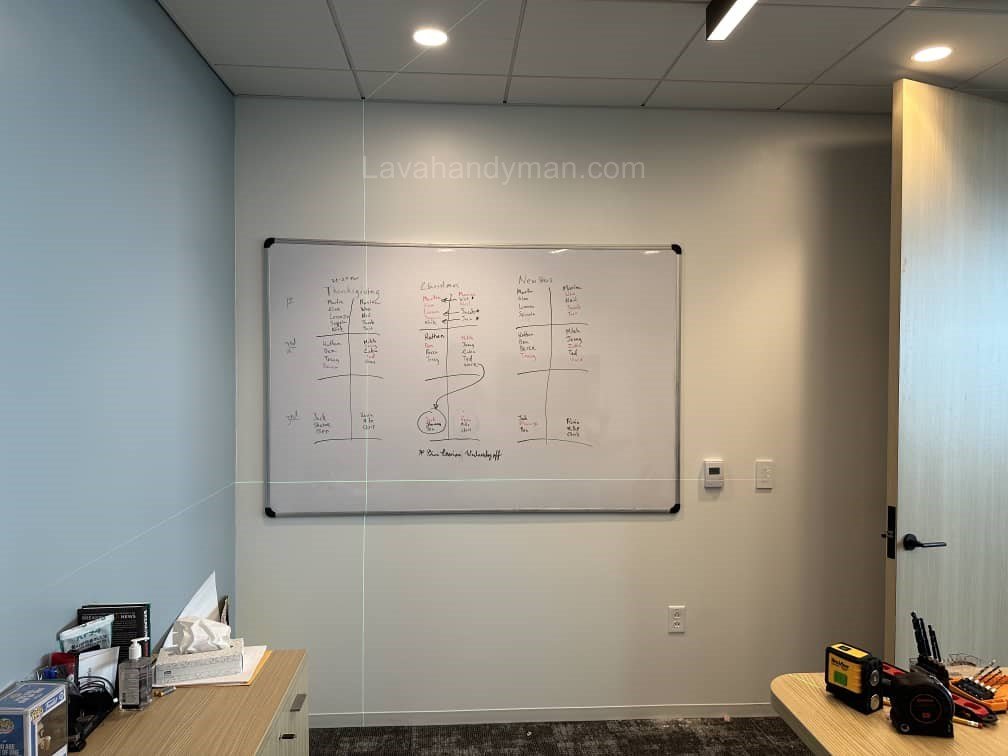
Common Mistakes in Whiteboard Height Installation
- Installing the whiteboard too high, causing arm fatigue
- Installing it too low, reducing visibility
- Ignoring children’s height in educational settings
- Overlooking the layout of furniture in front of the board
Additional Tips for Proper Installation
Choose an average height for shared use
Test the height before final installation
Use a level to ensure the whiteboard is straight
Standard Height for Installing Art Frames on the Wall
Installing Whiteboards and Art
What Is the Standard Height for Installing Art Frames?
According to interior design principles and gallery standards, the center of an art frame should be positioned approximately 145 to 155 centimeters above the floor. This height aligns with the natural eye level of most viewers and allows the artwork to be seen comfortably without tilting the head up or down.
Why Is the Center of the Artwork the Main Reference Point?
Unlike whiteboards, where the bottom edge is used as the installation reference, art frames are installed based on the center of the artwork. This approach ensures that the piece is viewed at the optimal angle and delivers the strongest visual impact.
Ideal Art Frame Height in Different Spaces
Art Frame Installation in Homes
In residential interiors, art frames are often installed above sofas, consoles, or beds. In such cases, maintaining a proper distance between the furniture and the artwork is important. A 15 to 30 centimeter gap between the top of the furniture and the bottom of the frame is generally recommended.
Art Frame Installation in Offices
In office environments, installing art frames at the standard height helps create a professional, organized, and visually balanced atmosphere. Artworks should be placed within common sightlines and main circulation areas.
Art Frame Installation in Galleries and Exhibitions
In art galleries, precise height standards are critical. Most galleries position the center of artwork at around 150 centimeters from the floor to ensure comfortable viewing for visitors of varying heights.
Installing Whiteboards and Art
Installing Multiple Art Frames Together
When hanging multiple frames, the centers of all artworks should align along a single horizontal line. This technique creates visual order and a professional appearance, even when frame sizes differ.
Factors Affecting Art Frame Installation Height
When determining the ideal height, consider the following:
- Average viewer height
- Size and dimensions of the artwork
- Type of space (home, office, or gallery)
- Presence of furniture or decorative elements below the frame
Common Mistakes in Art Frame Installation
- Hanging artwork too high
- Ignoring natural eye level
- Failing to level the frame properly
- Incorrect spacing between artwork and furniture
Installing Whiteboards and Art
Additional Tips for Proper Installation
Keep spacing consistent when installing multiple frames
Test the placement before final installation
Always use a level to ensure straight alignment
Types of Brackets Used for Installing Whiteboards and Art Frames on Walls
Brackets Used for Whiteboard Installation
Fixed Wall Bracket
This is the most common type of bracket for whiteboard installation.
Application: Lightweight to medium-weight whiteboards
Features:
- Direct wall mounting
- Installed with screws and wall anchors
- Reliable strength for daily use
Best for: Classrooms, offices, and training rooms
Installing Whiteboards and Art
Adjustable Wall Bracket
This type of bracket allows fine adjustments after installation.
Application: Educational environments and meeting rooms
Advantages:
- Height or alignment adjustment
- Greater flexibility
- Improved user comfort
Whiteboard Mounting Rail System
A professional and highly secure installation method.
Application: Schools, training centers, and high-traffic areas
Features:
- Adjustable board positioning
- Even weight distribution
- High safety level
Tilt Bracket
Used when a slight viewing angle is required.
Application: Lecture halls and specialized classrooms
Benefit: Better visibility from different angles
Brackets and Hardware for Art Frame Installation
Picture Hooks
The simplest method for hanging artwork.
Application: Lightweight frames
Advantages:
- Quick installation
- Minimal wall damage
Installing Whiteboards and Art
L-Shaped or Z-Shaped Brackets
Ideal for heavy or large framed artwork.
Application: Decorative and oversized art frames
Features:
- High load capacity
- Strong wall attachment
Picture Hanging Rail System
Commonly used in galleries and exhibitions.
Application: Art galleries and professional display spaces
Advantages:
- Easy repositioning of artwork
- No repeated wall drilling
Wire Hanging System (D-Rings and Steel Wire)
A professional and secure hanging solution.
Application: Medium to heavy art frames
Advantages:
- Even weight distribution
- Increased safety
Installing Whiteboards and Art
Heavy-Duty Adhesive Mounts
Suitable only for very lightweight artwork.
Important Note: Not recommended for valuable or heavy art pieces.
Quick Guide to Choosing the Right Bracket
| Bracket Type | Load Capacity | Recommended Use |
|---|---|---|
| Picture Hook | Light | Small frames |
| Screws & Anchors | Medium | Standard whiteboards |
| L or Z Bracket | Heavy | Large art frames |
| Wall Rail System | Variable | Schools & galleries |
| Adhesive Mounts | Very Light | Temporary displays |
Important Safety Tips
Periodically inspect mounting hardware
Always consider the wall type (concrete, brick, drywall)
Check the weight of the whiteboard or artwork before choosing a bracket
Use appropriate wall anchors
Conclusion
Installing whiteboards and art frames on walls requires attention, proper tools, and adherence to technical and safety principles. By understanding wall types, choosing correct installation methods, and considering both safety and aesthetics, you can achieve a durable, safe, and visually appealing result. This guide serves as a useful educational resource for websites, training centers, and service providers.
📞 Need Help?
Let us take care of the hard work while you sit back and relax.
📍 Serving: Austin, Round Rock, Cedar Park & more
📱 Call or Text: (737) 420-6992
🌐 Visit: https://lavahandyman.com