The Best Method for Hanging Wall Art Using Hidden Brackets – Full Tutorial
Introduction: Why Modern Brackets Are the Best Method for Wall Art Installation
Wall art installation has evolved significantly over the years. While traditional methods relied on nails, screws, wall plugs, or hanging wires, today’s interior designers increasingly prefer modern mounting brackets. These innovative brackets—such as hidden brackets, French cleats, keyhole brackets, slotted adjustable brackets, magnetic brackets, and heavy-duty adjustable systems—make installation far more accurate, secure, aesthetically clean, and long-lasting.
This comprehensive guide covers everything you need to know about installing wall art using new-generation brackets—from bracket types and installation techniques to recommended heights, necessary tools, interior design considerations, and common mistakes to avoid.
The Best Method for Hanging Wall Art
1. What Is a Wall Mounting Bracket and How Is It Different from Traditional Methods?
A wall mounting bracket is a metal or polymer component attached to the back of a frame and the wall surface. It allows artwork to hang securely while keeping all hardware completely hidden.
Advantages of modern brackets compared to traditional methods:
- ✔ Invisible hardware → a clean, modern look
- ✔ High strength → ideal for heavy artworks
- ✔ Adjustability → eliminates crooked frames
- ✔ Enhanced safety → prevents accidental falls
- ✔ Fast, accurate installation
- ✔ No damage to the frame
These benefits make modern brackets the best choice for homes, galleries, offices, hotels, restaurants, and commercial spaces.
The Best Method for Hanging Wall Art
2. Types of Modern Wall Art Mounting Brackets
Today’s market offers a wide range of mounting brackets. Below is the most complete breakdown.
2.1 Hidden Bracket (Invisible Bracket)
The most popular and widely used mounting system.
Features:
- Fully hidden after installation
- Ideal for wooden and MDF frames
- Suitable for canvas art, decorative frames, religious art, gallery art
- Weight capacity up to 30 kg (depending on model)
The Best Method for Hanging Wall Art
2.2 French Cleat (Z-Bar Bracket)
A two-piece bracket system—one part attaches to the frame, the other to the wall.
Benefits:
- Extremely strong and secure
- Allows horizontal adjustment
- Perfect for heavy artwork
- A preferred solution in galleries and museums
The Best Method for Hanging Wall Art
2.3 Keyhole Bracket
The bracket has a keyhole-shaped slot that locks onto a screw head.
Best for:
- Lightweight to medium-weight frames
- Quick and simple installation
- Industrial-style frames and décor
2.4 Adjustable Slotted Bracket
One of the best options for achieving perfect alignment.
Features:
- Vertical and horizontal adjustability
- Ideal for artwork requiring precise leveling
- A favorite among professional installers
The Best Method for Hanging Wall Art
2.5 Magnetic Bracket
A new-generation mounting solution using strong neodymium magnets.
Advantages:
- Ultra-fast installation
- Easy repositioning
- Great for lightweight art, LED backlit frames, nameplates, modern décor pieces
3. How to Choose the Right Bracket for Each Artwork Type
Wood/MDF Frames:
Hidden bracket or French cleat
Canvas Art (Stretched Canvas):
Hidden bracket with an internal leveling base
Heavy Artwork (Over 10 kg):
French cleat or dual heavy-duty brackets
Small Decorative Frames:
Keyhole or magnetic brackets
Multi-panel Art:
Adjustable slotted brackets for perfect alignment
The Best Method for Hanging Wall Art
4. Essential Tools for Installing Wall Art with Modern Brackets
To achieve professional-level results, you need:
- ✔ Measuring tape
- ✔ Level or laser line
- ✔ Drill
- ✔ Appropriate wall plugs (anchors)
- ✔ MDF/wood screws
- ✔ Pencil
- ✔ Screwdriver
- ✔ Your chosen bracket system
Using improper tools is the main cause of misaligned or unstable installations.
The Best Method for Hanging Wall Art
5. Standard Height for Installing Wall Art
Interior design experts recommend:
The center of the artwork should be 145–155 cm above the floor.
The universal standard is 150 cm, also known as the “eye-level rule.”
If installing above furniture:
Leave 20–30 cm between the top of the furniture and the bottom of the artwork.
For large artworks:
Install slightly lower to improve visibility and balance.
The Best Method for Hanging Wall Art
6. Step-by-Step Guide to Installing Art Using Modern Brackets
Below is the most complete and professional installation method.
Step 1: Choose the Mounting Location
- Determine the height
- Mark the wall center
- Consider lighting, furniture placement, and view lines
Step 2: Install the Bracket on the Frame
- Place the bracket exactly at the frame’s center
- Use a small level to avoid any tilt
- Heavy artwork requires two or more brackets
The Best Method for Hanging Wall Art
Step 3: Install the Bracket on the Wall
- Measure the distance between the frame’s top edge and the bracket
- Transfer measurement to the wall
- Drill holes
- Insert wall plugs
- Secure the wall-side bracket firmly
Step 4: Hang the Artwork
- Align the frame with the bracket and push gently downward
- Ensure the frame “locks” into place
- Adjust leveling if using an adjustable bracket
7. Professional Tips for Installing Artwork with Modern Brackets
✔ Use two brackets for wide frames
✔ Never skip the leveling step
✔ Use special drywall anchors for gypsum walls
✔ Choose a French cleat for heavy artwork
✔ Test the bracket before final installation
The Best Method for Hanging Wall Art
8. Installing Multi-Panel Artwork with Modern Brackets
Multi-panel wall art (3-piece, 5-piece, etc.) often ends up uneven using traditional methods.
The best solution:
✔ Adjustable slotted brackets
✔ Maintaining equal spacing (2–5 cm)
✔ Individual height adjustment for each panel
This creates a clean, gallery-level presentation.
The Best Method for Hanging Wall Art
9. Installing Art on Different Wall Types
1. Drywall (Gypsum Board)
- Use butterfly or molly bolts
- Two-point brackets recommended
2. Brick or Concrete Walls
- Standard wall plugs
- Heavy-duty brackets
3. Wooden Walls
- Direct screws
- Hidden bracket preferred
4. Tile or Stone Walls
- Use ceramic drill bits
- French cleat or keyhole bracket
The Best Method for Hanging Wall Art
10. Common Mistakes When Installing Artwork with Modern Brackets
- Skipping the leveling process
- Using undersized brackets for large frames
- Incorrect bracket type selection
- Ignoring artwork weight
- Off-center bracket placement on the frame
- Weak screws
- Incorrect height calculations
Avoiding these mistakes ensures a clean, stable, and professional installation.
11. Precise Measurement Formula for Bracket Installation
Use the following formula for perfect height placement:
Final screw height = chosen center height − (half the artwork height − distance from top edge to bracket)
This guarantees your artwork aligns exactly at the standard height.
The Best Method for Hanging Wall Art
12. Benefits of Using Modern Brackets
Modern brackets improve:
- Installation accuracy
- Overall safety and stability
- Longevity of the frame
- Ease of repositioning
- Clean aesthetic appearance
- Speed and quality of installation
These advantages make bracket-based installation the superior method in modern interior design.
Complete Guide to Standard Wall Art Hanging Height
Choosing the right height to hang wall art is one of the most important principles in interior design. Even the most beautiful artworks can lose their visual impact if installed at the wrong height. This guide explains the ideal height, calculation formula, professional tips, and common mistakes for hanging artwork on walls.
1. Golden Rule: Center of the Art at Eye Level
- The center of the artwork should be at 145–155 cm (57–61 inches) from the floor.
- The global standard is generally 150 cm (59 inches).
This height allows most people, whether standing or sitting, to view the artwork naturally and comfortably.
The Best Method for Hanging Wall Art
2. Adjusting Height According to Furniture
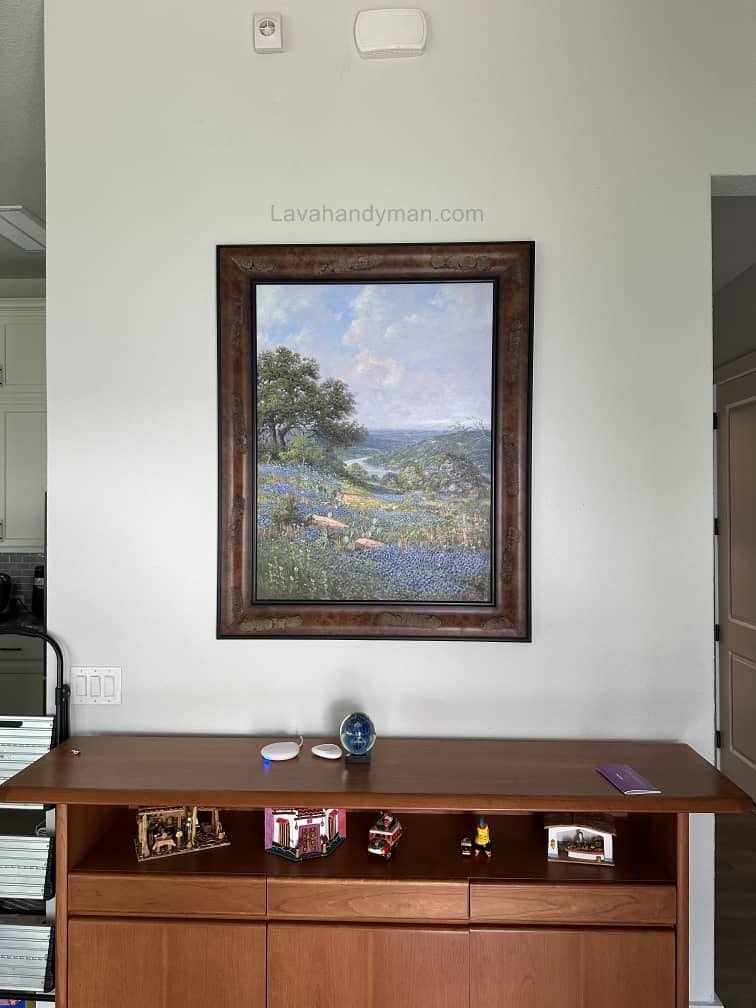
If the artwork is above a sofa, table, or shelf:
- Standard distance from the top of furniture to the bottom of the artwork: 20–30 cm (8–12 inches)
- Maintaining this space ensures visual harmony and a professional-looking wall display.
3. Precise Bracket Height Calculation Formula
For accurate bracket installation, use the following formula: Bracket or screw height=Art center height−(Art height2−Distance from top edge to bracket)\text{Bracket or screw height} = \text{Art center height} – (\frac{\text{Art height}}{2} – \text{Distance from top edge to bracket})Bracket or screw height=Art center height−(2Art height−Distance from top edge to bracket)
Practical example:
- Art height: 60 cm (24 inches)
- Standard center: 150 cm (59 inches)
- Bracket distance from top edge: 5 cm (2 inches)
150−(60/2−5)=150−(30−5)=125 cm (49 inches)150 – (60/2 – 5) = 150 – (30 – 5) = 125 \text{ cm (49 inches)}150−(60/2−5)=150−(30−5)=125 cm (49 inches)
So the bracket should be installed at 125 cm from the floor.
The Best Method for Hanging Wall Art
4. Recommended Height for Different Spaces
| Space Type | Recommended Hanging Height |
|---|---|
| Hallways & Corridors | 155–160 cm (61–63 in) for better visibility while walking |
| Living Room with Seating | 140–145 cm (55–57 in) for seated viewers |
| High Ceilings (3 m / 10 ft +) | 155–165 cm (61–65 in) for visual balance |
| Above Sofa or Shelf | 20–30 cm (8–12 in) above furniture |
The Best Method for Hanging Wall Art
5. Professional Tips for Leveling and Visual Harmony
- Use a level: Always use a laser or manual level for precision.
- Gallery wall arrangement: For multiple artworks, place the center of the entire arrangement at eye level.
- Wall clearance: Keep 5–10 mm (0.2–0.4 in) from the wall to protect frames and prevent moisture damage.
- Adjustable brackets: For large or heavy art, adjustable brackets allow minor vertical corrections after hanging.
6. Common Mistakes When Choosing Hanging Height
- Hanging the artwork too high or too low
- Ignoring furniture or shelf height
- Using a single central point without considering viewer sightlines
- Forgetting wall clearance for ventilation and frame protection
Following these tips ensures that your art is installed at the optimal height and enhances the overall interior design.
The Best Method for Hanging Wall Art
7. Summary
- Art center height: 150 cm (59 in) is the global standard
- Above furniture: maintain 20–30 cm (8–12 in) spacing
- Adjust height according to space type, ceiling height, and viewer perspective
- Ensure wall clearance and precise leveling for a professional look
By following these principles, wall art is displayed at the ideal height, enhancing the harmony and aesthetic appeal of any interior space.
Types of Wall Art and Professional Installation Tips
The Best Method for Hanging Wall Art
1. Canvas Art
Features:
- Made from canvas with oil or acrylic paint
- Classic or modern style
- Suitable for installation with hidden brackets or Z-bar
- Weight: light to medium
Benefits:
- Natural, artistic appearance
- Ideal for living rooms, galleries, and offices
- Can be installed as multi-panel sets
The Best Method for Hanging Wall Art
2. Prints & Posters
Features:
- Printed on paper, foam board, or cardboard
- Modern and minimalistic style
- Lightweight and easy to hang using lightweight or keyhole brackets
Benefits:
- Perfect for small spaces
- Easy to move or replace
- More affordable than canvas paintings
The Best Method for Hanging Wall Art
3. Multi-Panel Art
Features:
- Split into multiple pieces (3, 5, or more)
- Installed in a coordinated, gallery-style layout
- Works well with Z-bar or adjustable brackets
Benefits:
- Modern and professional appearance
- Fills large wall spaces
- Allows color and design combinations
The Best Method for Hanging Wall Art
4. Decorative Wall Art
Features:
- Made from wood, metal, or plastic decorative elements
- Modern, classic, or industrial style
- Lightweight to medium weight; easy to install with hidden or keyhole brackets
Benefits:
- High visual appeal
- Complements minimalistic or modern decor
- Quick and easy installation
5. Metal Wall Art
Features:
- Made of metal or a metal-wood combination
- Industrial or modern style
- Medium to heavy weight; requires sturdy brackets
Benefits:
- Durable and long-lasting
- Industrial and modern aesthetic
- Suitable for offices, restaurants, and hotel lobbies
6. 3D Wall Art
Features:
- Features a three-dimensional design
- Modern and artistic style
- Installed using special brackets or adhesive systems
Benefits:
- Unique, eye-catching appearance
- Adds depth and visual movement to the wall
- Ideal for modern interiors and galleries
7. Mixed Media Wall Art
Features:
- Combines wood, metal, glass, or fabric elements
- Modern and artistic style
- Mounted using sturdy or adjustable brackets
Benefits:
- Unique and visually striking
- Complements minimalistic, modern, or industrial interiors
- Perfect for large feature walls
SEO Keywords: mixed media wall art, modern mixed wall art, hanging mixed media art
8. Key Tips for Choosing the Right Wall Art
- Decor style: classic, modern, industrial, or minimalistic
- Weight of artwork: heavy pieces require sturdy brackets or Z-bar
- Wall size: small art for small walls, multi-panel sets for large walls
- Hanging height: center of the artwork should always be at eye level
- Number of pieces: for gallery walls or multi-panel art, coordinate colors and heights
9. Summary
- Wall art types include canvas, prints, multi-panel, decorative, metal, 3D, and mixed media
- Choosing the right type depends on style, available space, weight, and wall size
- Proper installation requires the right bracket and standard hanging height
By following these guidelines, your wall art will look attractive, harmonious, and professional, enhancing your interior design.
Conclusion
Modern wall-mount brackets have revolutionized the way wall art is installed. They are:
- sturdy
- hidden
- adjustable
- aesthetically clean
- suitable for all types of artwork
By understanding bracket types and following proper installation principles, you can mount any artwork with professional precision and elevate the visual harmony of your space.
📞 Need Help?
Let us take care of the hard work while you sit back and relax.
📍 Serving: Austin, Round Rock, Cedar Park & more
📱 Call or Text: (737) 420-6992
🌐 Visit: https://lavahandyman.com